





Which Whiskey Actually Makes the Best BBQ Sauce?
Here’s a fun fact that still makes me a little angry: most store bought “whiskey BBQ sauces” contain exactly zero whiskey. That Jack Daniel’s sauce sitting in your fridge? Check the label. It’s got “natural and artificial Jack Daniel’s flavorings,” which is corporate speak for “we waved a whiskey bottle near this vat once.”
So yeah. If you want the real thing, you’re making it yourself.
But here’s the question that sent me down a rabbit hole of taste tests and sauce stained aprons: does it actually matter which whiskey you use? Spoiler: it absolutely does. And once you understand why, you’ll stop guessing and start nailing it every time.
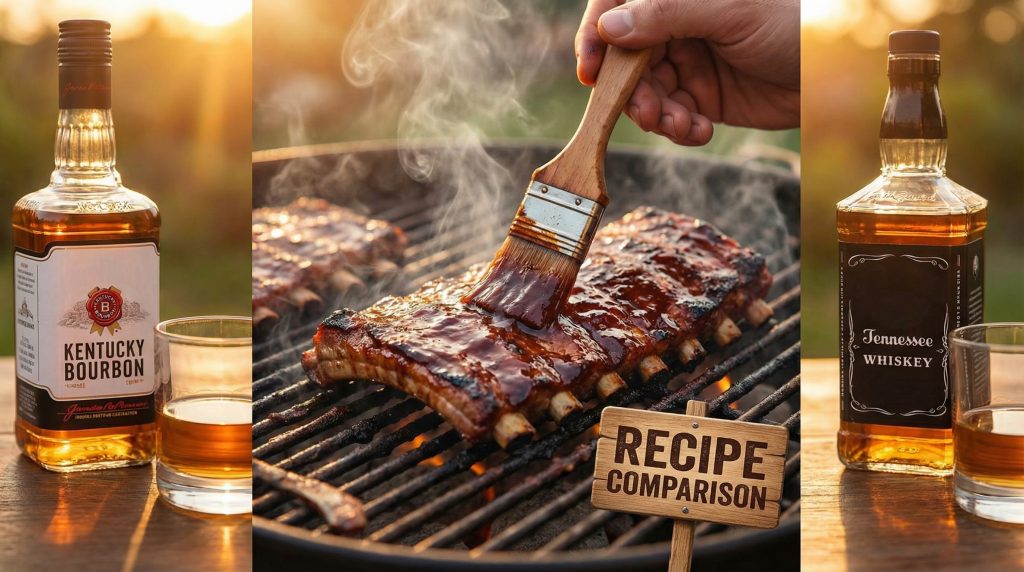
The Bourbon vs. Tennessee Showdown
Let’s settle this first, because if I had a nickel for every time someone told me “Tennessee whiskey is just bourbon,” I’d have enough nickels to buy a very nice bottle of bourbon.
Here’s the deal: Tennessee whiskey gets filtered through sugar maple charcoal before it ever sees a barrel. That extra step pulls out some of the harsher corn notes and gives it that smooth, almost maple-y sweetness. Bourbon skips the charcoal bath entirely and goes straight into charred oak barrels, where it picks up all that spicy, oaky personality.
The other thing? Rye content. Most bourbons run 15-20% rye in the grain mix, which is where that peppery kick comes from. Jack Daniel’s sits around 8%. Less rye = sweeter and smoother. More rye = spicier with more bite.
Here’s what happens when you cook with them: bourbon’s spicy, oaky notes get louder when you reduce it. It stands up to tomato and vinegar like a champ. Tennessee whiskey kind of… melts into the sauce. It gets rounder, sweeter, more caramel-y as things thicken up.
Neither is wrong. They’re just different tools for different jobs.
Matching Your Whiskey to Your Meat
After way too many batches, here’s what I’ve landed on:
Reach for bourbon when you’re making:
- Kansas City style sauce where you want that whiskey flavor to punch through all the sweetness
- Thin mop sauces for long smokes (those charred oak notes echo the wood smoke chef’s kiss)
- Anything going on brisket or fatty smoked meat the peppery finish cuts right through
Tennessee whiskey is your friend for:
- Glazes and finishing sauces when you want smooth, not sharp
- Pulled pork and ham, where that maple caramel vibe plays nice with the meat’s natural sweetness
- Chicken, salmon, or anything bourbon would bulldoze
- Crowd pleaser situations when you don’t want Uncle Gary saying “whoa, that’s a lot of whiskey”
(If your sauce already has molasses or maple syrup, honestly either works fine. That much sweetness kind of levels the playing field.)
The Two Stage Trick That Changed Everything
Most homemade whiskey sauce fails in one of two ways: it tastes like you poured raw booze on your ribs, or the whiskey completely vanishes. I’ve done both. Neither is great.
The fix is embarrassingly simple once you know it.
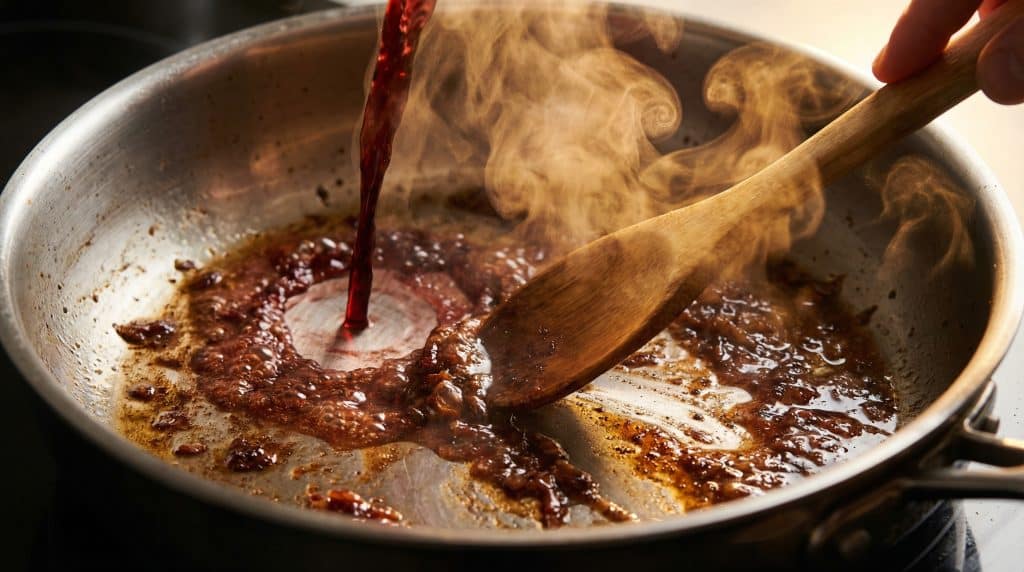
Stage One: Pour 1 cup of whiskey into a saucepan and boil it down to about 2 tablespoons. Yes, that seems aggressive. Do it anyway. This shows how much alcohol cooks off and concentrates all the good stuff the vanilla, the oak, the caramel notes.
Stage Two: Now add your sauce base (ketchup, brown sugar, vinegar, Worcestershire the usual suspects) plus another half cup of fresh whiskey. This puts the whiskey flavor back in without making it taste like a frat party. Simmer low and slow for about 30 minutes until it reduces by a third.
That’s it. That’s the secret. First reduction = depth. Second addition = brightness. Together = magic.
A few notes from my kitchen failures:
- Higher proof bourbons (like Knob Creek 100) need the full 30-40 minute simmer, or you’ll taste it.
- Tennessee whiskey finishes sweeter, so I usually cut the brown sugar by a tablespoon or two if I’m already using honey or molasses.
- Please don’t crank the heat to speed things up. I tried this. The sauce tasted vaguely scorched and sad.
The Ratio I Keep Coming Back To
This easy homemade sauce formula works with either whiskey:
- 2 cups ketchup or tomato sauce
- 1½ cups whiskey total (reduced using the method above)
- ½ cup apple cider vinegar
- ½ cup brown sugar
- 2-3 tablespoons molasses
- Worcestershire, garlic powder, onion powder, and whatever spices make you happy
Want it more bourbon forward? Cut the sugar to ¾ cup and bump up the Worcestershire. Going Tennessee? Keep the full sugar and maybe add a splash of maple syrup.
Budget Bottles That Actually Deliver
You do not need fancy whiskey for this. Once you’re boiling and simmering, the difference between a $30 bottle and an $80 bottle mostly disappears into the tomato.
Here’s what I actually buy:
| Whiskey | Type | Why I Like It | Price |
|---|---|---|---|
| Buffalo Trace | Bourbon | Sweet corn notes that play well with tomato | $25-30 |
| Knob Creek 100 | Bourbon | Higher proof = bold flavor in less volume | $35-40 |
| Maker’s Mark | Bourbon | Softer spice, very forgiving | $28-35 |
| Jack Daniel’s Old No. 7 | Tennessee | Balanced and nearly impossible to mess up | $22-28 |
| George Dickel | Tennessee | Slightly drier, good for less sweet sauces | $20-25 |
A $30 bottle gives you 4-6 batches of sauce. That’s like $2.50-3 per batch for actual whiskey flavor. Not bad.
The Best Way to Find Your Winner
Before your next cookout, make two small batches identical except for the whiskey. Taste them side by side on the same meat.
Bourbon sauce will read brighter with a finish that kind of wakes up your palate. Tennessee whiskey sauce will be rounder and sweeter and usually the crowd favorite when you’re feeding people who didn’t ask for a whiskey tasting.
But honestly? There’s no wrong answer here. Just the one that makes you reach for seconds.
Now go make some sauce. The real kind.