




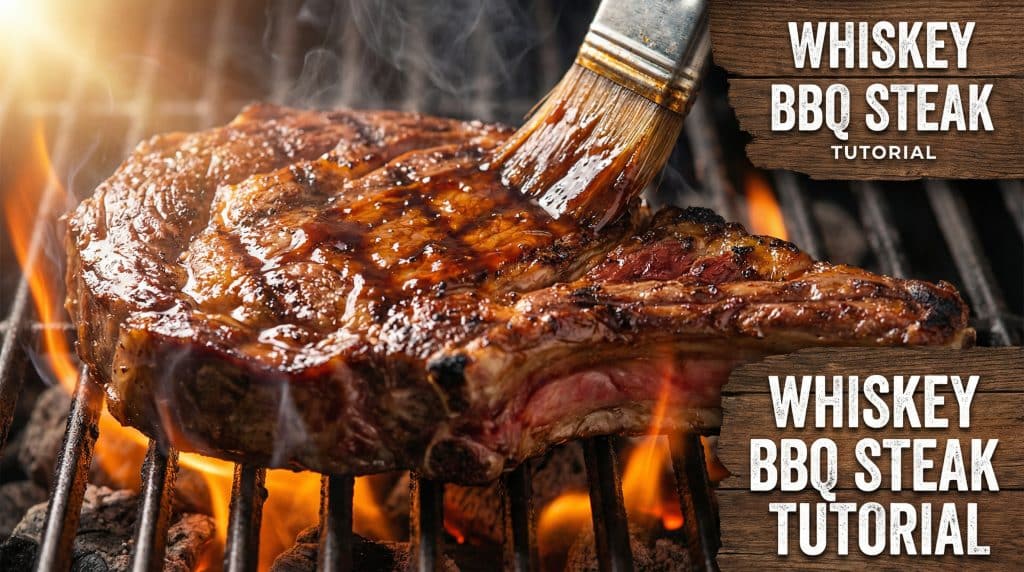

Turn That Bottle of Whiskey BBQ Sauce Into Your Best Marinade
Here’s something that took me way too long to figure out: that bottle of whiskey BBQ sauce sitting in your fridge door? It already has everything you need for a killer marinade. Vinegar for tenderizing. Whiskey for those warm, caramel-y notes. Sugar for that glossy, sticky crust we’re all chasing.
The catch? Use it straight from the bottle and you’ll end up with something that looks like it survived a house fire on the outside while staying disappointingly raw in the middle. Ask me how I know.
The fix is simple once you understand the game: thin it down, time it right, and grill smarter. Let me walk you through the whole thing.
The Quick Version (For the Impatient Grillers)
If you’re already preheating the grill and just need the highlights:
- Thin your sauce with oil, vinegar, and a splash of whiskey (ratios below).
- Pour off your finishing sauce first like, 25-30% of the batch before any raw meat goes near it. Label it. Guard it with your life.
- Marinate in the fridge. Times vary by protein, but chicken is touchier than beef.
- Grill with two zone heat so the sugar doesn’t burn before the inside cooks.
- Use a thermometer. Guessing is for lottery tickets, not food safety.
Okay, let’s get into the details.
Why This Actually Works
Most marinades only penetrate about 1-3mm into meat anyway basically just the surface. And honestly? That’s fine. The surface is where all the good stuff happens: the browning, the caramelization, the flavor you actually taste with every bite.
Think of marinating as building a really great crust, not trying to season the center. The vinegar in the sauce softens the surface proteins. The whiskey adds depth (plus those lovely vanilla caramel notes that somehow survive the heat). And the sugar? That’s your ticket to those sticky, glossy, slightly charred edges that make people ask for your recipe.
The Magic Ratio
For every 1 cup of BBQ sauce, mix in:
- ¼ cup neutral oil (helps everything coat and brown evenly)
- ¼ cup apple cider vinegar
- 2-3 tablespoons whiskey
- A little fresh minced garlic if you’re feeling fancy
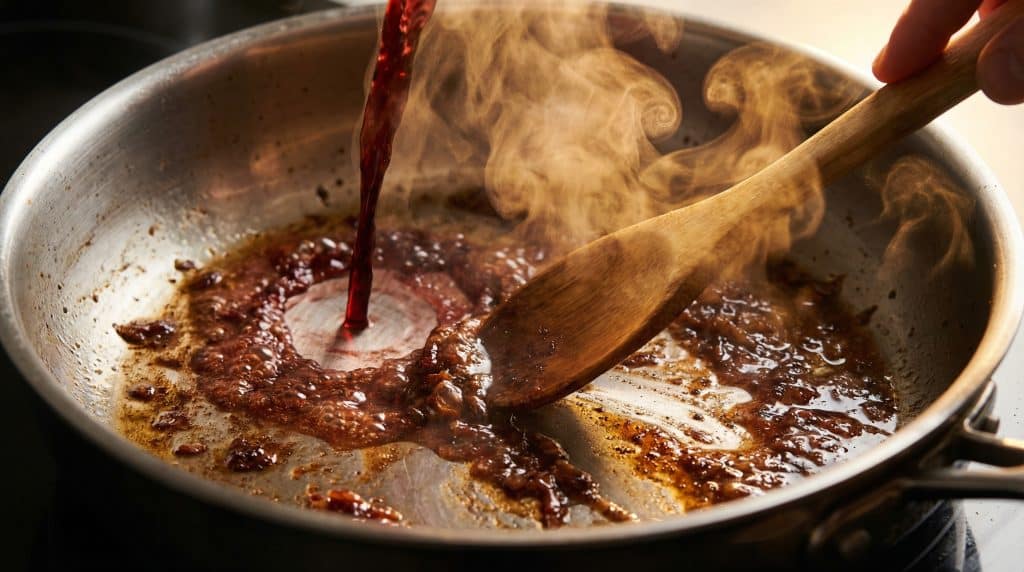
Simmer it for 2-3 minutes to marry the flavors, then and this part matters let it cool completely before it touches raw meat. Warm marinade + cold meat = bacteria’s favorite party.
Use about ½ cup of this thinned marinade per pound of meat.
Which Whiskey, Though?
Bourbon compared to Tennessee whiskey. The corn forward sweetness plays beautifully with pork and beef. Stick to 80-90 proof higher gets harsh, lower doesn’t contribute much. Honey whiskey works if you’re doing pork or chicken and want things sweeter, but I personally save the fancy stuff for drinking.
How Long to Marinate (This Is Where People Mess Up)
I’m going to be blunt: timing matters more than most people think, and sugar heavy marinades are less forgiving than plain ones.
Chicken is the diva of proteins. Boneless breasts need just 2-4 hours go past 6 and the texture gets weirdly soft, like meat that gave up on life. Bone in thighs and drumsticks can handle 4-8 hours because the bone and fat slow things down.
Beef is more chill. Steaks do well with 2-8 hours. For tougher cuts like flank, score the surface in a crosshatch pattern so the marinade has more to grab onto. Brisket and short ribs can go a full 12-24 hours that dense connective tissue can take it.
Pork splits the difference. Chops and tenderloin need 2-6 hours max. Past 8 hours, the surface starts going mealy, which is not the vibe.
Seafood is a whole different animal (literally). Shrimp and scallops need only 15-30 minutes. The acid will chemically “cook” the surface and turn everything rubbery if you go longer. Set a timer. I mean it.
How to Tell If You’ve Gone Too Far
- Surface looks grayish or weirdly translucent
- Meat feels mushy when you poke it
- Smells more fermented than fresh
If this happens, you can sometimes salvage things by trimming off the outer layer. Sometimes. No promises.
The Coating Method That Actually Works
Zip top bags are your friend. Add meat and marinade, seal most of the way, then dunk the bag in water to push out the air before sealing completely. Lay it flat in the fridge. Maximum contact, minimum fuss, and if you’ve coated everything properly, you don’t even need to flip.
One non-negotiable: pat the meat completely dry before grilling. I’m talking paper towels, both sides, until it looks barely shiny instead of wet. Wet sugar goes from “nicely caramelized” to “charcoal briquette” faster than you can say “where’s the fire extinguisher.”
Let it air dry on the counter for 10-15 minutes before grilling, but don’t exceed 30 minutes total outside the fridge.
Grilling Without Setting Everything on Fire
Here’s the science you need: sugar starts browning around 320°F and burns above 370°F. Which means all direct heat grilling is basically a recipe for “black outside, raw inside.”
Two zone heat is the move. Set one side of your grill to 400-450°F for searing, the other to 300-350°F for finishing. Sear 2-3 minutes per side over direct heat, then move to indirect until the meat is cooked through.
For really thick cuts (over 3 inches), reverse it: start on indirect heat for 15-20 minutes, then finish with direct heat to get that beautiful browning at the end.
Apply your finishing sauce in the last 2-3 minutes only. Brush lightly, grill a minute or two until it’s tacky, repeat once or twice. One thick coat will burn. Trust me on this.
Know Your Temperatures
Pull your meat 5-10°F below your target carryover cooking finishes the job while it rests.
- Chicken: Pull at 160°F, rest to 165°F (this one’s non-negotiable)
- Beef (medium rare): Pull at 125-130°F, rest to 130-135°F
- Pork: Pull at 140-145°F, rest to 145-150°F
Rest times: thinner cuts (¾ to 1 inch) need 3-5 minutes. Thicker cuts need 10-15. And resist the urge to tent with foil it’ll steam your beautiful crust into sad, soggy submission.
Leftover Sauce Storage
Sauce like easy homemade whiskey sauce that never touched raw meat keeps 7-14 days in the fridge. Making it a day ahead actually improves things the flavors meld overnight.
For longer storage, freeze in ice cube trays (about 2 tablespoons per cube). Good for 3 months.
Quick note on alcohol: most of it cooks off during simmering and grilling. What’s left is about as boozy as vanilla extract. But if you’re serving someone who avoids alcohol entirely, give them a heads up.
Go Make Something Delicious
Start with chicken thighs or pork chops this weekend both are forgiving and perfect for getting the hang of this method. Once you see that glossy, caramelized crust and taste the difference, you’ll never go back to plain old bottled sauce again.
And hey, if your first attempt doesn’t look Instagram perfect? It’ll still taste better than anything you could order. That’s the beauty of cooking with whiskey even the “failures” have a certain charm.