

Why Your One Pot Rice and Meat Keeps Turning Into Sad, Soggy Mush
Look, I get it. You followed the recipe. You measured your water like a responsible adult. And somehow you still opened the lid to find rice porridge instead of dinner.
Here’s the thing nobody tells you: meat is a snitch. It’s secretly dumping liquid into your pot while you’re not looking.
A single chicken thigh can release almost an ounce and a half of juice during cooking. That doesn’t sound like much until you realize the difference between fluffy rice and complete disaster is about 2-3 tablespoons of liquid. That’s it. That tiny margin is why your dinner keeps betraying you.
And once rice grains split open and release their starch? Game over. You’ve got paste now. No amount of hoping will fix it.
The Water Math (I Promise It’s Not Hard)
Here’s what I’ve learned after ruining more batches than I’d like to admit: when you’re cooking rice with meat, you need less water than your usual rice only ratio.
The basic formula:
- Rice alone usually wants 1 cup rice to 1.5 cups water
- Rice WITH meat? Start with 1 cup rice to 1.25 cups water
That’s roughly 3 tablespoons less. Your meat is bringing the rest to the party.
Adjust based on what you’re cooking:
- Lean meat (chicken breast, pork tenderloin): reduce water by about 2-3 tablespoons
- Already browned and drained ground meat: reduce by about 1 tablespoon
- Fatty cuts (thighs, pork shoulder, that 80/20 ground beef): reduce by about 4 tablespoons
Here’s the annoying truth: every rice cooker and Instant Pot is a little different. If your first batch comes out wet, cut another tablespoon next time. Too dry? Add one back. You’re allowed to experiment. The rice police aren’t coming.
Where You Put the Meat Actually Matters
I know, I know—it seems like it shouldn’t make a difference. But trust me on this one.
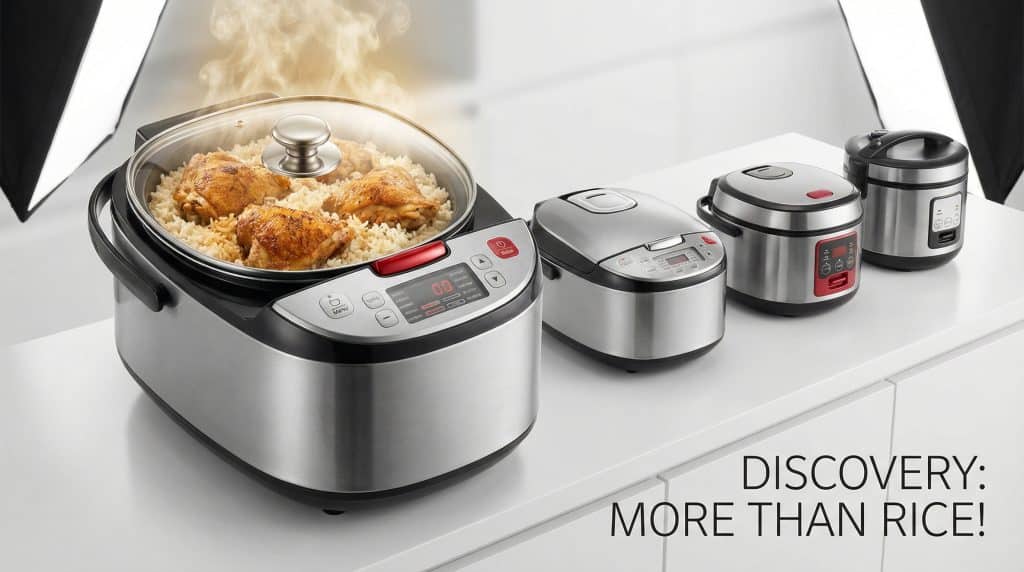
For chunks or pieces: Meat goes on the bottom in a thin, even layer for a lazy chicken and rice cooker meal. Rinsed rice goes on top. Don’t stir them together. The meat sits in the hottest zone, cooks faster, and your rice gets to steam peacefully above it.
For ground meat: Brown it first (sauté mode or a separate pan), then drain the fat before adding your rice. Raw ground meat can form this greasy layer that traps steam against the grains, and then you’ve got problems.
One more thing: don’t go crazy with the meat to rice ratio. Keep ground meat under 50% of the volume, cubed pieces around 25-40%. And cut everything into pieces no bigger than an inch—large chunks release liquid unevenly and create random wet pockets. Nobody wants bite roulette.
Three Tiny Habits That Make All the Difference
- Rinse your rice until the water runs clear. Two or three rinses removes that surface starch that turns gummy when extra liquid shows up. Tap the strainer afterward to knock off clinging water those drops count.
- Do not open the lid. I know you want to peek. I know. But every time you lift that lid, you drop the temperature, release steam, and throw off the whole cooking cycle. Walk away. Text a friend. Do literally anything else.
- Let it rest before you fluff. When the cooker clicks off, leave the lid on for 5-10 minutes. The steam evens out and the grains firm up. But don’t push past 10 minutes or things start getting wet again. When you do fluff, lift straight up with a fork instead of stirring—stirring breaks grains and releases starch.
These habits are boring. They’re also the difference between “wow this is great” and “I guess we’re ordering pizza.”
Instant Pot Users, Listen Up
Pressure cookers are a whole different beast. They force rice to absorb liquid faster, which means you need even LESS water than usual—about 15-20% less.
For 1 cup of rice with high moisture meat, you’re looking at roughly 0.85-0.9 cups of water. I know that sounds insane. Trust the process.
The crucial part: use a 10 minute natural pressure release. Quick release holds steam against the rice and basically guarantees mush. Then wait another 5 minutes before fluffing.
Oh, and avoid any setting that says “Glutinous,” “Sticky,” or “Sushi” for regular jasmine or long grain rice. Those modes push starch out and that’s not what we want. Stick with “Regular White,” “Jasmine,” or “Normal.”
Pick a Forgiving Rice
Not all rice is created equal when it comes to one pot cooking.
Your best friends: Jasmine and basmati. They’re lower in starch, clump less, and respond well to rinsing. They’re basically the golden retrievers of rice—cooperative and hard to mess up.
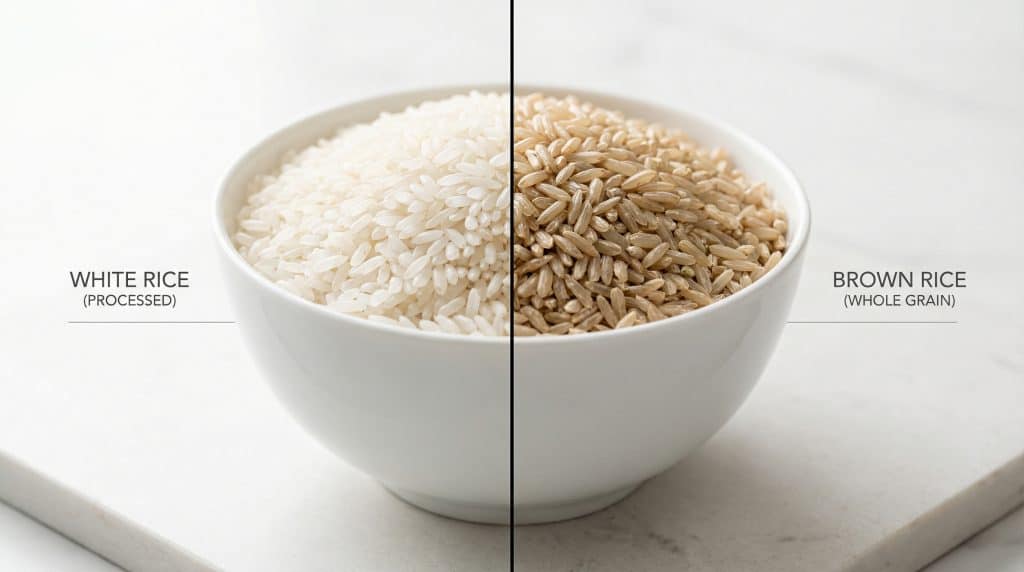
Skip these for one pot meals: Short grain white rice absorbs water too fast and turns pasty when extra liquid shows up. Brown rice cooks 15-20 minutes longer, which gives meat way more time to release liquid into your pot.
Stack the odds in your favor from the start.
How to Know If You Nailed It
Well cooked grains look translucent with no chalky white center. They compress slightly when pinched but keep their shape.
Try the pinch test: squeeze one grain between your thumb and forefinger. It should squish a little but still look like a grain. If it smears into paste or dissolves, it went too far.
Also check the bottom of the pot. Standing water = too much liquid. Dry rice with chalky centers = not enough.
When Things Go Wrong (Because Sometimes They Will)
If it’s just a little waterlogged but the grains still hold their shape: Spread the rice on a parchment lined sheet pan and refrigerate uncovered for 20 minutes. Reheat covered with a paper towel in the microwave, one minute at a time.
If there’s standing water and grains are starting to split: Heat your oven to 325°F. Spread the rice on parchment no thicker than 1/8 inch. Bake in 5 minute bursts until it dries out.
If the grains burst when you touch them: Start over. I know that’s not what you want to hear, but fresh rice takes 30-40 minutes—about as long as a rescue attempt—and it’ll actually taste good. If more than 15% of grains fail the pinch test, cut your losses.
Turn Your Failure Into Dinner Anyway
Here’s a secret: mushy rice isn’t trash. It’s just dinner in a different costume.
Chilled mushy rice actually makes excellent fried rice—the stickiness helps everything hold together. It’s also basically halfway to congee already, so simmer it with broth (1:3 ratio) for 15-20 minutes and call it comfort food.
Stir half a cup into soup and it thickens beautifully. In casseroles, the stickiness binds with cheese and cream sauce better than perfectly cooked rice ever could.
Even your kitchen fails can still be delicious. That’s the whole point.