





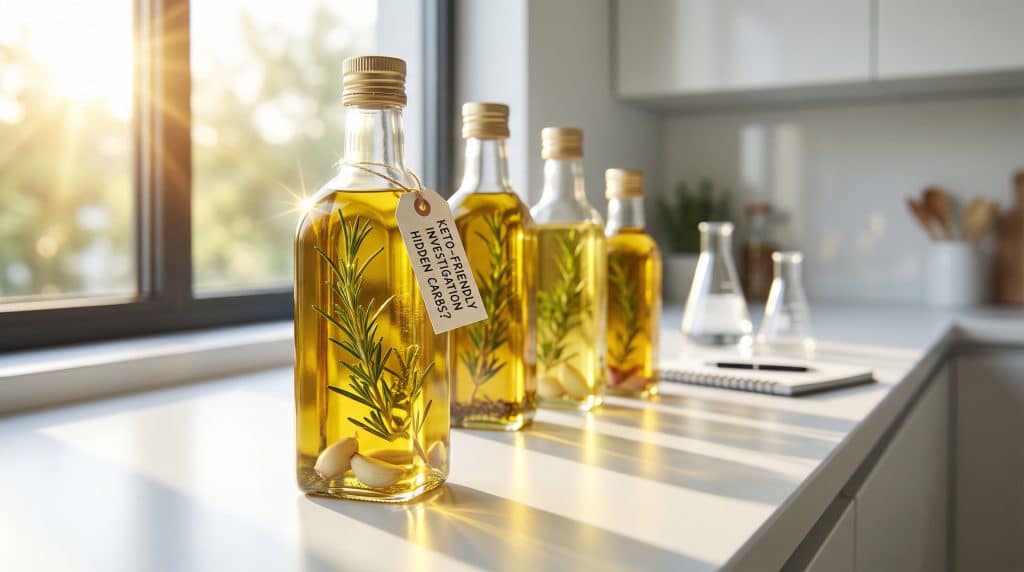

Which Infused Oils Are Actually Keto Safe? (And Which Ones Are Lying to You)
So you’re drizzling that gorgeous rosemary infused olive oil on your steak, feeling like a keto goddess, and then someone on Reddit casually mentions that some infused oils have hidden carbs and suddenly you’re spiraling at 11pm googling truffle oil macros.
Been there. Let me save you the anxiety.
Here’s the good news: about 90% of herb infused oils have essentially zero carbs. The bad news? The other 10% are sneaky little saboteurs hiding 4-6 grams per tablespoon. The difference comes down to what’s floating around in that pretty bottle and once you know what to look for, you’ll never stress about it again.
The Quick and Dirty Shopping Guide
Let me just give you the cheat sheet first, because I know you’re probably reading this on your phone in the grocery store aisle right now.
Grab these without guilt:
- Any oil infused with just dried herbs or spices
- Chili oils (unless they’ve snuck sweetener in check the label)
- Plain olive, avocado, or coconut oil as your base
Walk away from these:
- Honey or agave infused oils (4-6g carbs per tablespoon yikes)
- Citrus oils made with juice concentrate (2-3g per tablespoon)
- Sweetened chili oils (looking at you, trendy hot honey oils)
- Anything with caramelized garlic or onion (cooking concentrates their sugars)
- “Natural flavors” with zero explanation (what are you hiding, label?)
The truffle oil trap that drives me bonkers: Most commercial truffle oils don’t contain actual truffles. They’re synthetic aroma mixed with thickeners like gum arabic or modified starch, which can sneak in 0.5-1g of carbs even when the label proudly says “0g.” If you’re a truffle oil person (no judgment, I get it), look for bottles listing real truffle pieces.
Why Most Infused Oils Are Fine
Here’s the thing: pure cooking oils olive, avocado, coconut, MCT are basically 100% fat. Zero carbs, zero protein. The oil itself isn’t the problem.
When you steep rosemary in olive oil, the oil pulls out the fat soluble flavor compounds and leaves the carbs behind in the plant material you strain out. It’s like the oil takes a flavor vacation and comes back with souvenirs but no baggage. That’s why basil infused olive oil can honestly read 0g carbs.
One nerdy thing worth knowing: The FDA lets labels say “0g carbs” if a serving has less than 0.5g. At a tablespoon or two a day? Who cares. But if you’re the type who uses four tablespoons of garlic oil daily (I see you, and I respect the commitment), those rounded down amounts can add up to 1-2g you didn’t count.
Fresh Garlic: The Gray Area Nobody Talks About
Dried herbs like rosemary, thyme, and oregano are totally safe most of their water is already gone, and how cooking changes carbs is why their carb contribution is negligible.
Fresh garlic, though? Garlic carb breakdown starts at about 1g of carbs per clove. Infuse a bottle with 8-10 cloves, and that spreads across the whole thing at roughly 0.5g per tablespoon (usually rounded to “0g” on labels). For most people, this is fine. But if you’re doing strict keto under 20g daily and you’re generous with that garlic oil, it’s worth a mental note.
How to Read Labels Without Getting a Headache
You don’t need to become a food scientist. Just do this:
Check the serving size first. One tablespoon is normal. If the serving size is half a teaspoon, they’re playing games to make the numbers look better. (Who uses half a teaspoon of oil? Nobody. That’s who.)
Scan for red flags: Maltodextrin, dextrose, modified food starch, corn syrup, or mysterious “natural flavors” with no explanation. These are how carbs sneak in while the nutrition panel still looks clean.
Do the math for your actual usage. If you use three tablespoons and each has 0.5g that got rounded down, that’s 1.5g you’re not tracking.
Quick Notes on Cooking With Infused Oils
I’ll spare you the chemistry lecture, but here’s the practical stuff:
Infusing an oil can lower its smoke point because tiny herb particles burn before the oil does. If you’re getting bitter, burnt flavors, turn down the heat.
My lazy rule: Use infused oils for dressings, finishing, and light sautéing. For high heat searing, use plain refined avocado oil. Save your fancy rosemary oil for drizzling at the end when you can actually taste it.
Also, strain your homemade oils really well getting those herb bits out can raise the usable smoke point by 25-50°F.
Don’t Let Your Oil Go Rancid (Please)
Commercial infused oils: follow the expiration date, and once opened, use within 2-3 months. Keep them away from light and heat.
Homemade herb oils with dried ingredients: 4-6 weeks in the fridge, or 2-3 weeks at room temperature.
The sniff test is real: If your oil smells musty, metallic, or just off, throw it out. Rancid oil isn’t just gross oxidized fats can increase inflammation and basically work against everything you’re trying to do with keto. Not worth it.
Make Your Own (It’s Cheaper and You’ll Know Exactly What’s In It)
Homemade infusions cost roughly $0.15-0.25 per tablespoon versus $0.50-1.50 for store bottles. Plus, zero carb mysteries.
But first, a safety thing I cannot stress enough: Homemade garlic oil creates perfect conditions for botulism bacteria because of the low acid, oxygen free environment. (I know, I know but I’d rather be the annoying friend who tells you than have you get sick.) Commercial versions are safe because they’re acidified and pasteurized. For homemade garlic oil or any infusion with fresh ingredients, refrigerate immediately and use within 2-3 days. Never leave it at room temperature. Or just use dried garlic and skip the stress entirely.
The easy cold method:
- Mix 2-3 tablespoons dried herbs per cup of oil in a glass jar
- Seal it, stick it in a dark cabinet for 7-10 days
- Strain through cheesecloth
That’s it. Carb addition is about 0.04g per tablespoon basically nothing.
The Bottom Line
If you’re doing strict keto under 20g daily: make your own cold infused oil with dried herbs and don’t give it another thought.
If you’re doing standard keto (20-50g daily): store bought garlic or herb oils are totally fine if the label shows 0g carbs and the ingredient list is short and boring.
If you’re a heavy user (3+ tablespoons daily): making your own saves money and eliminates any carb guesswork.
That’s it. You can now drizzle with confidence and stop second guessing every bottle in your pantry. Your keto journey has enough things to worry about infused oils don’t need to be one of them.