






BBQ Sauce Gone Wrong? Let’s Fix It.
Look, I’m just going to say it: we’ve all been there. You’re stirring your homemade BBQ sauce, feeling like a culinary genius, and then you taste it and… oh no. It’s either liquid candy or something that could strip paint off a fence.
Here’s the good news: a wonky BBQ sauce is the easiest kitchen disaster to rescue. You don’t need to start over (yet). You just need to figure out what went sideways and nudge it back.
First, Figure Out What’s Actually Wrong
A good BBQ sauce lives in that sweet spot between sweet and tangy. When one side wins, you’ll know immediately.
Too sweet? Your sauce will look darker, glossier, almost syrupy. It’ll coat your tongue like you just licked a lollipop and completely bury any smoke or spice. This usually happens when you let it simmer too long, or be honest you packed that brown sugar into the measuring cup like you were building a sandcastle.
Too tangy? It’ll be thinner, sharper, and hit the front of your tongue with that “whoa, okay, too much” pucker. This is what happens when vinegar goes rogue or you didn’t simmer long enough to mellow things out.
Quick sanity check: if you’ve already made three or four adjustments and it still tastes weird, stop. Label that batch as marinade and note ratios and timing (it’ll be fine for that), and start fresh with a half batch. Sometimes you just gotta cut your losses. But if you caught it early? We can work with this.
Fixing a Sauce That Tastes Like Dessert
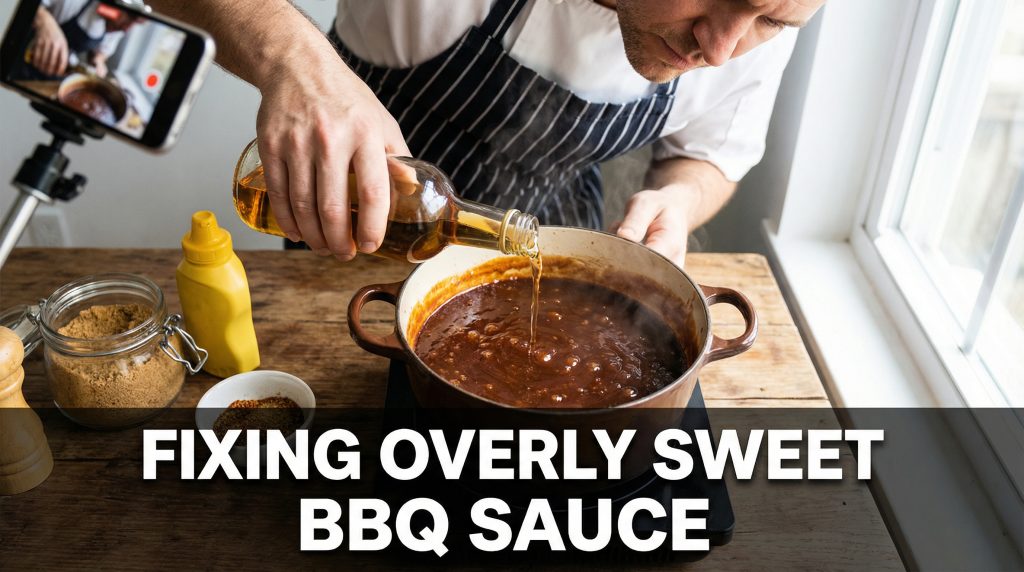
Acid is your best friend here. It won’t remove the sugar that ship has sailed but it’ll create enough contrast that the sweetness stops hogging the spotlight.
Start with apple cider vinegar. Add 1 tablespoon per cup of sauce, stir it in, let it sit for about five minutes, then taste. Apple cider vinegar is my go to because it’s got that mild fruitiness that actually belongs in BBQ. If it’s really sweet, you can go up to 2 tablespoons per cup, but add it in steps. Don’t just dump.
Still too sweet? Yellow mustard (1-2 tablespoons per cup) adds acidic bite without making it taste like salad dressing. Or try a splash of Worcestershire or soy sauce (1-2 teaspoons per cup) to build some savory depth.
Heat helps too. A little cayenne, hot sauce, or chipotle powder makes sweetness feel less overwhelming. Chipotle is especially good here because the smokiness distracts from the sugar situation. (I once saved a batch this way and honestly, it ended up being one of my favorites. Happy accidents.)
Last resort: If your sauce is thick enough to stand a spoon in, thin it with a few tablespoons of plain tomato sauce per cup. Skip ketchup that’s just adding more sugar to the sugar problem.
Taming a Sauce That Makes Your Face Pucker
This one’s a little easier because sweetener is the obvious fix. But fat and body also smooth out that sharpness without turning it into candy.
Brown sugar first. Add 1 tablespoon per cup, stir it in, and simmer for 2-3 minutes until it’s fully dissolved. Dark brown sugar works better than light because the molasses actually softens the sharpness rather than just piling on sweetness. Add more in half tablespoon increments if needed.
Honey or molasses both work great too. Honey (add it off heat for best flavor) brings a light floral note that’s nice with fruity sauces. Molasses goes deeper and darker perfect for homemade whiskey glaze.
Butter is magic. Seriously. Stir 2 tablespoons of unsalted butter into warm sauce and watch that acid bite just… relax. Bacon fat works too if you want extra smokiness. (Fair warning: sauces with added fat don’t keep as long use within a week.)
For really aggressive tang: Simmer the sauce uncovered over medium low for 5-15 minutes. The heat cooks off some of that sharp vinegar edge while everything else thickens. Just stir so it doesn’t scorch.
Emergency nuclear option: Baking soda neutralizes acid. But I’m putting this last for a reason it’s risky. Dissolve 1/8 teaspoon in a tablespoon of water and add it drop by drop while stirring. It’ll foam as the acid reacts. Stop when the foaming stops. Too much baking soda creates a soapy, metallic taste you absolutely cannot fix, and then you’ve really ruined the pot. Only try this after everything else has failed.
Quick Note on Regional Styles
Before you go adjusting, remember that different BBQ styles are supposed to taste different:
- Kansas City sauce is meant to be sweet, thick, and molasses heavy. That’s not a flaw, that’s the point.
- Carolina vinegar sauce is supposed to be sharp it cuts through rich smoked pork. Only sweeten it if it tastes bitter or burnt.
- Memphis style balances tomato and vinegar with sweetness in the background.
- Carolina Gold gets its kick from mustard and vinegar. Fix with more mustard or a little honey, not more acid.
Know your target before you start “fixing” something that was already correct.
The Golden Rule: Go Slow
Here’s the thing that separates a rescued batch from a ruined one: patience.
Pull out a half cup test portion first. Add strong stuff (Worcestershire, hot sauce, spices) by the teaspoon. Add liquids and sugars by the tablespoon. Stir, wait 2-5 minutes, then taste again. One ingredient at a time.
For sweet sauce: add acid first, then heat or savory elements, then thin at the end if needed.
For tangy sauce: add sweetener first, then fat, then simmer, then baking soda only as a desperate Hail Mary.
The Real Test: Put It on Wings
Tasting sauce from a spoon is fine, but the real test? Toss some cooked chicken wings in it and eat them.
Bake wings at 425°F for about 25 minutes, warm your sauce to around 130°F, and toss. A balanced sauce clings evenly and looks more matte than shiny. If it’s still glossy and wet, probably still too sweet add more acid. If it’s slick but dull, still too acidic touch more honey.
Also taste it warm, because that’s how BBQ sauce gets served. If it tastes fine at room temp but goes sugary when heated, add a splash more vinegar.
You’ve Got This
Look, fixing an off balance sauce isn’t magic. It’s just identifying the problem and adding the fix slowly instead of panicking and throwing in everything at once (been there, learned that lesson).
And honestly? A sauce that’s slightly off your ideal target can still taste amazing on actual food, where the meat and smoke and sides round out the whole experience. So don’t stress too much.
Next time your sauce goes sideways, take a breath, grab a spoon, and work through it. Your rescued batch will be worth the effort and you’ll feel like a genius when you pull it off.