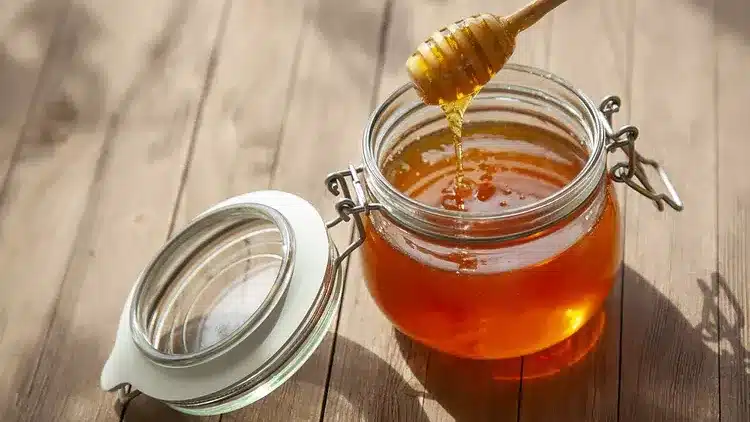


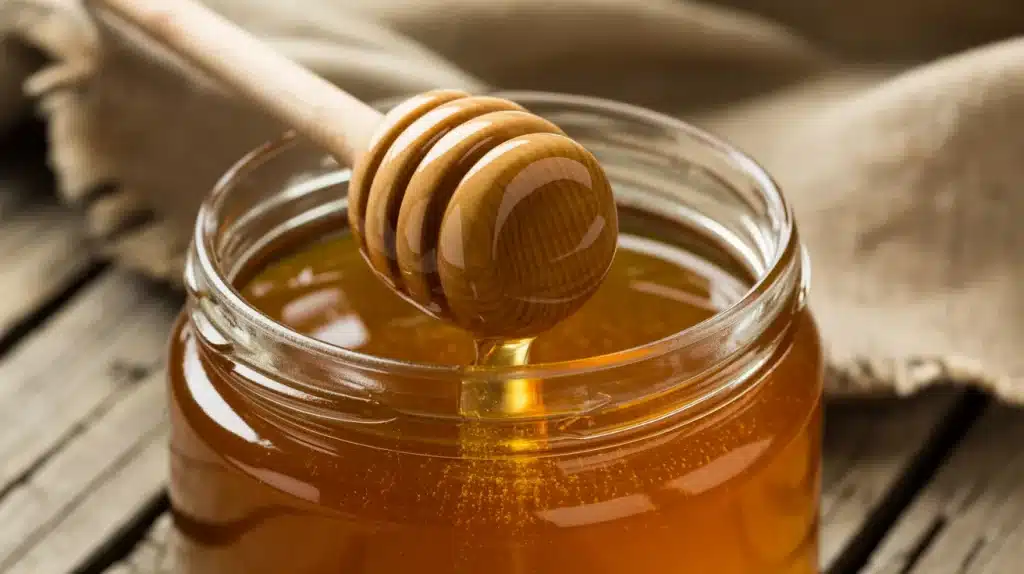

You grab your honey, flip the bottle, and nothing moves. It’s thick, grainy, maybe even solid. Naturally, you assume something’s gone wrong.
It hasn’t.
Honey crystallizing is completely normal. In fact, it’s a natural process that happens over time, especially in raw or unprocessed honey.
Before you throw it out, it’s worth understanding what’s really happening. This explains why honey crystallizes, what speeds up the process, and how to deal with it properly without overcomplicating the science.
What is Honey Crystallization?
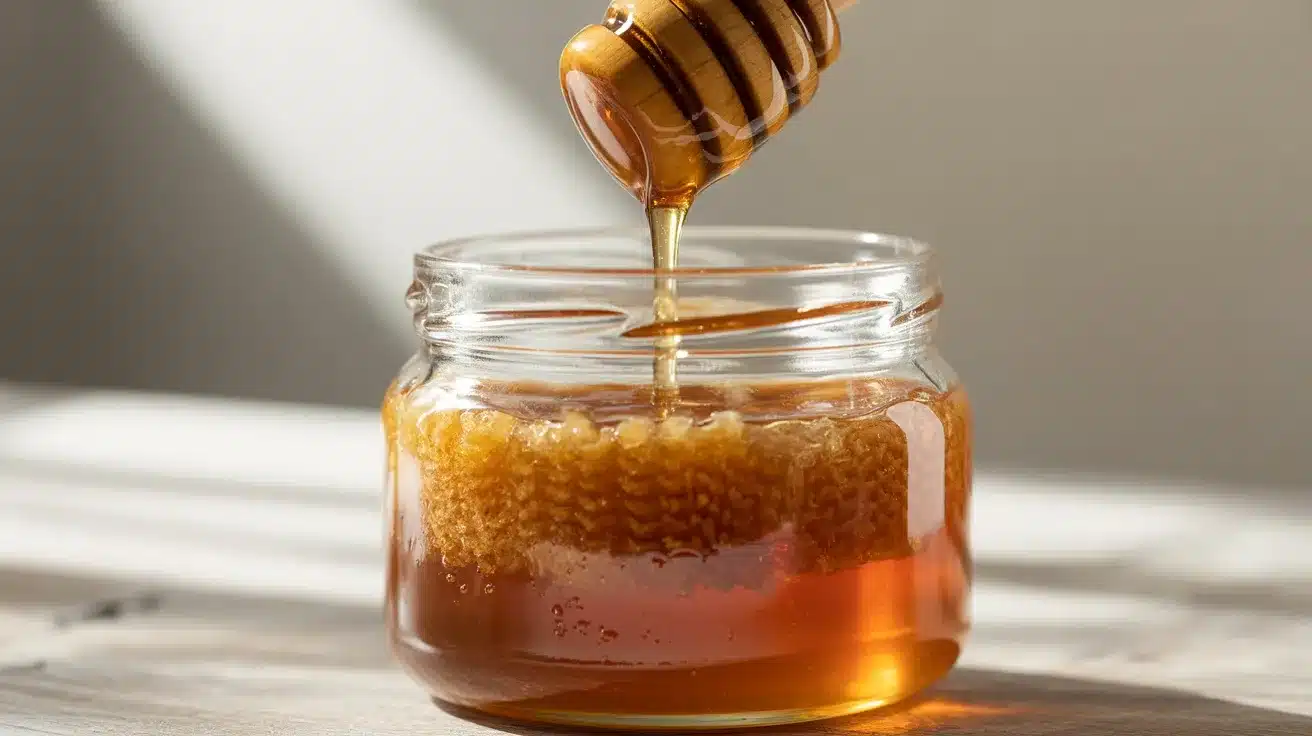
Honey crystallization is when liquid honey turns into a thick, grainy, or semi-solid texture over time. It can happen slowly or surprisingly fast.
It can happen slowly or surprisingly fast, depending on the type of honey and how it’s stored. To understand why it happens, you need to look at what honey is made of.
In many cases, crystallization is actually a sign of real, minimally processed honey.
The Science Behind Why Honey Crystallizes
Most people assume honey changes because something went wrong, but the real reason is much simpler. It all comes down to how sugar and water behave inside honey over time. And you don’t need a chemistry degree to understand this.
Honey is basically a sugar overload
Honey contains about 70–80% sugar and only about 17–20% water. That means it holds way more sugar than the water in it can comfortably dissolve. It’s similar to dissolving too much sugar in too little water; eventually, it starts to separate. The same thing happens to honey over time.
Glucose vs Fructose: This is the Key
Honey has two main sugars: glucose and fructose. Fructose likes to stay liquid. Glucose does not. Glucose is less stable in water and wants to separate out. When glucose separates, it forms tiny crystals that serve as a base for additional crystals to grow on, eventually spreading throughout the entire jar. That’s how the whole jar eventually turns solid.
What Factors Affect How Fast Honey Crystallizes?
Honey doesn’t crystallize at a fixed rate; it depends on a few key conditions working together.
If you’ve ever wondered why honey crystallizes, these factors explain why some honey stays liquid for months while others turn solid quickly.
- Temperature: Honey crystallizes fastest between 10–15°C. This is basically fridge temperature. If you’re storing honey in the fridge, that’s probably why it turned solid.
- Glucose content: The more glucose a honey has, the faster it crystallizes. Different flowers produce different sugar ratios, so honey from different plants behaves differently.
- Tiny particles: Pollen grains, air bubbles, and traces of beeswax give glucose crystals something to grab onto and grow around. More particles = faster crystallization.
- Processing: Heavily filtered commercial honey has most particles removed, so it stays liquid much longer.
Why Raw Honey Crystallizes Faster
Raw honey is barely processed. It still has its natural pollen, tiny wax particles, and trace minerals, all of which accelerate crystallization. Store-bought honey is usually heated and filtered to remove these and keep it looking clear on shelves for longer.
Raw honey crystallizing quickly is actually a good sign. It means it hasn’t been over-processed and still has its natural structure intact.
So if your raw honey turned solid within a few weeks, that’s not a defect. It’s simply behaving the way natural honey should.
Is Crystallized Honey Bad or Unsafe?
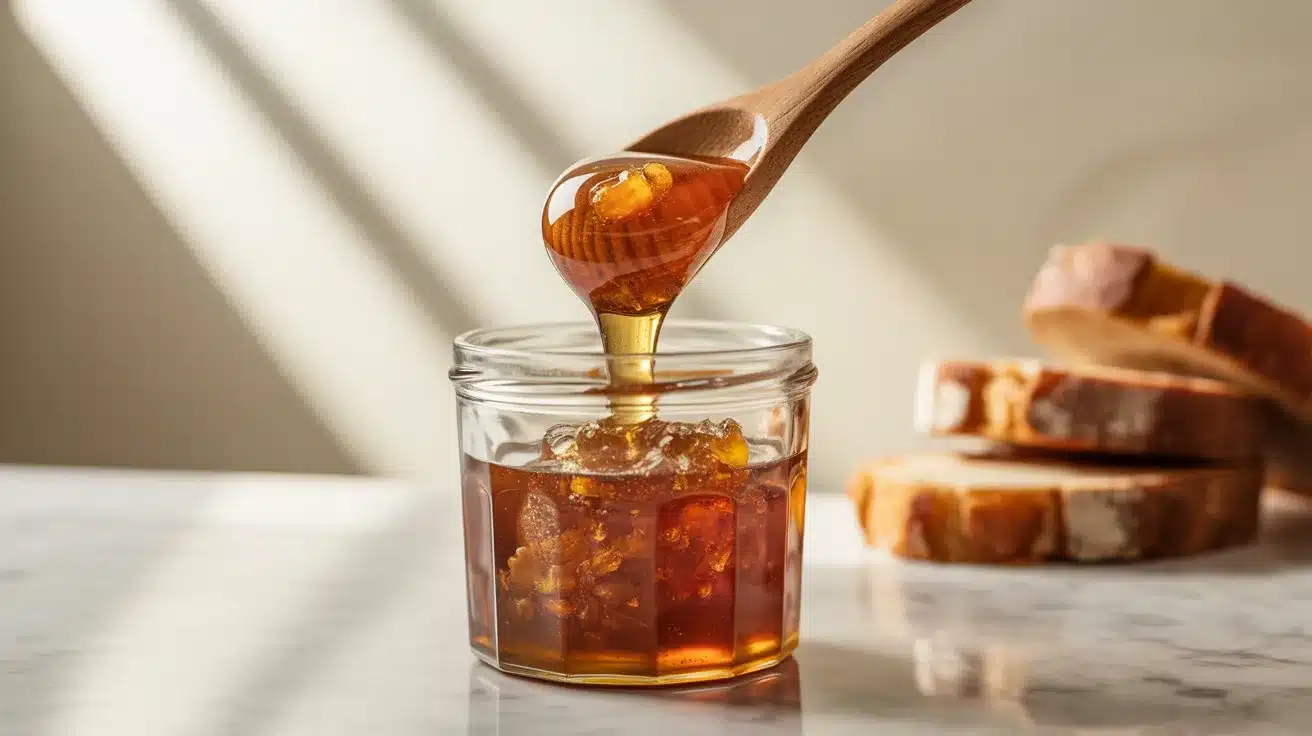
No. Full stop.
Crystallized honey is 100% safe to eat. The nutritional value is the same. The taste is the same. The only thing that changed is the texture.
Real honey resists spoilage because of its low moisture content and natural antibacterial properties. As long as no water or contaminants are introduced, it remains stable for a very long time, even if it crystallizes.
How to Fix Crystallized Honey
If the texture bothers you, fixing crystallized honey is simple and doesn’t require anything complicated. The key is to use gentle heat so the crystals melt without damaging the honey. Follow the process carefully:
- Place your honey jar (lid on) in a bowl of warm water, not boiling, just warm. Let it sit for 15–30 minutes, stirring occasionally.
- Don’t rush it with boiling water or on high in the microwave. Overheating above 40°C can destroy natural enzymes and hurt the flavor.
- Stir gently to break up crystals faster.
Done right, your honey will return to a smooth, pourable texture without losing its quality. Just remember, low heat and patience matter more than speed here.
How to Prevent Honey from Crystallizing
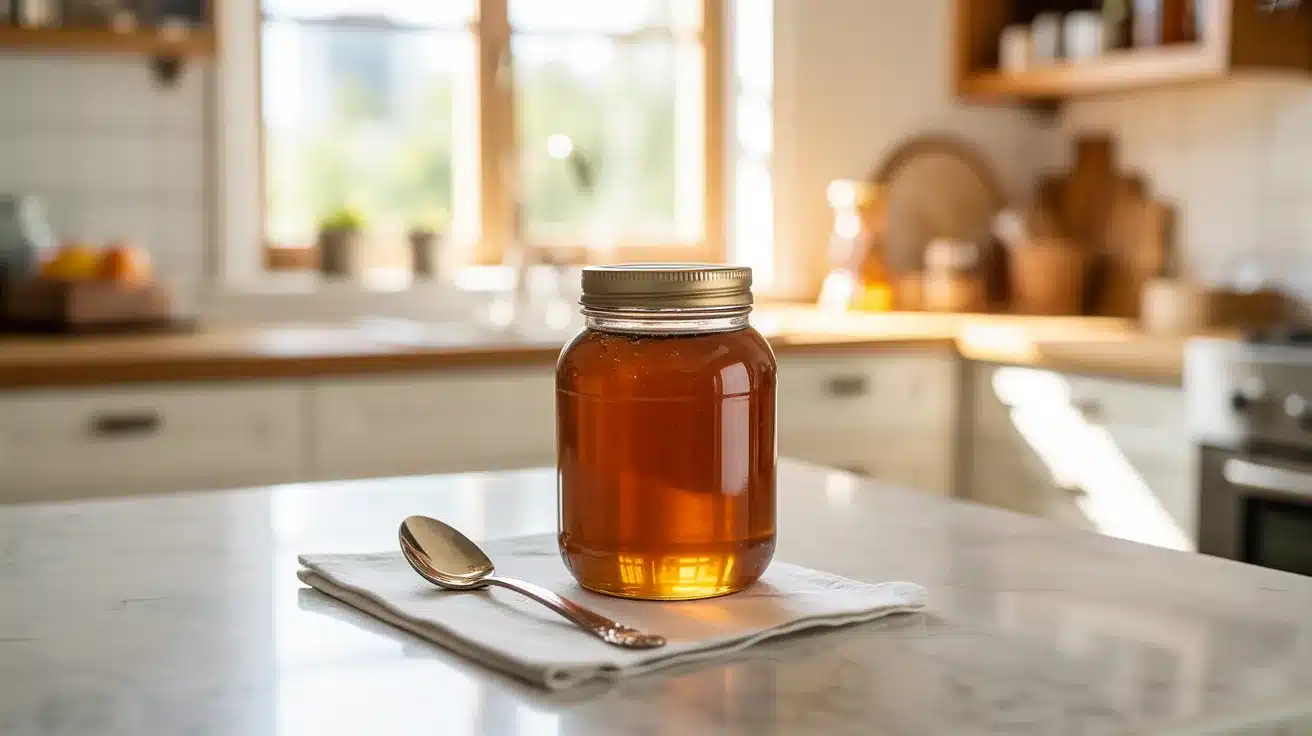
You can’t completely stop honey from crystallizing, but you can slow the process down significantly with the right habits. Most of it comes down to storing your honey properlyand avoiding conditions that trigger faster crystal formation.
- Store honey at room temperature, not in the fridge
- Keep the lid tightly sealed to block moisture
- Always use a clean, dry spoon; water speeds things up
- Keep it away from cool spots like AC vents or a cold windowsill
These small adjustments make a noticeable difference in how long your honey stays smooth and liquid. Store it properly, and you’ll delay crystallization without needing to constantly fix it later.
Why Store-Bought Honey Stays Liquid Longer
Commercial honey is heated and fine-filtered to remove pollen and particles, basically all the natural “seeds” that crystals grow around. This gives it a longer shelf life and that clear, pourable look.
The trade-off is that it loses some natural pollen content and enzymes in the process. It’s not inferior, just processed differently. Raw honey skips most of this, which is why it behaves more naturally and crystallizes faster.
Final Thoughts
Crystallized honey is one of the most misunderstood things in the kitchen. People see a solid jar and assume the worst. But it’s completely normal, totally safe, and often a sign you’ve got good honey.
The science is simple: too much glucose, not enough water, natural particles doing their job. If it bothers you, a warm water bath fixes it in minutes. If it doesn’t, just scoop it out and enjoy it.
Either way, don’t throw it out.
Frequently Asked Questions
Does Pure Honey Crystallize?
Yes, pure honey naturally crystallizes over time due to its glucose content. In fact, faster crystallization often indicates less processing and higher quality.
How Long Does it Take for Honey to Crystallize?
It depends on the type of honey and storage conditions. Some honeys crystallize in a few weeks, while others can stay liquid for months.
Can You Turn Crystallized Honey Back into Liquid?
Yes, you can gently warm it using a warm water bath to dissolve the crystals. Avoid high heat, as it can damage the honey’s natural properties.
Why Does Honey Crystallize Faster in the Fridge?
Cold temperatures speed up the crystallization by making it easier for glucose to separate from water. Storing honey in the fridge almost guarantees it will turn solid faster.