

Walking into a coffee shop and ordering a cold drink can feel overwhelming with so many options on the menu.
Iced lattes have become one of the most popular cold coffee drinks, yet many people are still unsure how they differ from iced coffee or cold brew.
An iced latte is an espresso-based drink made with milk and ice, giving it a creamy texture and a smooth, balanced coffee flavor.
It is typically less intense and less bitter than other cold coffee options, making it an easy choice for many coffee drinkers.
While iced coffee and cold brew offer bolder flavors, iced lattes stand out for their silky mouthfeel, customizable flavors, and café-style taste that works well any time of day.
What Is an Iced Latte?
An iced latte is a cold coffee drink made using espresso, cold milk, and ice. It starts with espresso, which is a concentrated form of coffee brewed under high pressure.
Most iced lattes use a ratio of about one part espresso to three parts milk, though this can vary by café. A typical serving includes one or two shots of espresso, ice, and enough milk to fill the glass.
The hot espresso is poured over ice, then mixed with cold milk, cooling it instantly. The result is a smooth, creamy drink with a mild coffee flavor.
Milk reduces bitterness, adds natural sweetness, and creates a thicker, velvety texture that sets iced lattes apart from other cold coffee drinks.
What Are Iced Coffee and Cold Brew?
While iced lattes are built on espresso and milk, iced coffee and cold brew rely on different brewing methods, which give each drink a distinct taste and body.
Iced coffee is made by brewing regular coffee with hot water using methods like drip, pour-over, or French press, then cooling it and serving it over ice.
Because little to no milk is used, the flavor is bold and direct. It has brighter acidity and a lighter body compared to an iced latte.
Cold brew is prepared by steeping coarse coffee grounds in cold or room-temperature water for 12 to 24 hours.
This slow process creates a smooth, low-acid coffee with subtle sweetness and chocolatey notes. Cold brew is strong and full-bodied, but still less creamy than an iced latte unless milk is added.
Although all three drinks are served cold, iced lattes are the only option that uses espresso and treats milk as a core ingredient rather than an add-on.
Iced Latte vs Iced Coffee vs Cold Brew: Key Differences
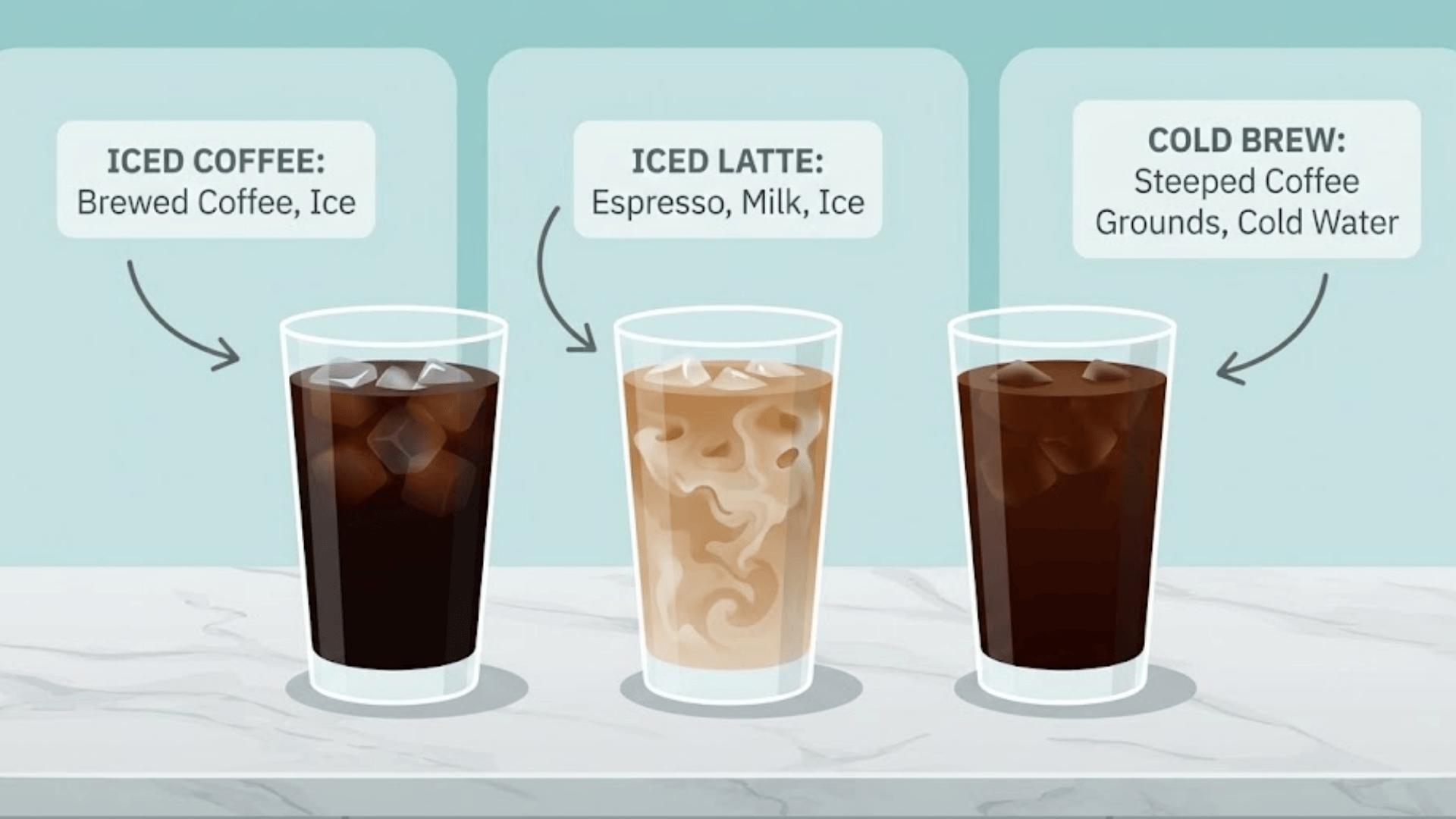
These cold coffee drinks may look similar, but differences in ingredients, preparation, caffeine, and mouthfeel create very different drinking experiences.
1. Ingredients
The main ingredients in each drink determine how creamy, strong, or smooth the final coffee tastes and feels.
| Drink | Main Ingredients | Milk |
|---|---|---|
| Iced Latte | Espresso, milk, ice | Main ingredient |
| Iced Coffee | Brewed coffee, ice | Optional |
| Cold Brew | Coffee grounds, cold water | Optional |
Because milk is essential in iced lattes, they naturally feel richer and smoother than drinks built mainly on brewed coffee.
2. Brewing Methods
Brewing methods control extraction, strength, and smoothness, making them one of the biggest differences between cold coffee drinks.
-
Iced Latte: Espresso brewed quickly, then combined with ice and cold milk
-
Iced Coffee: Hot-brewed coffee cooled and served over ice
-
Cold Brew: Coffee steeped in cold water for 12–24 hours
Fast espresso brewing gives iced lattes balance, while slower methods produce stronger or smoother flavors depending on extraction time.
3. Caffeine & Acidity
Caffeine strength and acidity affect energy levels, digestion, and comfort, especially for people sensitive to strong coffee.
| Drink | Caffeine (16 oz) | Acidity Level |
|---|---|---|
| Iced Latte | ~150 mg | Medium |
| Iced Coffee | ~165–200 mg | High |
| Cold Brew | ~200–300 mg | Low |
Iced lattes offer moderate caffeine with softened acidity, while cold brew suits high-energy needs, and iced coffee delivers sharper intensity.
4. Taste & Texture
Taste and texture define how enjoyable a drink feels, especially when choosing between creamy, bold, or smooth coffee styles.
-
Iced Latte: Creamy, smooth, and velvety
-
Iced Coffee: Bold, bright, and lighter-bodied
-
Cold Brew: Smooth, strong, and fuller-bodied
Milk gives iced lattes a thicker, smoother mouthfeel, setting them apart from the sharper texture of other cold coffee drinks.
5. Quick Summary
This summary highlights the main differences to help quickly decide which cold coffee drink best matches personal taste preferences.
| Feature | Iced Latte | Iced Coffee | Cold Brew |
|---|---|---|---|
| Coffee Base | Espresso | Brewed Coffee | Cold Brewed Coffee |
| Taste | Creamy & Balanced | Bold & Bright | Smooth & Strong |
| Texture | Thick & Velvety | Light & Thin | Heavy but Smooth |
| Best For | Creamy coffee lovers | Strong coffee taste | Low-acid, high caffeine |
Each drink serves a different purpose, but iced lattes remain the most balanced option for smooth flavor and everyday enjoyment.
Similarities Between Iced Latte, Iced Coffee & Cold Brew
Even though these drinks are prepared using different methods, they share several important similarities.
All three are served cold over ice, making them refreshing alternatives to hot coffee. They’re especially popular in warmer weather but remain available year-round at most cafés.
Each drink is made from coffee beans. The differences come from brewing techniques, extraction methods, and ingredient ratios rather than the beans themselves.
All three can be customized with milk, including dairy and non-dairy options like oat, almond, or soy. Sweeteners, flavored syrups, and add-ins are also commonly used.
These drinks appear on nearly every café menu and represent the most popular ways people enjoy cold coffee in everyday settings.
Ingredients You’ll Need
|
How to Make an Iced Latte at Home
This simple five-step method explains how to make a smooth, café-style iced latte at home using basic ingredients and easy techniques.
Step 1: Brew the Coffee

Brew 1–2 shots of espresso or make very strong coffee using a Moka pot, AeroPress, or French press. The coffee should be concentrated so its flavor stays bold after ice and milk are added.
Step 2: Fill the Glass with Ice

Choose a 16-oz glass and fill it about three-quarters full with ice cubes. Using enough ice helps chill the espresso immediately and keeps the drink cold without becoming watered down too fast.
Step 3: Add Espresso

Slowly pour the hot espresso directly over the ice. This rapid cooling method reduces bitterness, keeps the coffee smooth, and creates a balanced base for the iced latte.
Step 4: Add Milk
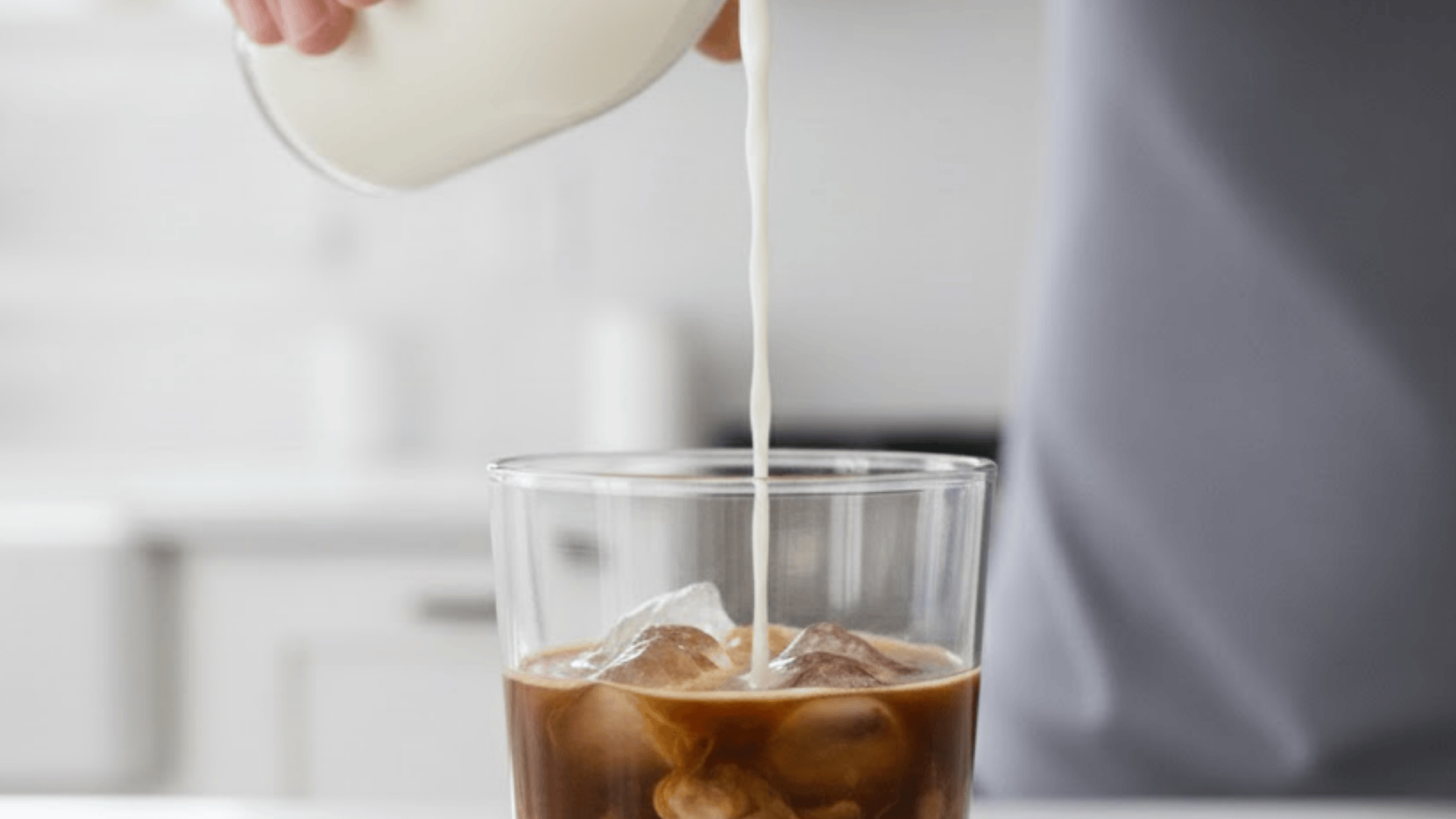
Pour 8–10 ounces of cold milk into the glass. Any milk works well, including dairy or non-dairy options, and should be added slowly to blend smoothly with the espresso.
Step 5: Stir and Serve

Add sweetener or flavoring if desired, then stir thoroughly until the espresso and milk are fully combined. Taste the drink, adjust the sweetness or strength, and enjoy it immediately while fresh and cold.
Which Drink Should You Choose?
Choosing the proper cold coffee depends on flavor preference, caffeine needs, and whether you enjoy creamy or coffee-forward drinks.
| If You Want…. | Iced Latte | Iced Coffee | Cold Brew |
|---|---|---|---|
| Creamy, milk-based drink | ✓ | ✗ | ✗ |
| Smooth and mild flavor | ✓ | ✗ | ✓ |
| Strong coffee taste | ✗ | ✓ | ✓ |
| Low-acid option | ✗ | ✗ | ✓ |
| Higher caffeine boost | ✗ | ✗ | ✓ |
| Easy flavor customization | ✓ | ✗ | ✗ |
| Enjoyable without milk | ✗ | ✓ | ✓ |
| Feels more like a treat | ✓ | ✗ | ✗ |
Each drink fits different preferences, but iced lattes offer the most balanced choice for creaminess, flavor, and everyday enjoyment.
Which Is Healthier: Iced Latte, Iced Coffee, or Cold Brew?
The healthiest choice between an iced latte, iced coffee, and cold brew depends on your goals.
A plain iced latte made with 2% milk contains about 120 calories and provides protein and calcium, but flavored versions can reach 200–300 calories due to added sugar.
Black iced coffee and black cold brew have only about 5 calories and no sugar, making them the best low-calorie options.
Iced lattes contain natural milk sugar and less caffeine, which may suit those sensitive to caffeine. Cold brew is usually the gentlest on the stomach.
Overall, black iced coffee or cold brew is lowest in calories, while a plain iced latte offers more nutrition.
Popular Iced Latte Variations
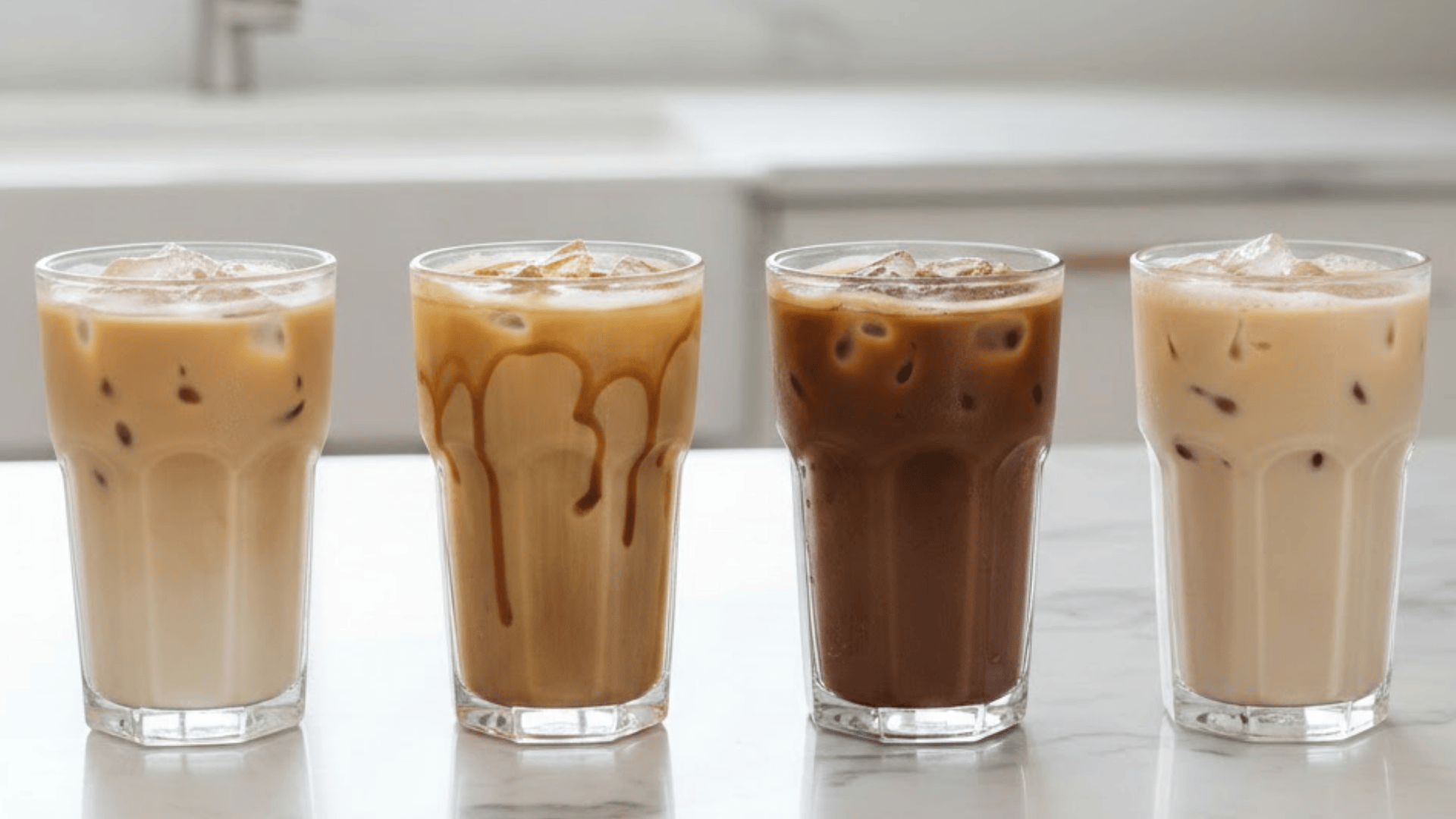
Iced lattes are popular because they’re easy to customize with different flavors and milk options, making them suitable for many taste preferences.
1. Vanilla Iced Latte
A vanilla iced latte combines espresso, vanilla syrup, and cold milk to create a smooth, lightly sweet drink. The vanilla adds gentle flavor without overpowering the coffee, making it a popular and approachable choice for everyday coffee drinkers.
2. Caramel Iced Latte
The caramel iced latte mixes espresso with caramel syrup and chilled milk, often topped with a caramel drizzle. Its rich sweetness gives it a dessert-like feel while still keeping the coffee flavor noticeable and balanced.
3. Iced Mocha Latte
An iced mocha latte blends espresso with chocolate syrup or cocoa powder and milk, creating a coffee and chocolate combination. The result is smooth, mildly sweet, and appealing to those who enjoy chocolate-flavored coffee drinks.
4. Oat Milk Iced Latte
An oat milk iced latte uses oat milk instead of dairy, giving the drink a creamy texture and light natural sweetness. Oat milk pairs well with espresso, making this a popular non-dairy choice for iced lattes.
Tips for the Best Homemade Iced Latte
These practical tips help you achieve better flavor, creamier texture, and a balanced iced latte when making it at home.
- Choose whole or 2% milk for a smoother, creamier mouthfeel
- Use oat milk for the closest non-dairy texture to traditional lattes
- Pour hot espresso directly over ice to cool it quickly and avoid bitterness
- Stir thoroughly so the espresso and milk blend evenly
- Adjust ice or espresso strength if the drink tastes diluted
With the right technique and small adjustments, homemade iced lattes can taste just as satisfying as café-made versions.
Final Thoughts
Making an iced latte at home is simple, affordable, and highly customizable.
With just strong coffee, milk, and ice, you can create a refreshing drink that fits your taste and lifestyle.
Preparing it yourself gives you full control over sweetness, strength, and ingredients, while also saving money compared to café drinks.
If you prefer dairy or non-dairy milk, iced lattes can easily be adjusted to match your preferences and daily routine.
Once you master the basics, experimenting with flavors becomes effortless and enjoyable.
Try making your own iced latte today and experiment with different milk options and flavors to find your perfect combination.
Frequently Asked Questions
Can You Use Regular Coffee Instead of Espresso?
Yes, as long as the coffee is brewed much stronger than usual to avoid tasting diluted.
Can You Sweeten an Iced Latte Naturally?
Yes, honey, maple syrup, or vanilla extract add sweetness without using flavored syrups.
Is an Iced Latte Healthier Than Iced Coffee?
It depends on milk and sugar added, but iced lattes provide protein and calcium from milk.