






If you enjoy cooking with salmon but can’t always use it right away, you might find yourself asking, “Can you freeze salmon?” The simple answer is yes, you definitely can.
Freezing salmon is one of the best ways to keep it fresh for longer, prevent waste, and make meal prep easier during busy weeks. When salmon is frozen properly, it retains its flavor, color, and firm texture, so you can still enjoy a delicious meal later.
The important part is knowing the proper steps, because good preparation makes a big difference in how the salmon tastes after thawing. With just a few easy tips, you can store salmon like a pro and enjoy it anytime you want.
Can You Freeze Salmon?
Yes, you can freeze salmon, and it’s actually one of the safest and most effective ways to keep it fresh for later.
Freezing stops bacteria from growing and locks in the salmon’s natural flavor, so it stays good for weeks or even months.
The key is to freeze it while it’s still fresh. Salmon that smells clean and looks bright is best for freezing.
If the salmon already smells strong, looks dull, or feels mushy, it shouldn’t be frozen because the quality won’t improve.
You also shouldn’t refreeze salmon that has already been thawed, as this can change its texture and raise safety concerns. When handled properly, though, freezing salmon is an easy way to enjoy it anytime.
Things to Keep in Mind Before Freezing Salmon
Before you freeze salmon, it’s essential to start with safe, good-quality fish. Freezing won’t “fix” salmon that’s already old or spoiled; it will just pause it where it is.
- Buy the freshest salmon you can: Look for firm flesh that springs back when pressed, a moist (not dry) surface, and no brown or gray patches.
- Check the smell carefully: Fresh salmon should smell mild, like the sea. If it smells very fishy, sour, or like ammonia, don’t buy it and don’t freeze it.
- Watch for sliminess or discoloration: A very slimy surface, dull color, or dark spots around the edges can be signs it’s going bad. In that case, it’s safer to skip it.
- Know if it was previously frozen: If the package says “previously frozen,” it’s best not to freeze it again once it’s fully thawed. Either cook it soon or choose a different piece to freeze.
- Check the use-by date and storage: Buy from a store that keeps seafood well-chilled, and always check the date on the package. Don’t freeze salmon that’s past its use-by date.
- When in doubt, throw it out: If the salmon looks off, smells wrong, or you’re just unsure about how long it’s been in the fridge, don’t freeze it, toss it. It’s not worth the risk of food poisoning.
How to Freeze Raw Salmon Properly
Freezing raw salmon isn’t hard; you just need a few simple steps to keep it fresh and tasty. Follow this method to protect its flavor and texture.
Step 1: Start with Fresh Salmon
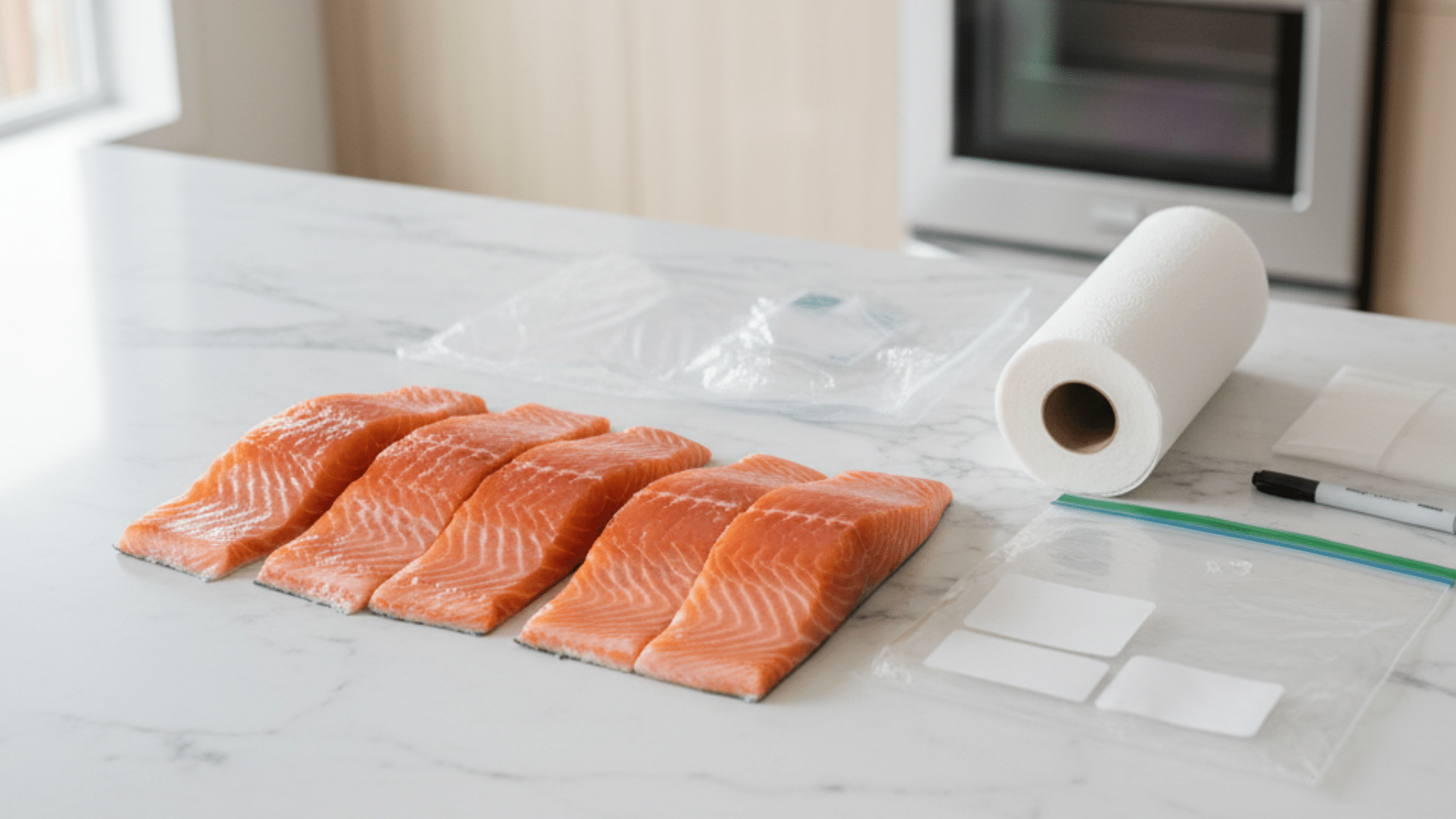
Choose salmon that smells mild, looks bright, and feels firm to the touch. Fresh salmon freezes better and keeps its flavor and texture longer.
Step 2: Pat the Salmon Dry
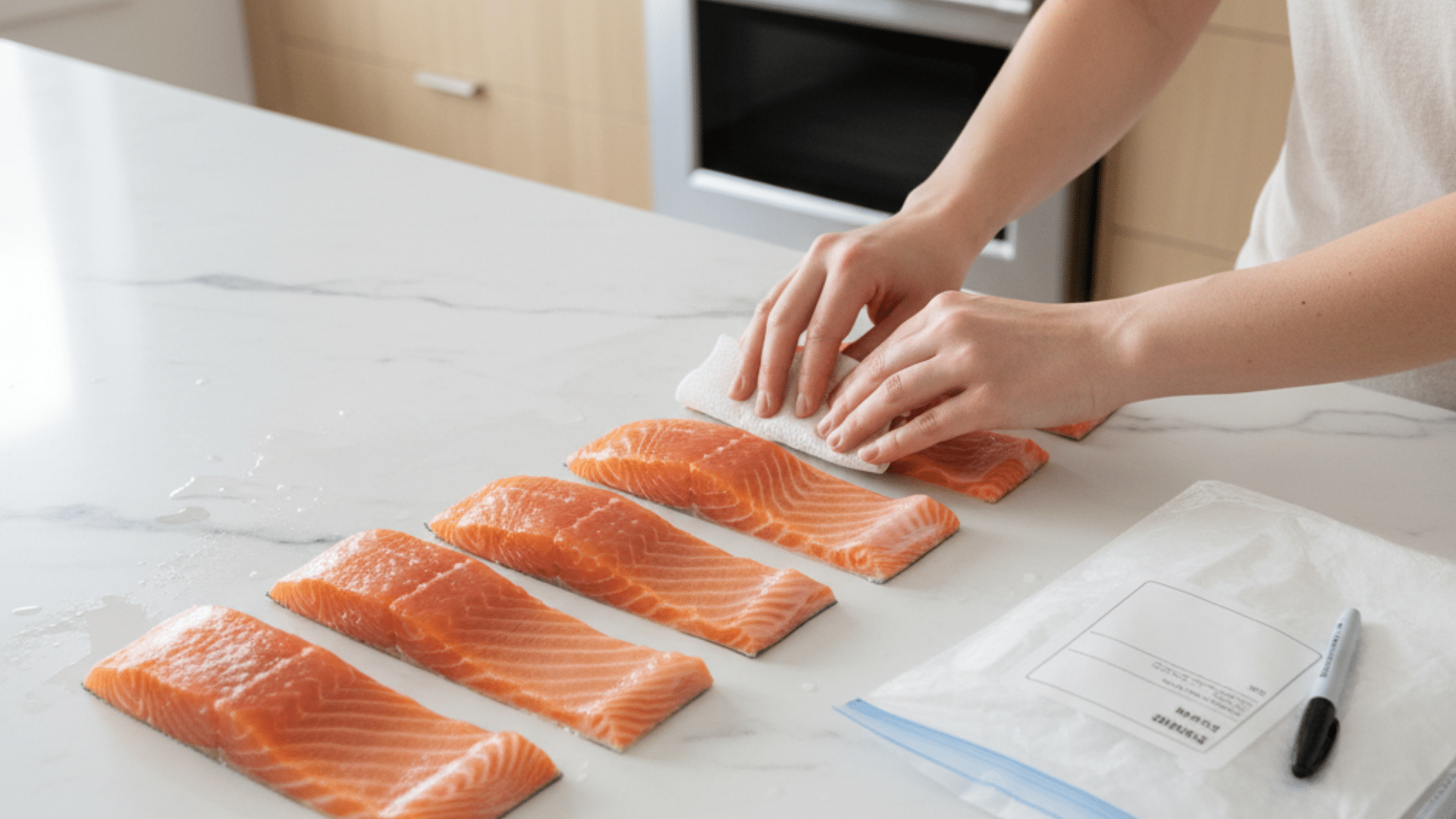
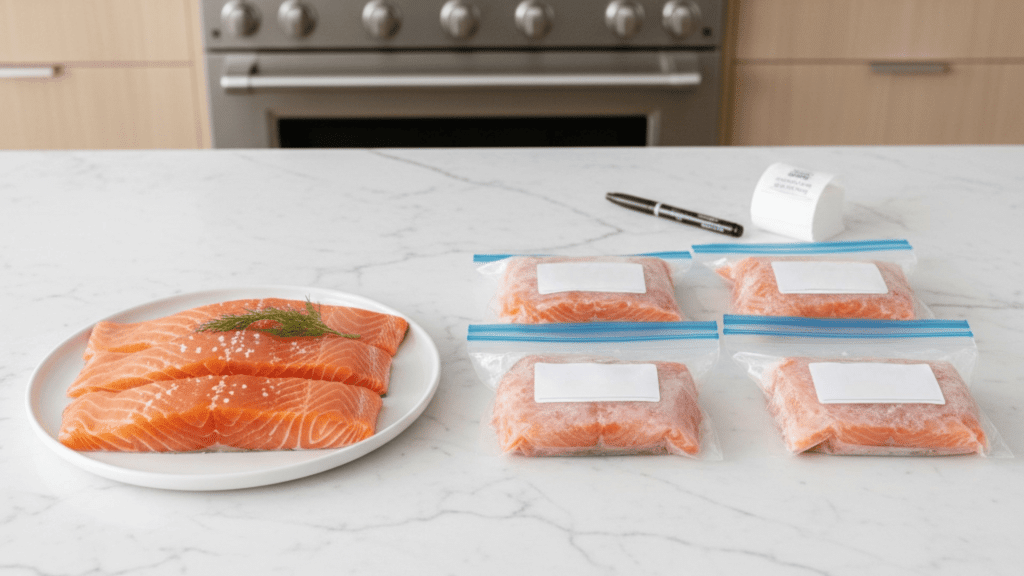
Use a clean paper towel to gently remove extra moisture from the surface. This helps prevent ice crystals from forming and keeps the texture smooth after thawing.
Step 3: Wrap the Salmon Tightly
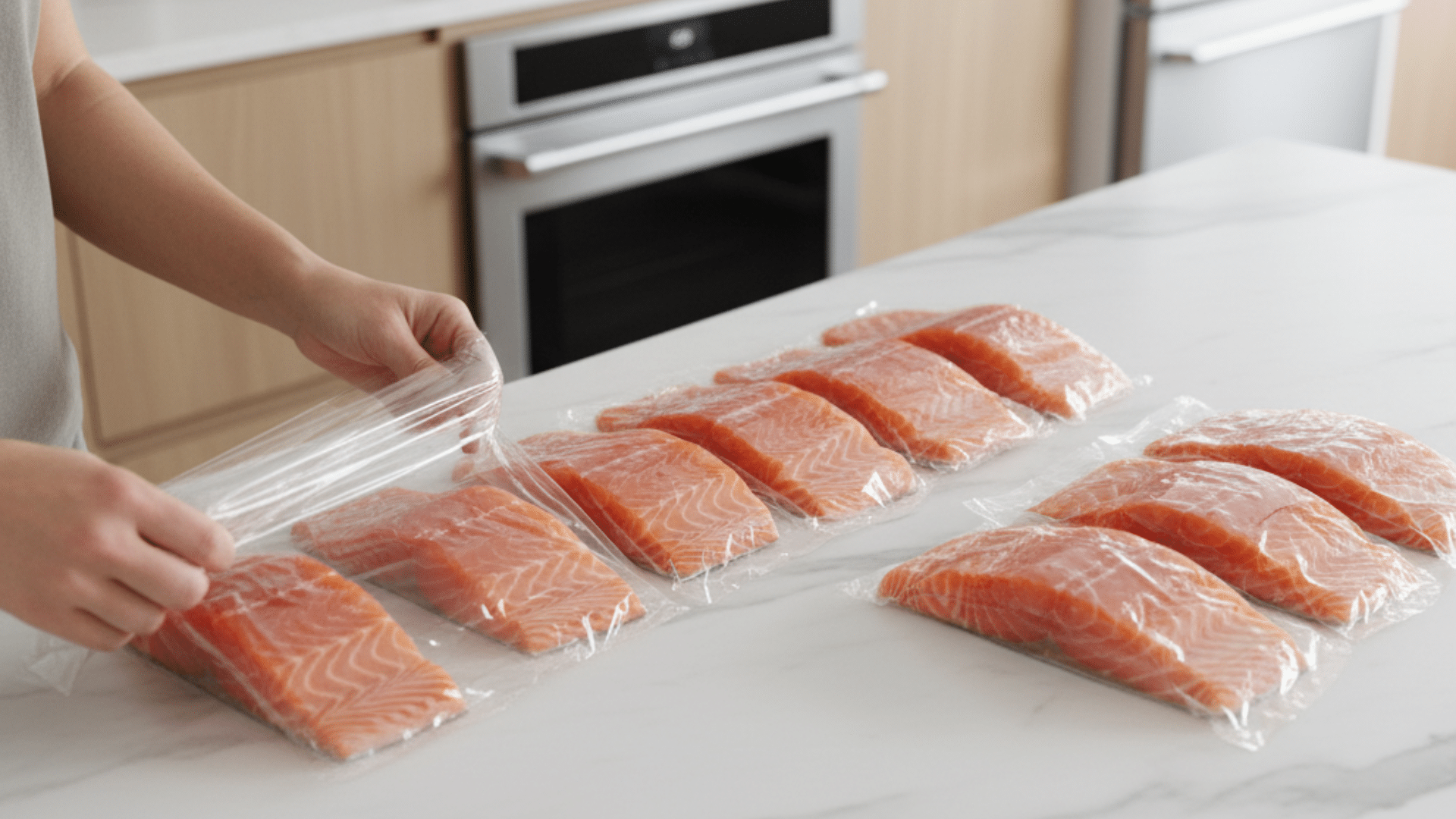
Cover the salmon in plastic wrap, making sure there are no gaps where air can sneak in. A tight wrap protects it from freezer burn and keeps it fresh.
Step 4: Place It in A Freezer-Safe Bag or Container
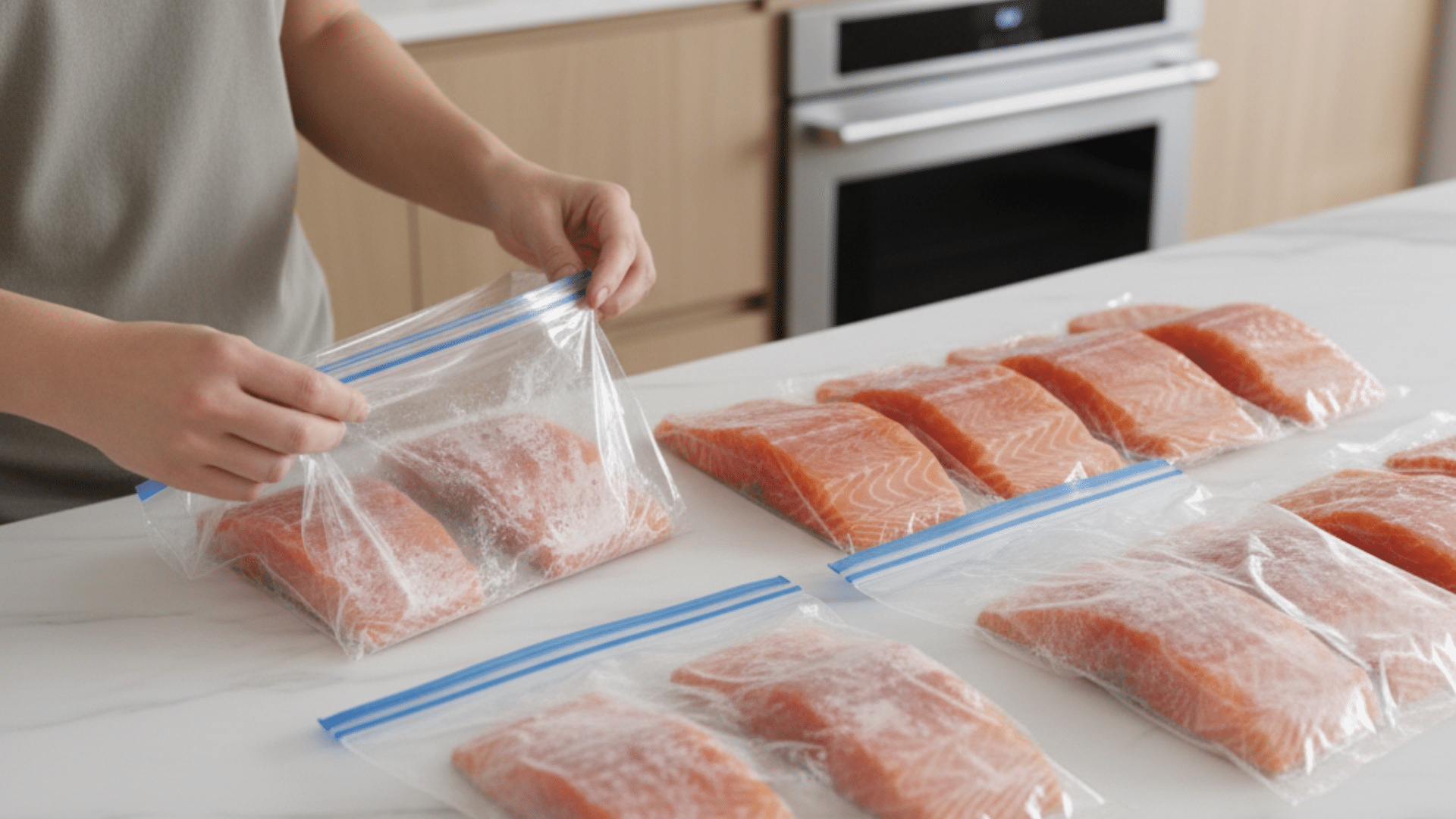
Put the wrapped salmon into a freezer bag or an airtight container, then press out as much air as possible before sealing. This adds an extra layer of protection.
Step 5: Label and Store Properly
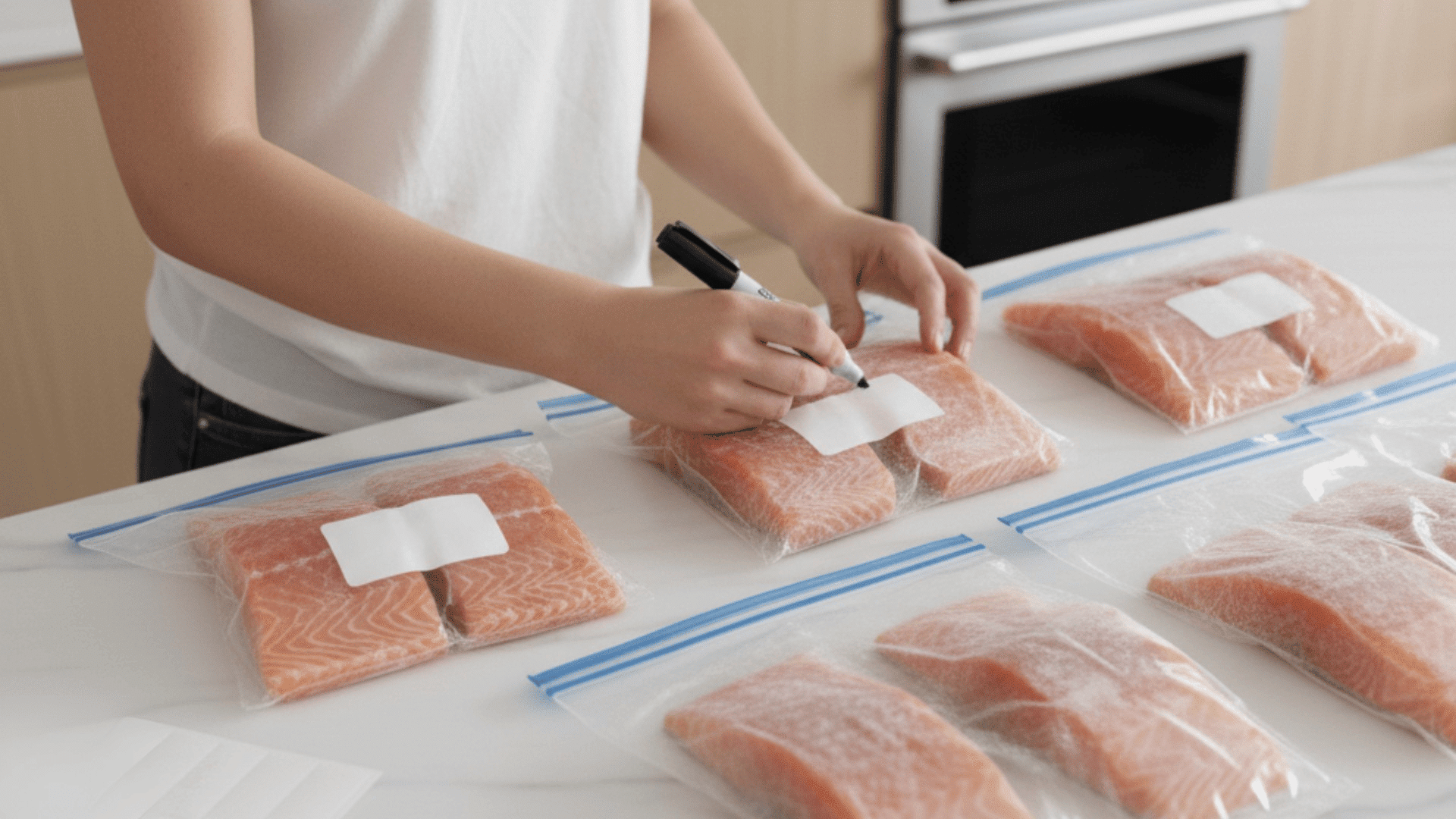
Write the date on the bag so you know how long it’s been frozen. Place the salmon in the coldest part of the freezer, ideally at 0°F (-18°C) or lower.
Step 6: Use Within 3 Months
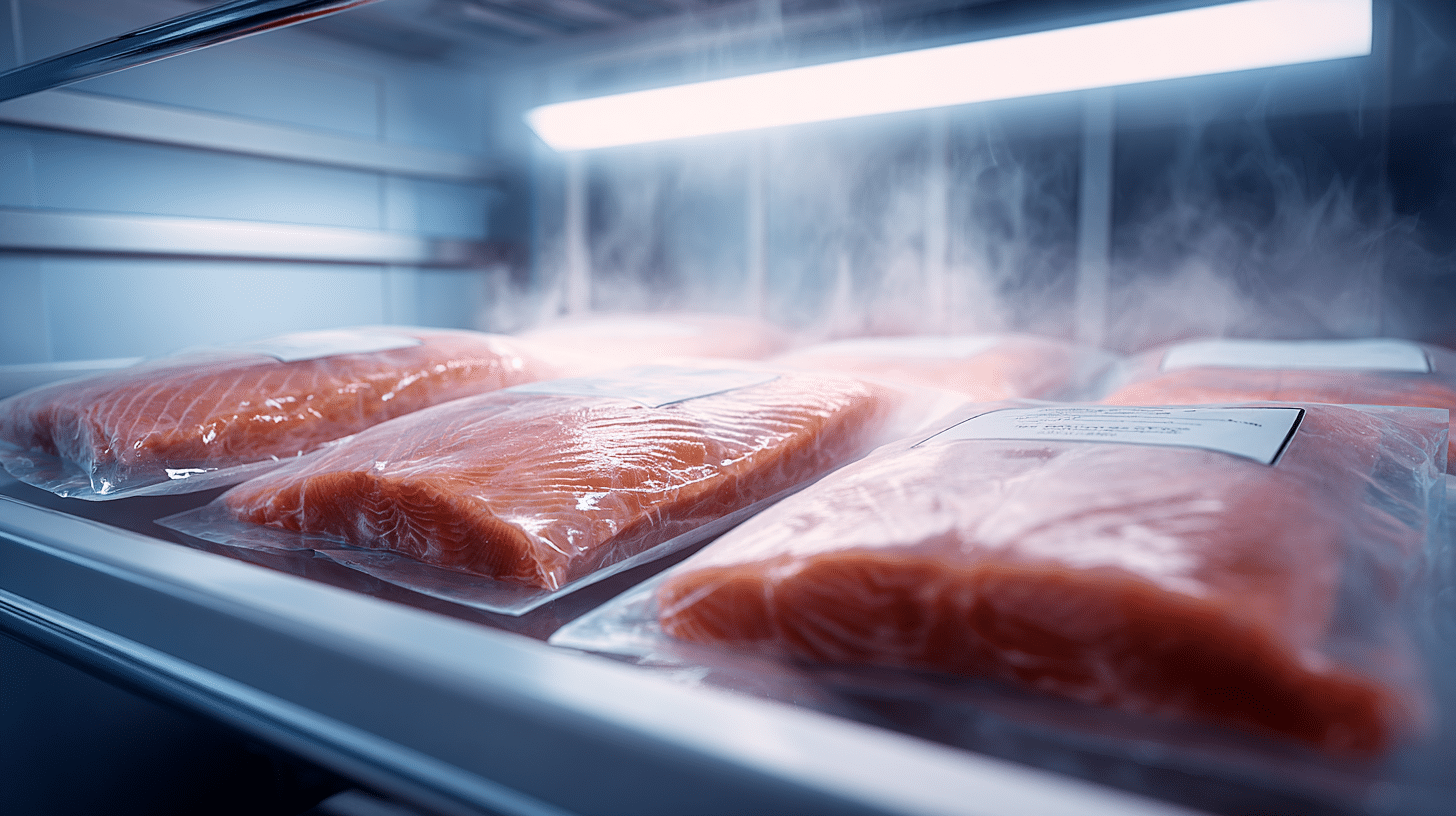
For the best flavor and texture, use frozen raw salmon within three months. It may last longer, but quality can start to go down over time.
How to Freeze Cooked Salmon
Freezing cooked salmon can be just as helpful as freezing raw salmon, especially when you have leftovers or want to meal prep.
The key is to protect its texture so it doesn’t turn dry or mushy after thawing. With a few quick steps, cooked salmon can stay tasty and ready for future meals.
Step 1: Let the Salmon Cool Completely
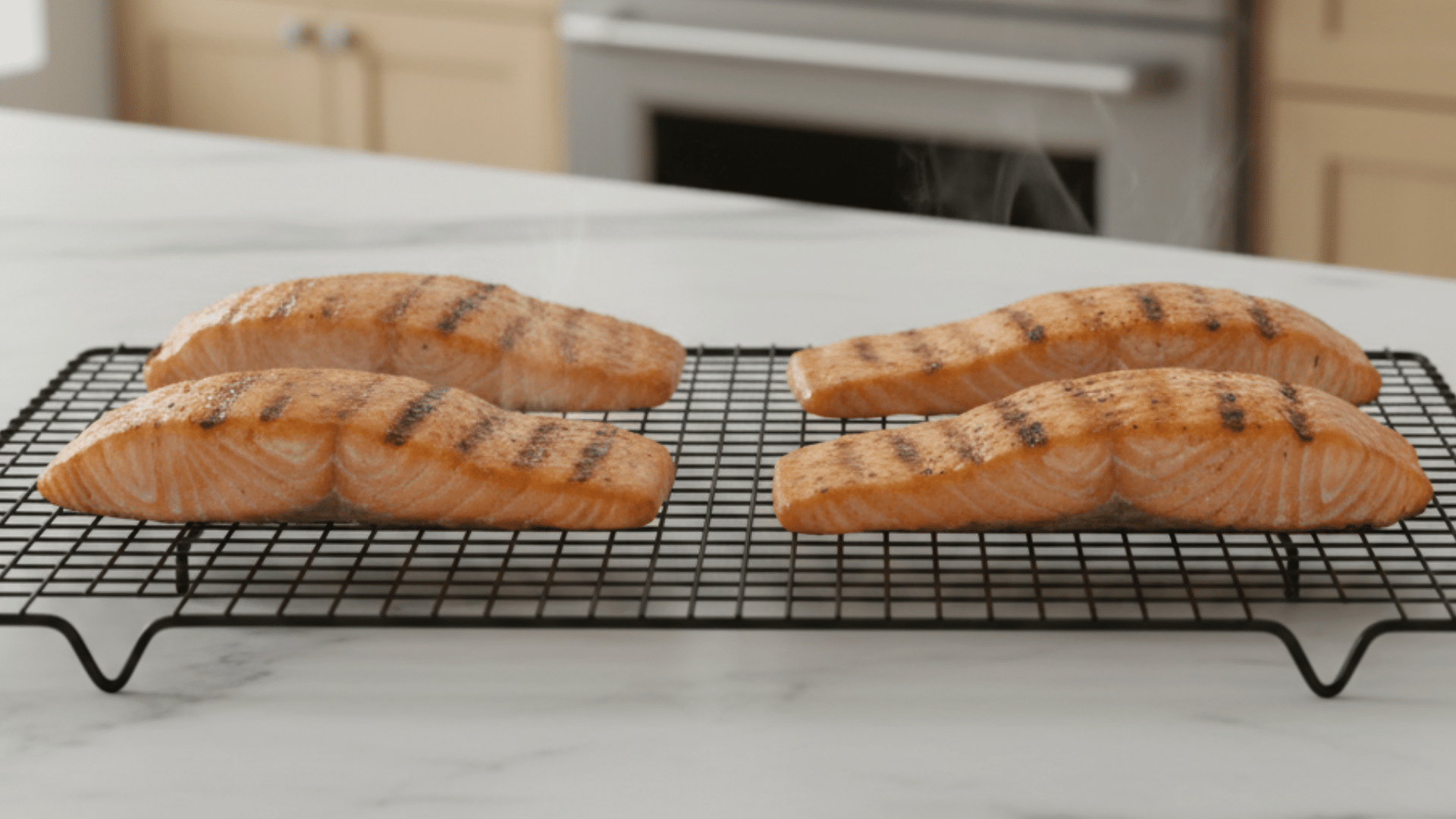
Before freezing, allow the cooked salmon to cool to room temperature. Freezing it while it’s still warm can create excess moisture, leading to a softer, less pleasant texture later.
Step 2: Break It Into Portions
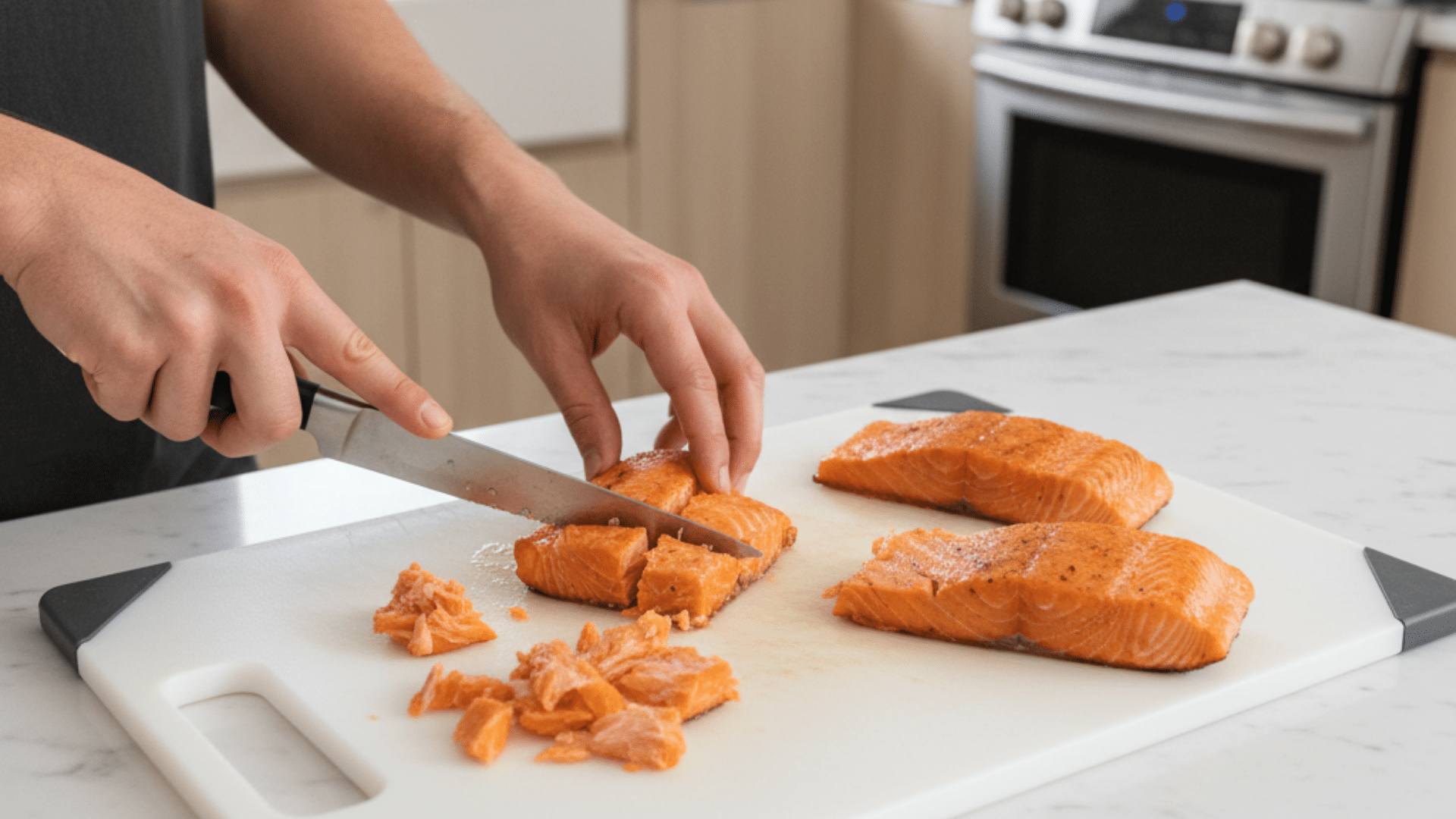
Cut or flake the salmon into meal-sized pieces. Smaller portions freeze faster, thaw more evenly, and help you use only what you need.
Step 3: Wrap Each Portion Tightly
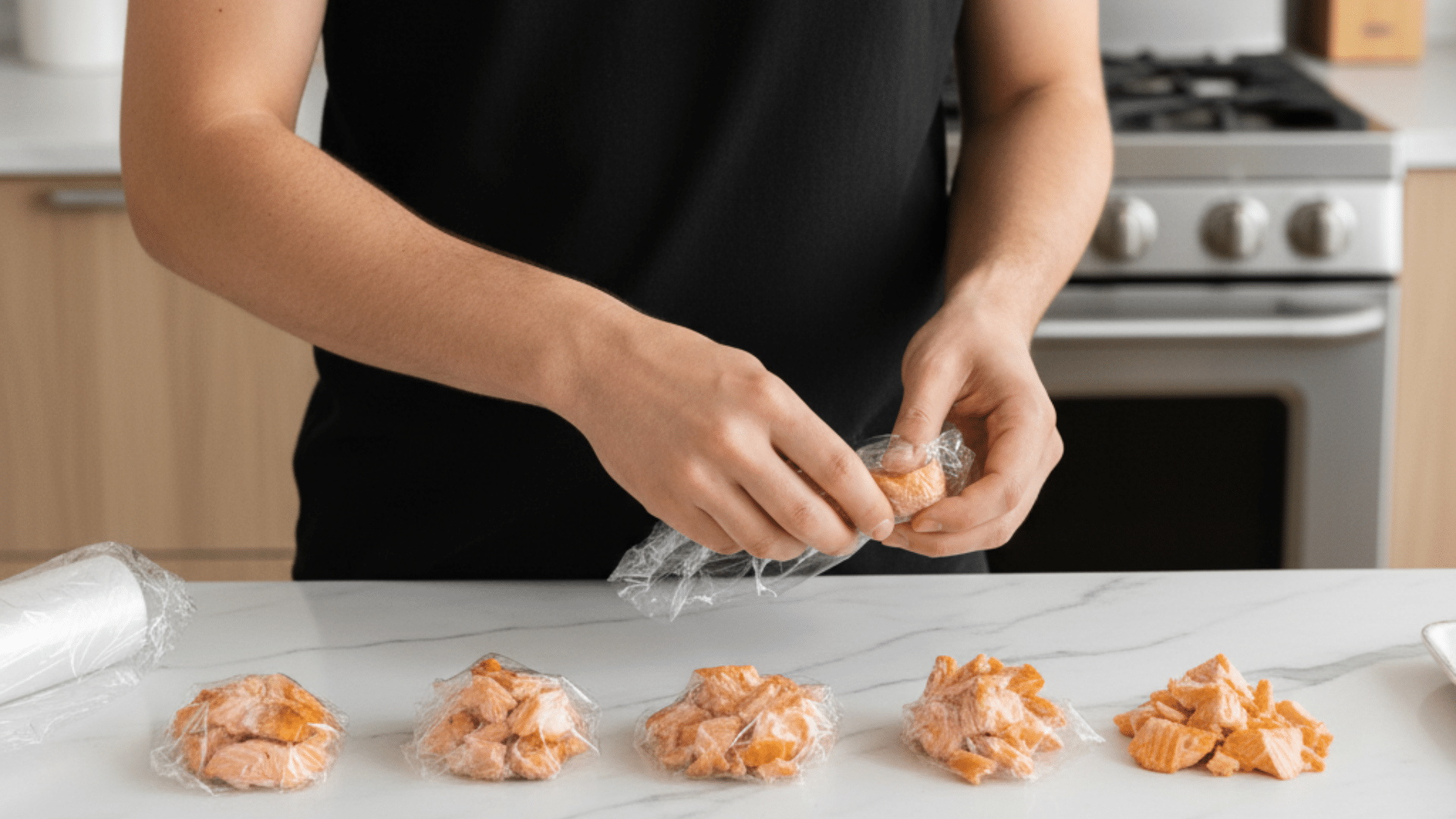
Use plastic wrap or parchment paper to cover each piece. Make sure the wrap fits snugly to keep air out and prevent freezer burn.
Step 4: Place the Wrapped Pieces in An Airtight Container

Use a freezer-safe container or a heavy-duty zip bag for extra protection. Press out the air before sealing to keep the salmon fresh.
Step 5: Label and Freeze
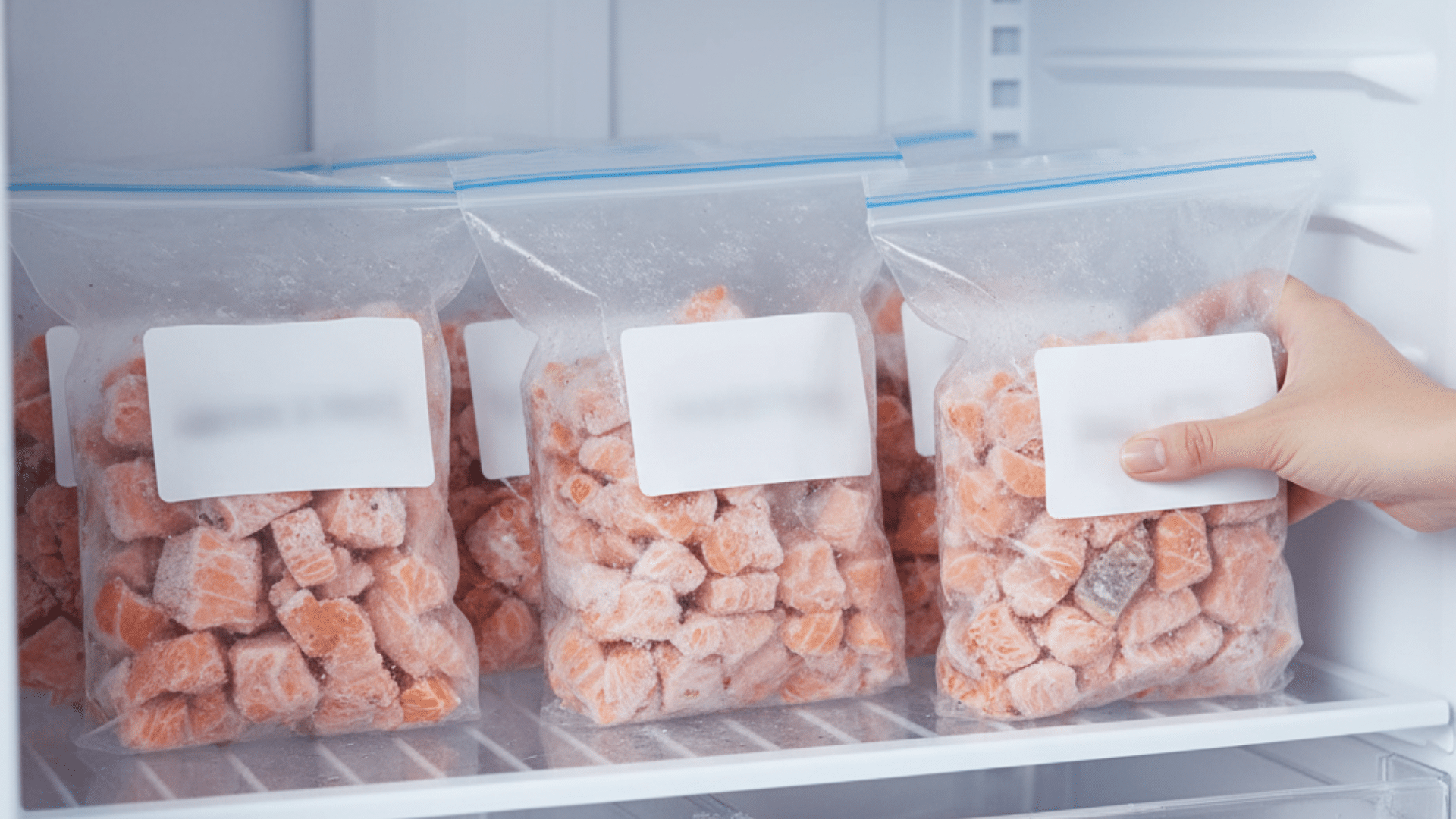
Write the date on the container or bag so you know how long it has been stored. Cooked salmon stays at its best quality for about 2–3 months in the freezer.
How to Defrost Salmon Without Losing Quality
Defrosting salmon the right way helps keep it firm, flavorful, and safe to eat. Since salmon is delicate, using the wrong method can make it mushy or unevenly thawed. These simple steps protect both the texture and taste so your salmon turns out just as delicious as when it was fresh.
- Thaw in The Refrigerator (best Method): Place the frozen salmon, still in its packaging, on a plate and set it in the fridge. This slow thaw keeps the temperature safe and helps the fish stay firm.
- Use Cold Water for A Faster Thaw: If you need the salmon sooner, place the sealed bag of salmon in a bowl of cold water. Change the water every 30 minutes to keep it cold.
- Keep It Sealed While Thawing: Always leave the salmon in its packaging while it defrosts. This prevents water from soaking into the fish, altering its texture.
- Never Thaw at Room Temperature: Avoid leaving salmon on the counter. Warm temperatures can promote bacterial growth and compromise food safety.
- Cook or Use Immediately After Thawing: Once thawed, cook the salmon right away for the best flavor and quality. Avoid refreezing thawed salmon, as it can become dry and lose freshness.
Can You Cook Salmon From Frozen?
Yes, you can cook salmon directly from frozen, and it’s completely safe when done the right way. The texture may be slightly firmer than fresh salmon, but it still cooks well and makes a fast, reliable meal.
| STEP | WHAT TO DO | Why Is This Done |
|---|---|---|
| Step 1 | Rinse off any ice crystals under cold water and pat the salmon dry. | Removes extra moisture so seasoning sticks better and cooks evenly. |
| Step 2 | Brush with a little oil and add simple seasoning like salt and pepper. | Keeps the salmon moist and adds flavor as it cooks. |
| Step 3 | Bake or air-fry at 400°F (200°C), adding 4–6 extra minutes. | Higher heat helps thaw and cook the salmon at the same time. |
| Step 4 | Check the internal temperature; it should reach 145°F (63°C). | Ensures the salmon is fully cooked and safe to eat. |
| Step 5 | Serve immediately while hot and tender. | Frozen-cooked salmon tastes best when enjoyed right away. |
Tips for Best Results
Here are a few extra tips to help your frozen salmon taste as close to fresh as possible. Follow these, and you’ll get better texture, flavor, and less waste every time.
- Freeze salmon while it’s still fresh: The sooner it goes into the freezer, the better the texture and flavor will be when you thaw it.
- Remove as much air as possible: Less air means less freezer burn and a fresher-tasting salmon later.
- Keep your freezer at 0°F (-18°C) or lower: A consistently cold temperature protects the salmon’s quality.
- Thaw salmon slowly in the fridge whenever possible: This helps it stay firm and prevents mushiness.
- Use frozen salmon within 2–3 months: It may last longer, but the flavor and texture start to fade after that.
Conclusion
Freezing salmon is an easy and reliable way to keep it fresh, safe, and ready for future meals.
With the right steps, like wrapping it tightly, storing it at the correct temperature, and thawing it slowly, you can enjoy delicious salmon anytime without losing quality.
Whether it’s raw or cooked, following these simple methods helps your salmon stay firm, flavorful, and satisfying.
Once you understand how to properly freeze and defrost it, keeping salmon on hand becomes simple, convenient, and stress-free.
Frequently Asked Questions
Can You Freeze Salmon with The Skin On?
Yes! You can freeze salmon with or without the skin. Keeping the skin on can actually help protect the fish from drying out.
How Long Does Frozen Salmon Stay Good?
Raw salmon is best used within 3 months, while cooked salmon stays freshest for 2–3 months. It’s still safe after that, but it may lose flavor.
Can I Freeze Salmon Twice?
It’s not recommended. Once salmon has been thawed, it should not be refrozen because it can affect the texture and food safety.
How Can I Tell if Salmon Has Gone Bad?
Spoiled salmon smells fishy or sour, feels slimy, or has a dull, off-colored appearance. If it seems questionable, it’s best to avoid eating it.