






Pollo Picante vs. Chicken Cacciatore: The Showdown You Didn’t Know You Needed
Look, I get it. You’re staring into your fridge, vaguely hungry, and somewhere in the back of your brain you remember seeing both of these dishes on a menu once. They’re both Italian ish. They both involve chicken. How different can they really be?
Very. The answer is very different.
One gets dinner on your table in 30 minutes with enough heat to wake up your taste buds (and possibly your sinuses). The other asks you to slow down, trust the process, and rewards you with leftovers that somehow taste better on day two. Your move depends entirely on how much patience you have tonight and whether your dinner guests can handle spice.
The Cheat Sheet (For When You’re Already Hungry)
Make pollo picante if:
- You need food in 30 minutes or less
- You want bold, wine forward heat
- Everyone at the table can handle spicy
- You’re eating it tonight, not meal prepping
Make cacciatore if:
- You’ve got 90 minutes and a good podcast
- You’re feeding people with wildly different spice tolerances
- You want leftovers that actually improve with time
- You love a thick, clingy tomato sauce
| Pollo Picante | Chicken Cacciatore | |
|---|---|---|
| Heat level | Spicy (that’s the whole point) | Mild |
| Sauce vibe | Wine glossy, loose, pooling | Tomato rich, thick, clingy |
| Protein | Boneless breast | Bone in thighs/legs |
| Serves best with | Pasta or rice | Crusty bread, polenta, potatoes |
| Best for | Weeknight speed | Meal prep, feeding a crowd |
Okay, snapshot complete. Let’s get into the actual cooking.
What’s Actually Going On Here
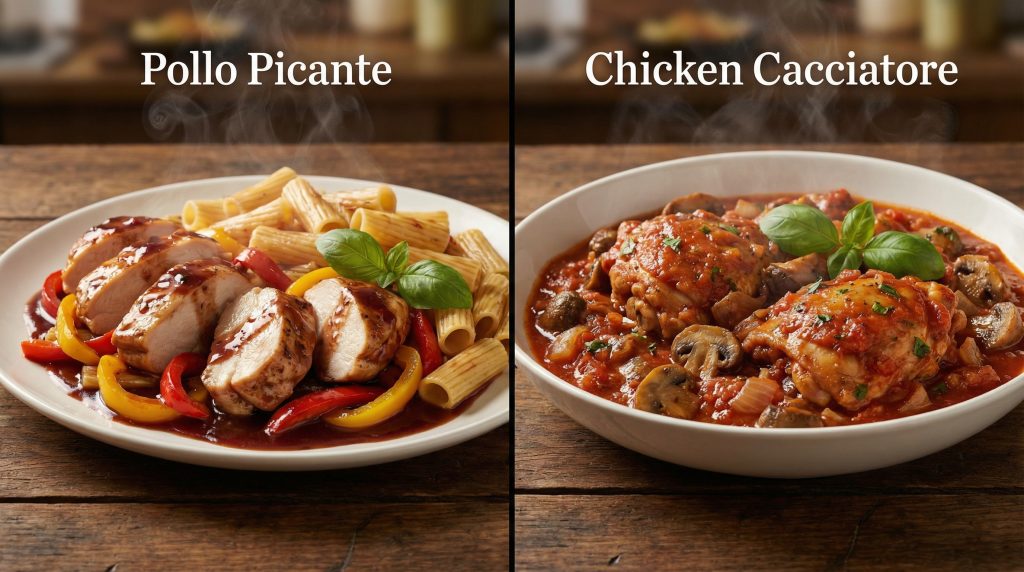
Pollo picante literally translates to “spicy chicken,” and yes, spelling and pronunciation matter and the heat is the main character. The Italian American restaurant version which is what I’m talking about here uses boneless breast, seared fast, then finished in a glossy wine sauce with peppers and chili. It’s bright, it’s bold, and it does not mess around.
(Side note: there are Bolivian versions with aji paste and potatoes, Nashville versions that are basically cayenne coated fried chicken… but for this comparison, we’re staying in Italian American territory since that’s the natural face off with cacciatore.)
Chicken cacciatore means “hunter’s style,” which sounds way more romantic than it is. It’s a traditional braise: bone in chicken simmering in tomatoes, wine, and all the aromatics onion, garlic, celery, carrot, mushrooms. After an hour plus, everything melds into this deeply flavored, herb heavy sauce that practically hugs the chicken.
The Time Reality Check
Here’s where the rubber meets the road.
Pollo picante: 25-30 minutes, start to finish. Sear the chicken (3 minutes per side), cook your peppers and garlic into a garlic red pepper sauce with harissa for about 10 minutes, deglaze with wine and stock, reduce until glossy, toss with pasta. Done. You’re eating.
Cacciatore: 75-90 minutes minimum. You can do it stovetop (more hands on), oven braised (mostly hands off after the initial sear), or slow cooker (set it and forget it for 6-8 hours). The oven method is my personal favorite because it gives you an hour to do literally anything else while dinner handles itself.
If your stomach is growling right now, pollo picante is your friend. If it’s Sunday afternoon and you’re in “puttering around the kitchen” mode, cacciatore all the way.
The Sauce Situation
This is honestly where these two dishes become completely different animals.
Pollo picante’s sauce stays bright and wine forward. The short cook time means the wine flavor stays present almost assertive with heat layered right on top. It’s loose and glossy. It doesn’t cling. It pools around your pasta and coats it in the best way.
Cacciatore’s sauce goes deep. After that long simmer, the tomatoes break down completely, the wine mellows into the background, and you’re left with this thick, clingy, herb heavy situation that sticks to everything it touches.
Quick test: spoon up some sauce. Pollo picante slides off. Cacciatore hangs on for dear life.
This is also why pollo picante basically requires pasta you need something to catch all that loose sauce. (Rice works too. Potatoes? Nope. It just slides right off and sits there looking sad.) Cacciatore is way more flexible: crusty bread for mopping, creamy polenta, roasted potatoes, or honestly just a fork and determination.
The Mistakes That’ll Ruin Your Dinner
I’ve made both of these mistakes. Learn from my pain.
Pollo picante crimes:
- Adding harissa to cold ingredients. It needs to bloom in hot fat with the peppers for a solid 10 minutes, or it tastes weirdly raw and aggressive.
- Not reducing the sauce enough. You want glossy and coating, not thin and watery.
- Adding liquid before your peppers have softened. Crunchy bell pepper chunks will haunt you.
Cacciatore crimes:
- Skipping the tomato paste cook. Give it 1-2 minutes in the pan until it darkens. Otherwise your sauce stays sharp and one dimensional.
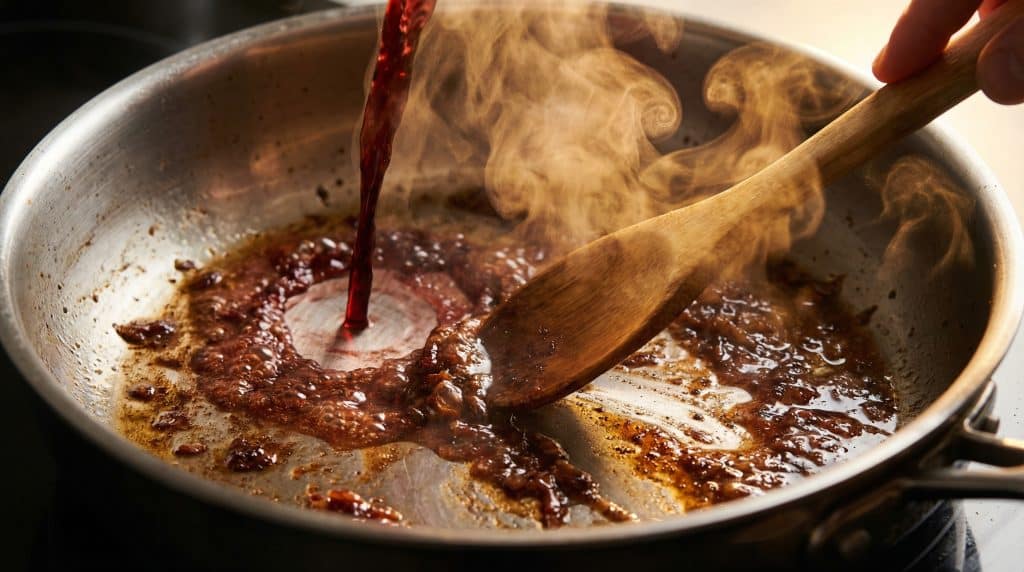
- Not searing the chicken first. Those browned bits in the pan (fond, if you want to be fancy) are the foundation of your entire sauce.
- Rushing the simmer. Under 45 minutes and you’ve just made… chicken in tomato sauce. Which is fine, but it’s not cacciatore.
The Leftover Situation
Cacciatore wins this one, hands down. It keeps 3-5 days in the fridge and genuinely tastes better around day two all those flavors just keep getting to know each other.
Pollo picante keeps fine (3-4 days), but here’s the thing: the heat intensifies as it sits. What felt perfectly spicy on Monday might feel like it’s attacking you by Wednesday. If your leftovers get too aggressive, stir in a splash of cream or a squeeze of lime to mellow things out.
Both freeze well for 3-4 months if you’re into that kind of planning ahead. (I am. Future me loves past me for it.)
So… Which One Tonight?
Here’s my honest take:
If it’s Tuesday, you’re tired, you want dinner NOW, and you love a little heat? Pollo picante. It’s fast, it’s punchy, and you’ll feel like you actually cooked something without spending your whole evening in the kitchen.
If it’s the weekend, you’ve got time to let something simmer while you fold laundry or catch up on TV, and you’re feeding people who might not share your spice enthusiasm? Cacciatore. It’s comfort food that rewards patience, and your lunch game for the next few days will be unbeatable.
Check your pantry. Harissa paste and white wine say go spicy. Canned tomatoes and fresh herbs say slow it down. Your ingredients and your patience level already know the answer.