


Is No Yolks Gluten Free? (Spoiler: Nope, and Here’s Why)
If you’ve ever stood in the pasta aisle staring at a bag of No Yolks noodles thinking “wait, is this gluten free?” you’re not alone. I’ve lost count of how many times someone has asked me this exact question, usually with a mix of hope and suspicion in their voice.
And honestly? I get it. The name is confusing. “No Yolks” sounds like something is missing, right? Like maybe they skipped the wheat too?
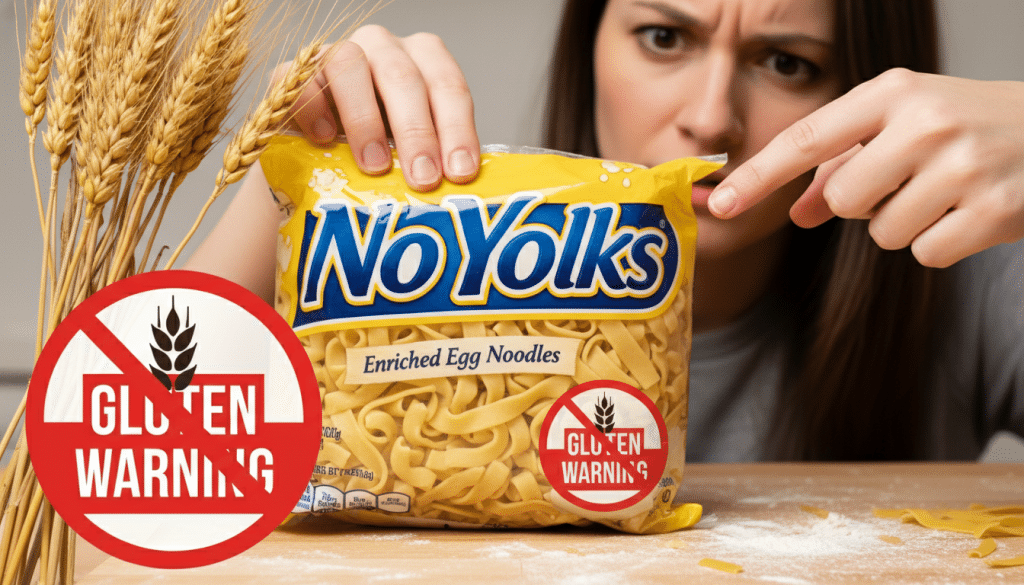
Yeah, no. Unfortunately, No Yolks is absolutely, definitely, 100% NOT gluten free. And I’m going to explain why plus give you some actually safe alternatives that won’t leave you feeling betrayed by the pasta aisle.
The Name Is Playing Tricks on You
Here’s the deal: “No Yolks” just means they ditched the egg yolks and used egg whites instead. That’s it. That’s the whole thing.
The point of No Yolks is to be cholesterol free and low fat great news if you’re watching your heart health, but completely irrelevant if you’re avoiding gluten.
The noodles themselves? Made with semolina and durum flour. Both wheat. Both loaded with gluten. Both a hard pass if you have celiac disease or gluten sensitivity.
(I know. I was disappointed too the first time I realized this. The branding really does make it seem like it might be… something else.)
Quick reality check: No Yolks = no egg yolks. Still contains wheat AND egg whites. If you’re avoiding either of those things, put the bag down and back away slowly.
What’s Actually in the Bag
Every No Yolks variety Fine, Broad, Extra Broad, doesn’t matter uses the same base:
- Semolina (wheat this is your main gluten culprit)
- Durum flour (also wheat double trouble)
- Corn flour
- Dried egg whites
- Some vitamins they add back in
The allergen label clearly lists wheat and eggs. No milk, no soy, no nuts. But for anyone dealing with celiac, gluten sensitivity, wheat allergy, or egg allergy? This one’s not for you.
Oh, and before you ask: no, cooking doesn’t remove gluten. It survives boiling just fine, and the cooking water becomes contaminated too. So if you’re making pasta for someone with celiac, never I repeat, never use the same pot of water you just cooked wheat pasta in. Fresh pot, fresh water, every time.
How to Spot Gluten on Labels (Without Losing Your Mind)
Okay, let’s make this quick because nobody wants to spend 45 minutes decoding pasta packages.
My scanning order:
- Check the allergen statement first look for “wheat” in bold or all caps
- Hunt for a “Gluten Free” claim somewhere on the front
- Look for certification logos GFCO or NSF actually mean something (they test for this stuff)
- Read any cross contact warnings “made in a facility that processes wheat” is a yellow flag
Words that always mean gluten: semolina, durum, enriched flour (unless it specifically says rice or corn), spelt, barley, rye
Words that are usually safe: rice flour, tapioca starch, potato starch, corn flour, chickpea flour, lentil flour
One thing that trips people up: kosher certification tells you nothing about gluten. Completely different thing. Don’t let that little symbol give you false confidence.
Gluten Free Noodles That Actually Taste Good
Here’s the good news: you don’t have to give up egg noodles entirely. The gluten free pasta game has gotten SO much better in the last few years.
My top picks:
Jovial Tagliatelle This one’s my personal favorite if you want something close to traditional egg noodles. It’s organic brown rice and eggs, and the texture is genuinely good. Not mushy, not weird. Just… noodles.
Rice noodles The easiest swap for most dishes. They’re just rice flour and water, they’re everywhere, and they work in soups, stir fries, casseroles, you name it.
Chickpea or lentil pasta I’ll be honest, I was skeptical of these at first. But chickpea pasta actually holds its shape really well and is super filling. Red lentil pasta cooks fast (like 8 minutes) and pairs nicely with heavier sauces.
A warning about soba noodles: This one has burned me before. Even if the package says “buckwheat noodles,” most soba is 40-80% wheat. Unless it specifically says “100% buckwheat” AND has a gluten free label, assume it’s not safe.
Look for these in the gluten free aisle or weirdly the kosher section. Noodle brands sold online usually cost a bit more than regular noodles, but not outrageously so.
The Bottom Line
No Yolks noodles are not gluten free. The name is misleading, the wheat is hiding in plain sight, and I really wish they’d put a clearer warning on there for folks who are scanning quickly.
But here’s the thing: safe egg noodle options have never been better. Between rice based egg noodles, legume pastas, and all the other alternatives out there, you can still have your chicken noodle soup, your stroganoff, your casseroles all without compromising your health.
Just read those labels, look for the certifications, and don’t trust a name to tell you the whole story.
Your gut will thank you. 🍝