





Why One Spicy Chicken Burns Way Longer (And How to Not Destroy Your Mouth)
Look, I need to have a serious conversation with you about spicy chicken. Because there’s a solid chance you’ve ordered something labeled “hot” at a restaurant, taken a confident bite, thought this is fine, and then ten seconds later wondered if you should call someone.
That’s what happened to me the first time I tried Nashville hot chicken. I ordered “medium” like a person who regularly handles jalapeños. Reader, I was not fine.
Here’s the thing: not all spicy chicken is built the same. Nashville hot chicken and pollo picante both promise heat, but they deliver it in completely different ways and understanding the difference will save you from some truly regrettable lunch decisions.
The Quick Version (For the Impatient)
Before we dive in, here’s the cheat sheet:
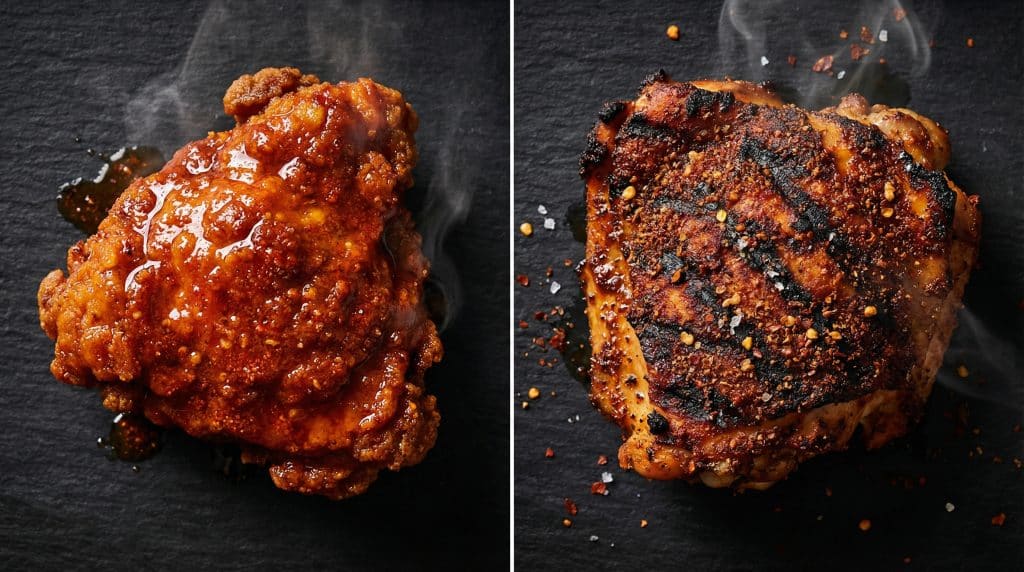
- Nashville hot chicken: Heat lives in an outer paste that hits you after you swallow. Sneaky. Intense. Lingering. Crunchy as heck.
- Pollo picante: Heat is cooked through the meat and hits you immediately. More predictable. Fades faster. Often grilled or roasted.
One is a delayed attack. The other announces itself upfront. This changes everything about how you order.
Why Nashville Hot Chicken Is Basically a Trap
Nashville hot chicken gets spiced three separate times, which is frankly aggressive.
First, the chicken soaks in a brine for hours we’re talking pickle juice, hot sauce, and cayenne working their way into the meat. Then it gets coated in more cayenne spiked flour before frying. And then, fresh out of the fryer, it gets brushed with a paste made from the hot frying oil, brown sugar, and you guessed it more cayenne.
So when you bite into it, you’re chewing through layers: spicy crust, spicy breading, spicy meat. It’s like the chicken is wearing a heat jacket over a heat sweater over heat pajamas.
And here’s the kicker: the burn is delayed. You take a bite, taste salt and tang, think “I’ve got this,” and then 15-30 seconds after swallowing, the heat rolls in from the back of your throat like it was just waiting for you to get comfortable. That’s what regulars call “ninja heat,” and it can linger for 30-45 minutes after you finish eating.
(Ask me how I know this. Actually, don’t. My dignity can’t take it.)
Pollo Picante Plays Fair
Pollo picante is more upfront about its intentions if you are comparing pollo picante and chicken cacciatore. The chicken gets one heat application a dry rub or citrus based marinade before hitting the grill or oven. The spice cooks into the meat instead of sitting on top in layers.
You feel the heat on the first bite. You know exactly what you’re dealing with. And it usually fades within a few minutes after you stop eating.
The peppers are different too. Nashville runs on cayenne sharp, straightforward, like turning up a volume knob. Pollo picante typically uses dried chiles like guajillo (fruity, almost berry like), arbol (sharper with a grassy edge), and chipotle (smoky). Mix those together and you get actual flavor with your heat, not just pain.
This is why pollo picante can be very spicy but still taste like something besides regret.
The Menu Label Problem
Here’s where it gets tricky: Nashville heat labels are basically made up.
“Mild” at a Nashville hot chicken joint is often 2-3 times hotter than what you’d expect from any other restaurant’s “mild.” “Medium” can mean mouth on fire that lingers for five plus minutes. “Hot” is where flavor goes to die and only pure capsaicin remains.
Every restaurant calibrates differently. Some add extra levels like “shut the cluck up” because their baseline already runs hot. There’s no standardization. It’s chaos dressed up as a menu.
Pollo picante is generally more predictable. “Medium” means medium. “Hot” means hot. You can make reasonable decisions.
My advice? When ordering Nashville hot chicken for the first time at any new place, ask the server what level most people regret. Then order one step below that. Your future self will thank you.
How to Put Out the Fire
Nashville hot chicken traditionally comes with white bread and pickles, and those aren’t just garnish they’re functional.
The bread soaks up the spicy oil. The pickles’ acid actually interferes with how capsaicin clings to your mouth. Use them on purpose.
For real relief:
- Best option: Whole milk or a thick milkshake. The casein proteins bind to capsaicin.
- Also great: Ice cream. Thicker and colder.
- Decent: White bread as a physical sponge for the oils.
- Absolutely do not: Drink water. Capsaicin doesn’t dissolve in water. You’ll just slosh it around your entire mouth and make everything worse.
Pollo picante is more forgiving. Dairy helps, but since the burn fades naturally, you can often just… wait.
Making Them at Home (If You Hate Yourself a Little)
Real talk: Nashville hot chicken is a project. We’re talking 5-13 hours total mostly brine time plus precise frying temperature control, plus brushing on that paste while the chicken is still hot. You’re adjusting spice in three different places, and the results don’t hold well because the exterior loses its magic as it cools.
Pollo picante? 30-45 minutes with a dry rub, or a few hours if you’re marinating with garlic red pepper sauce. Regular grill or oven. One spice mix to worry about. Reheats fine.
For weeknight cooking, pollo picante wins by a mile. Nashville hot chicken is for weekends when you’ve decided to make cooking your whole personality.
So Which Should You Actually Order?
It comes down to what kind of experience you want.
Go Nashville hot if: You want maximum crunch, you enjoy a challenge, and you think delayed onset mouth fire sounds fun. (Also if you have milk nearby and nowhere to be for an hour.)
Go pollo picante if: You want to actually taste the peppers, you prefer knowing what you’re getting into, and you’d like the burn to fade before your next meeting.
Personally? I love both but I’ve learned to respect Nashville hot chicken’s power. It’s not trying to hurt me, exactly. It’s just… very committed to its craft.
Order wisely out there.