

Seafood is becoming a go-to choice for people who want to eat better, and flounder is quietly appearing on more dinner tables.
This mild, lean white fish is perfect for anyone who prefers a light, delicate flavor over a strong, fishy taste.
Naturally, that raises the question: Is flounder good for you?
Many people reach for it as a simple, calming option after a long day, or as a gentle way to introduce kids to seafood.
Even if it’s baked, pan-seared, or tucked into soft tacos, flounder brings an easy, no-fuss feel to mealtimes while still helping you feel like you’re making a wise choice at home, again and again.
What Is a Flounder?
Flounder is a type of flatfish that lives along the sea floor, with both eyes on one side of its head and a slim, flattened body that helps it disappear into sand or mud.
The name covers several species, such as summer and winter flounder, starry flounder, and American plaice, and it’s closely related to fish like sole and halibut.
These bottom-feeders snack on shrimp, small crabs, and worms, which gives the flesh a mild, slightly sweet taste and soft, flaky texture.
Because the fillets are thin, flounder cooks quickly and works well baked, pan-seared, tucked into tacos, or prepared with a light crumb coating for an easy weeknight meal.
Flounder Nutrition (Is Flounder Nutritious?)
Flounder is a lean, low-calorie fish that delivers satisfying protein and healthy fats in a small, easy-to-enjoy serving.
| Nutrient | Amount per 3 oz (85 g) cooked |
|---|---|
| Calories | 73–100 |
| Protein | 13–19 g |
| Total Fat | 1–2 g |
| Saturated Fat | < 1 g |
| Omega-3 Fatty Acids | 300–500 mg |
This simple profile shows why flounder fits so well into weight-loss, heart-healthy, and low-carb eating patterns.
Beyond the macros, flounder also offers a helpful mix of vitamins and minerals that support everyday health:
- Vitamin B12 – supports nerve health and red blood cell production
- Vitamin D – helps maintain strong bones and immune function
- Selenium – an antioxidant that supports thyroid function and cell protection
- Phosphorus – works with calcium for healthy bones and teeth
- Magnesium – involved in blood pressure, blood sugar, and energy production
- Zinc – contributes to immune health and wound healing
- Iron – helps transport oxygen in the blood
- Potassium – supports fluid balance, muscles, and nerves
- Choline – plays a role in brain function and metabolism
Together, these nutrients make flounder a light yet nourishing choice that can easily slot into regular meals.
Health Benefits of Eating Flounder
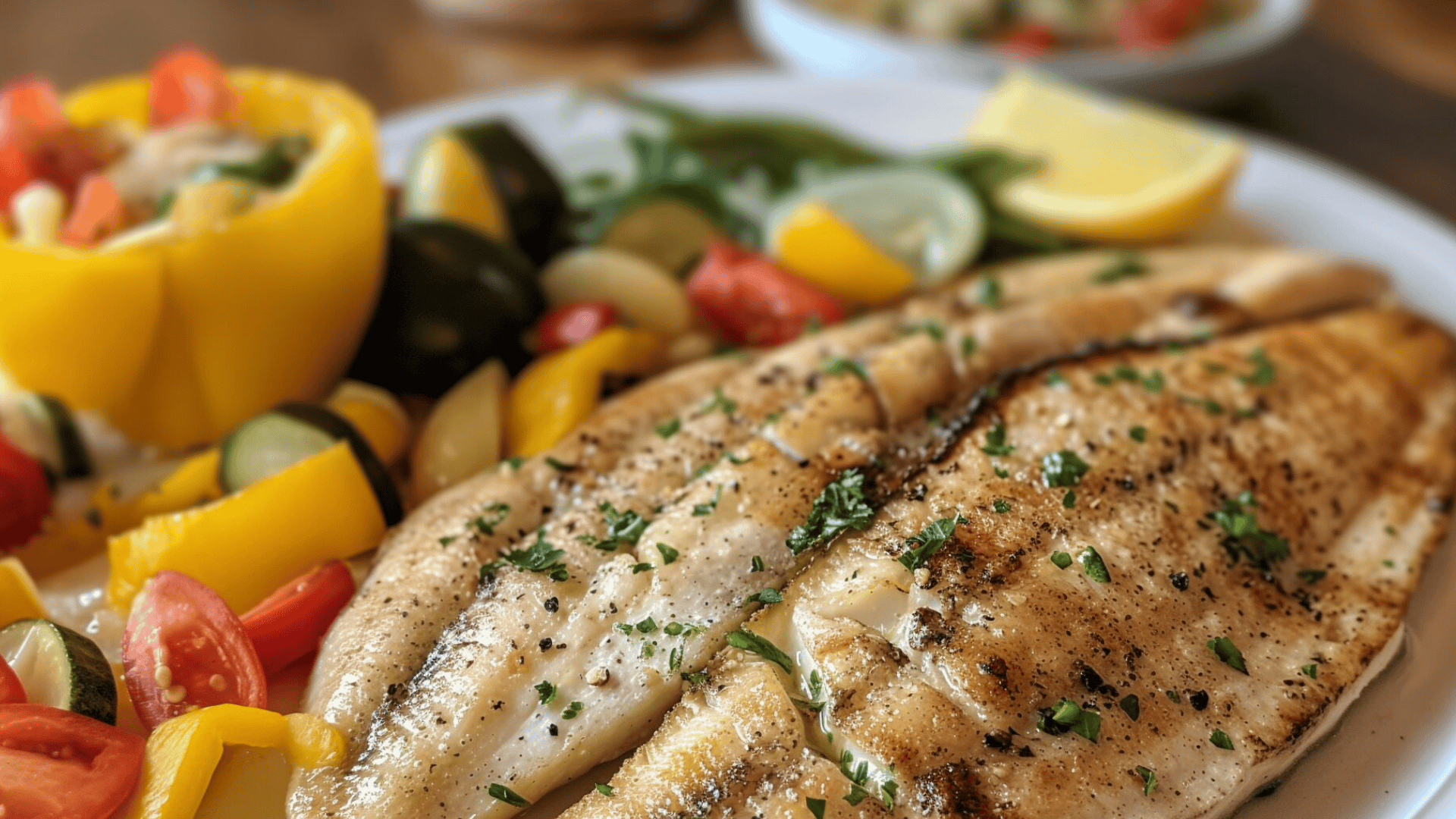
Flounder offers several health benefits, providing lean protein, omega-3 fatty acids, and key micronutrients that support your heart, metabolism, and overall well-being.
1. Heart Health & Omega-3 Fats
Flounder supplies EPA and DHA, omega-3 fatty acids linked to better heart health and a lower risk of stroke.
These fats help support healthy triglycerides, calmer inflammation, and more stable blood pressure when you enjoy flounder alongside other heart-friendly foods during the week.
2. Weight Loss and Weight Management
With few calories and plenty of protein per serving, flounder can support weight loss or long-term weight maintenance.
Protein helps you stay full, burn more calories during digestion, and preserve lean muscle, which keeps metabolism steadier as body weight changes.
3. Blood Sugar & Diabetes-Friendly Protein
Because flounder contains no carbohydrates, it works as a blood sugar–friendly protein choice for many eating patterns.
Swapping some red meat for flounder may help maintain steadier blood sugar levels and improve insulin sensitivity, mainly when meals include fiber-rich vegetables and grains.
4. Brain, Nerves & Mood Support
Omega-3 fats and vitamin B12 in flounder help support brain cells, nerve signaling, and clear thinking over time.
Getting these nutrients regularly from seafood may benefit focus, memory, and mood, particularly when paired with sleep, movement, and other healthy habits.
5. Thyroid and Metabolism (Selenium)
Selenium in flounder supports enzymes your thyroid uses to make and activate essential hormones that drive metabolism and energy.
When thyroid function is well supported, processes like temperature control, digestion, and mood balance feel steadier and comfortable throughout the body.
Benefits of Flounder for Kids
Flounder is a great fish choice for kids because its mild, slightly sweet taste and soft, flaky texture are easy to enjoy.
It delivers high-quality protein children need for growth, without the higher mercury levels found in many large predatory fish.
Flounder also provides omega-3 fatty acids like DHA, plus vitamin D, vitamin B12, and choline, which support healthy brain and eye development.
Smaller amounts of iron and zinc help keep their immune systems strong, so flounder fits easily into simple, family-friendly meals and snacks each week for most kids.
How Much Flounder Can Kids Eat?Because flounder is low in mercury, it’s considered safe for children to eat regularly. The FDA and EPA recommend that children eat 2-3 servings of low-mercury fish per week, with serving sizes adjusted based on age: Ages 1-3: About 1 ounce per serving Ages 4-7: About 2 ounces per serving Ages 8-10: About 3 ounces per serving Ages 11+: About 4 ounces per serving (adult portion) |
Is Flounder Safe During Pregnancy & Breastfeeding?
Flounder is generally considered safe to eat during pregnancy and breastfeeding because it’s a smaller, short-lived fish with naturally low mercury levels.
It averages about 0.05 ppm, well below the FDA action level of 1.0 ppm and similar to other low-risk options, such as salmon and shrimp.
Following FDA and EPA advice, most pregnant and nursing women can enjoy 8–12 ounces (2–3 servings) of low-mercury fish, such as flounder, each week.
Always cook flounder thoroughly to avoid harmful bacteria or parasites.
Healthiest Cooking Methods

Simple cooking methods keep flounder moist and light while highlighting its mild flavor without adding unnecessary calories or heavy fats.
| Method | Time & Temperature | How to Cook |
|---|---|---|
| Baking | 375–425°F, 10–15 minutes | Drizzle with olive oil, lemon, and herbs: bake until it flakes easily and reaches 140–145°F. |
| Steaming | 8–10 minutes over simmering liquid | Set over water or broth with aromatics: steam until the fillets turn opaque and tender. |
| Poaching | 5–8 minutes, very gentle simmer | Submerge in seasoned broth, wine, or water: cook just until the flesh is opaque and moist. |
| Grilling | 3–4 minutes per side, medium heat | Oil-grate, foil, or basket: grill until lightly charred on the outside and opaque in the center. |
| Air-frying | 8–10 minutes at 400°F | Coat lightly with crumbs or seasoning: air-fry, turning once, until crisp on the outside and flaky. |
Whichever method you choose, watch closely: perfectly cooked flounder looks opaque, flakes easily with a fork, and still feels juicy.
What to Limit or Avoid
Even though flounder is a healthy fish, certain cooking styles can quickly turn a light meal into something less wholesome.
- Deep frying: Submerging flounder in hot oil adds lots of calories from fat, so keep fried versions for occasional treats.
- Heavy breading: Thick coatings add refined carbs and soak up more oil; if you bread fillets, keep the layer light and thin.
- High-sodium sauces: Creamy or very salty sauces can overshadow flounder’s benefits; choose herb, olive oil, or citrus-based toppings instead.
Choosing lighter coatings, minimal oil, and lower-sodium toppings helps flounder remain nutritious, balanced, and supportive of your overall health goals.
Flounder vs Other Popular Fish
See how flounder stacks up against salmon, tilapia, and cod for calories, omega-3s, flavor, and everyday meal planning choices better.
All values are approximate per 3 oz (85 g) cooked serving.
| Aspect | Flounder | Salmon | Tilapia | Cod |
|---|---|---|---|---|
| Omega-3 | ~0.48 g (480 mg) | ~1.5 g (1,500 mg) | ~0.18 g (180 mg) | ~0.20 g (200 mg) |
| Calories | ~100 kcal | ~200 kcal | ~110 kcal | ~90 kcal |
| Total fat | ~1.5 g | ~10 g | ~2.5 g | ~1.0 g |
| Flavor | Very mild, slightly sweet | Richer, fishier | Mild, neutral | Mild, clean |
Values are approximate but highlight the key factors most people consider when choosing fish.
Is Flounder Good for the Planet?
Whether flounder is good for the planet depends on the species and where it’s caught.
Many U.S. flounder fisheries, especially summer flounder from Atlantic waters, are now better managed and often rated “Best Choice” or “Good Alternative” by sustainability programs.
Most flounder is wild-caught, so look for the MSC blue label and check the country of origin to support responsible fisheries.
Choosing sustainable flounder helps protect seafloor habitats, reduce bycatch, and keep fish populations healthy for future generations.
Final Thoughts
If you’ve been wondering, “is flounder good for you,” the easiest way to find out is to cook it.
Pick up a few fresh or frozen fillets this week, season them, and notice how they fit into your usual meals and appetite.
Experiment with baking, steaming, or air-frying, swap it in for heavier proteins, and see how your body feels afterward.
If you have specific medical conditions, check in with your healthcare provider about adding more seafood.
And whenever possible, choose sustainably sourced options, so your plate supports both your health and healthier oceans at the same time. Then keep flounder in your regular rotation whenever it feels good.
Frequently Asked Questions
Can You Eat Flounder Skin?
Yes, flounder skin is edible when well-cleaned and cooked crisp, though many prefer skinless fillets.
Is Frozen Flounder As Healthy As Fresh Flounder?
Yes, properly frozen flounder retains most nutrients; avoid products with heavy breading or sauces.
How Long Does Cooked Flounder Last In The Fridge?
Cooked flounder keeps in the refrigerator for about three days when stored airtight and chilled.
Does Flounder Have Many Bones Compared To Other Fish?
Flounder has a central bone structure; when properly filleted, most bones are removed before cooking.