




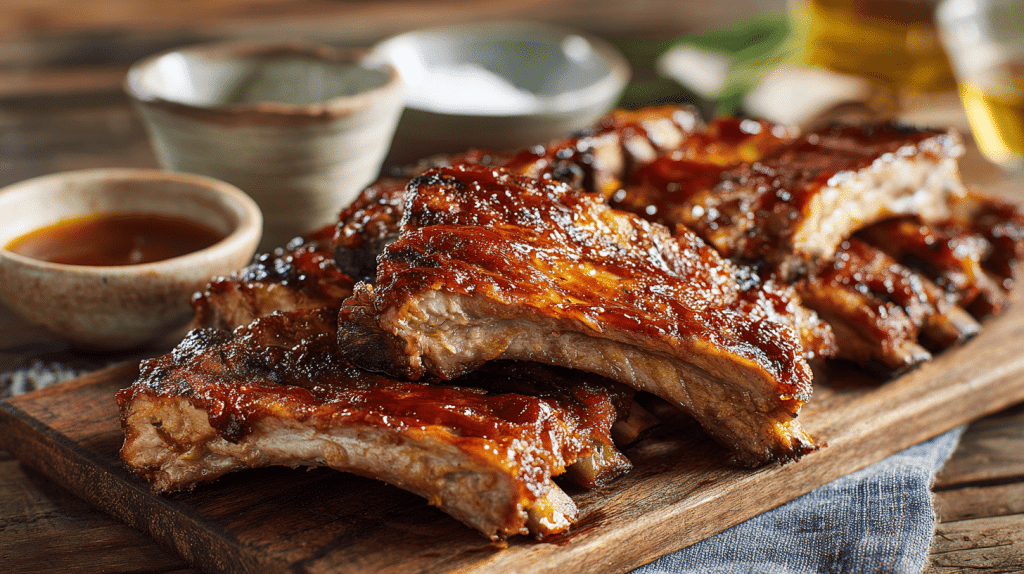

Learning how to cook pork ribs at home brings restaurant-quality results right to your kitchen. Tender meat that falls off the bone, smoky flavor, and sticky barbecue glaze make ribs a crowd favorite for family dinners and backyard gatherings.
Many people think cooking ribs requires special equipment or expert skills, but that’s not true. With the right techniques and a bit of patience, anyone can master juicy, flavorful ribs using an oven, grill, or smoker.
Understanding proper preparation, cooking temperatures, and timing makes all the difference between tough, dry ribs and melt-in-your-mouth perfection. Ready to become a rib-cooking pro? Let’s get started.
Know Your Ribs: Baby Back vs St. Louis vs Spare Ribs
Pork ribs come in three main cuts, each with unique characteristics. Baby back ribs are smaller, curved bones with tender meat on top. They cook faster due to their size.
Spare ribs are larger, flatter, and meatier with more fat running through them. St. Louis ribs are spare ribs with the tips trimmed off for a rectangular shape. The cut you choose affects cooking time significantly.
Baby backs need about 3-4 hours, while spare ribs require 5-6 hours for proper tenderness. Understanding these differences helps you plan your cooking method and timing correctly.
Each cut offers distinct flavor and texture, so pick based on your preference and available time.
Disclaimer: Cooking times vary by method. The 3-6 hour timelines above apply to traditional low-and-slow grilling or smoking without foil. Foil-wrapped oven ribs, as shown below, cook faster – typically 2.5-3 hours at 275°F. Always judge doneness by tenderness, not time.
Prepping: Trimming, Cutting & Seasoning Basics
Proper preparation sets the foundation for tender, flavorful ribs. Start by removing the membrane on the bone side – slide a knife underneath, grip it with a paper towel, and peel it off in one piece.
Trim away thick fat caps and any loose pieces hanging off the edges. For even cooking, cut racks into smaller portions of 3-4 ribs each if needed.
Before applying seasoning, brush ribs with yellow mustard or olive oil as a binding agent; this helps the dry rub stick without affecting taste.
Apply your chosen spice blend generously on both sides, pressing it into the meat. Let seasoned ribs rest for 30 minutes at room temperature or refrigerate overnight for deeper flavor penetration.
Needed Ingredients to Cook Pork Ribs
|
How to Cook Pork Ribs in the Oven
Oven-baked ribs deliver tender, fall-off-the-bone results without needing a grill or smoker. The low and slow method breaks down tough connective tissue while keeping the meat juicy.
Step 1: Prepare and Trim the Ribs
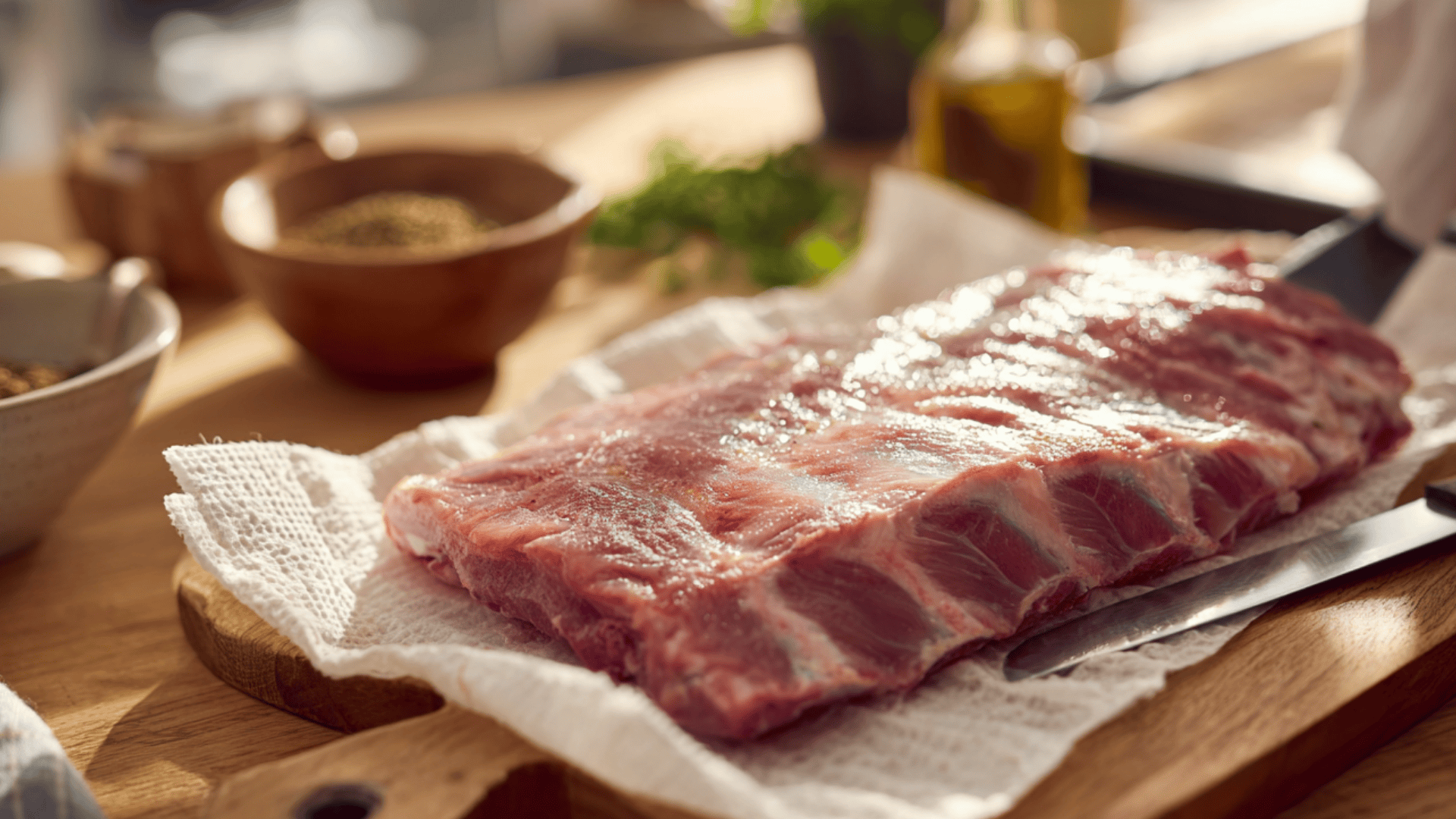
Start by flipping the ribs bone-side up. Look for a thin, shiny membrane covering the bones. Slide a butter knife under it to loosen, then grip with a paper towel and pull it off completely.
Trim any excess fat or uneven edges with kitchen shears. Pat the ribs thoroughly dry with paper towels. This helps the seasoning stick better and creates a nice crust during cooking.
Step 2: Season the Ribs Evenly
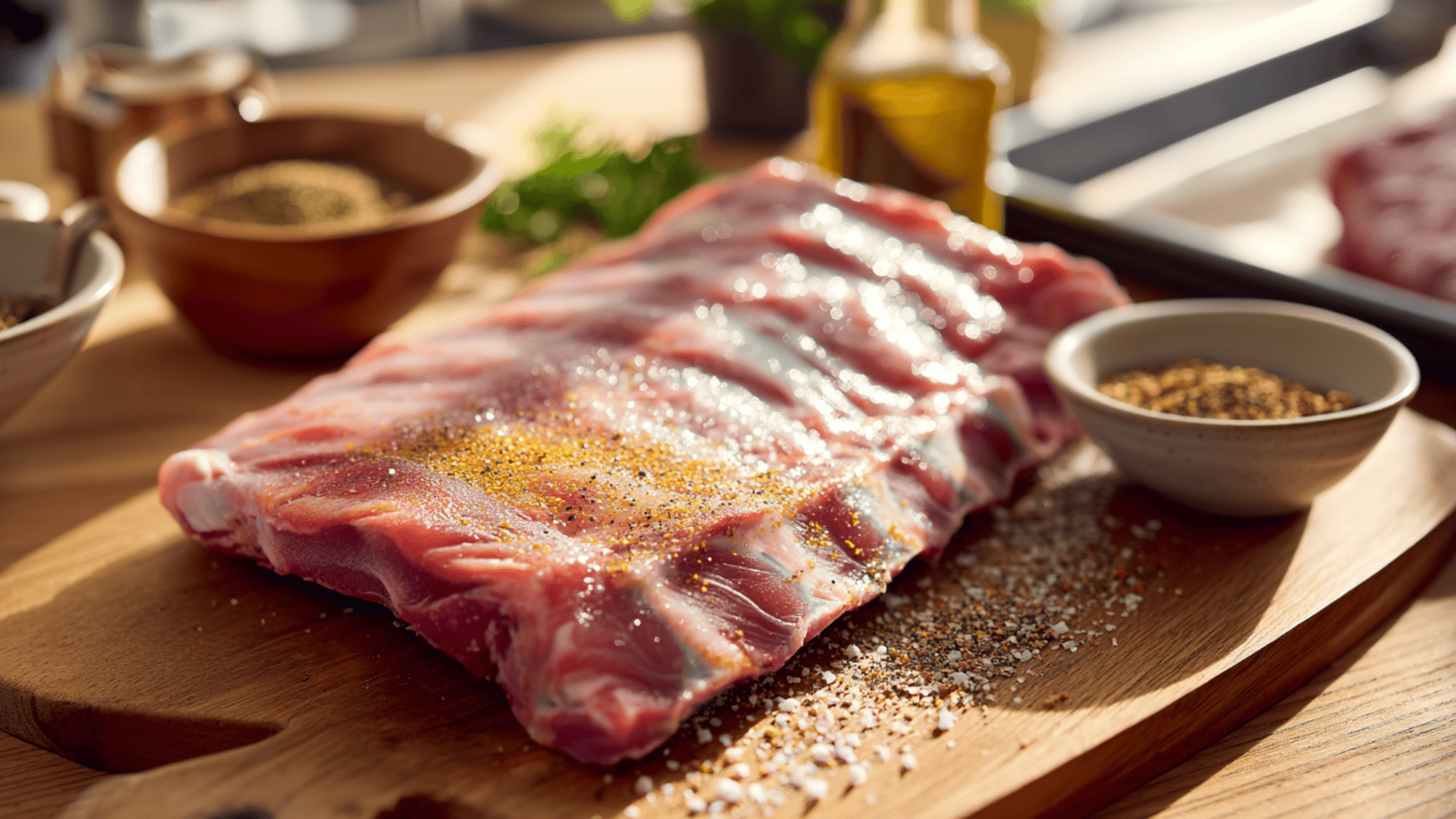
Brush a light layer of oil or yellow mustard across both sides of the ribs if desired. This acts as a binder for your spices. Sprinkle salt, black pepper, or your favorite dry rub generously over the meat side first, then flip and season the bone side.
Gently press the seasoning into the meat. Let the ribs sit at room temperature for 15-20 minutes so the flavors penetrate the surface.
Step 3: Bake Low and Slow
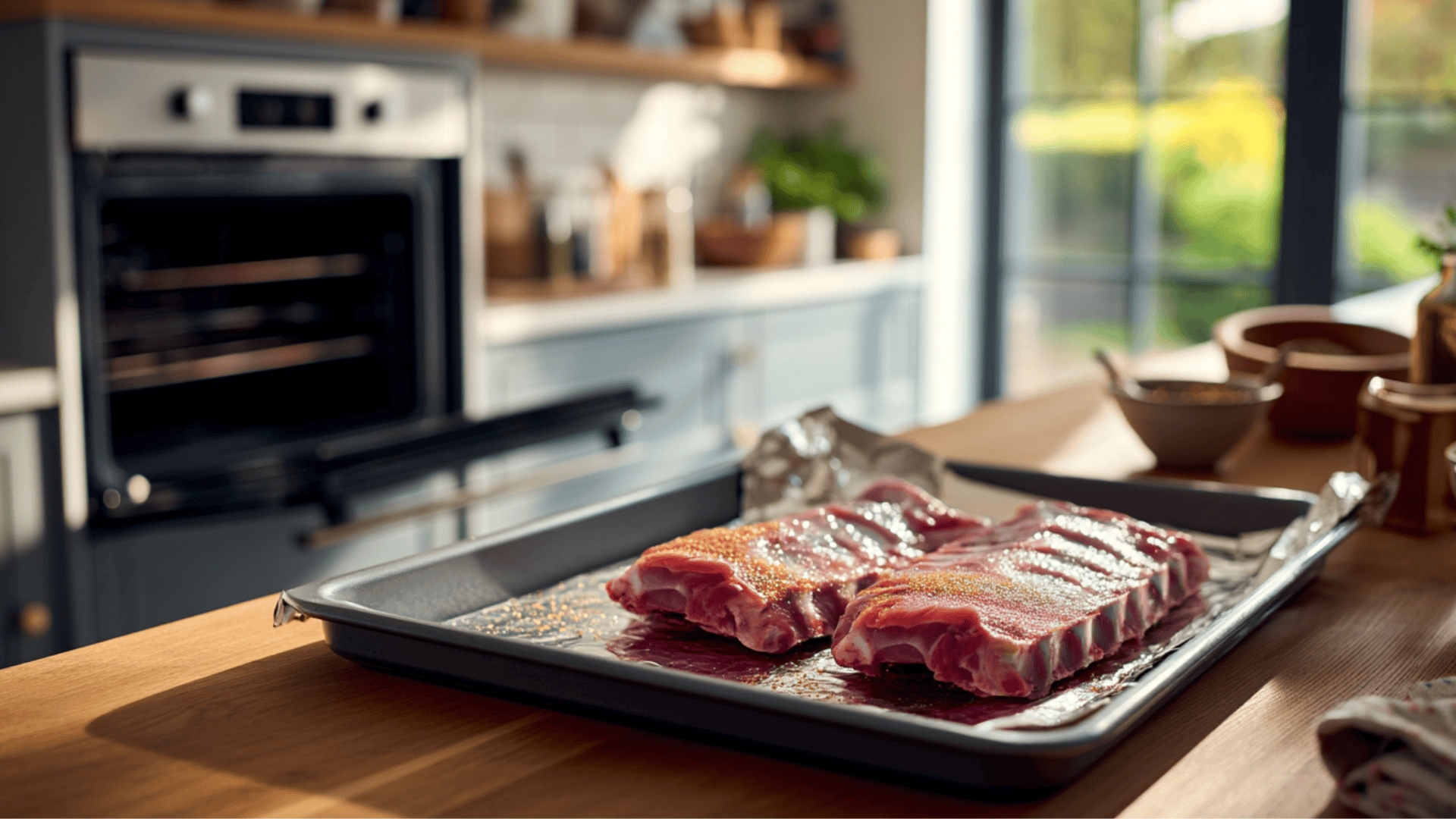
Set your oven to 275°F and let it preheat fully. Line a large baking sheet with heavy-duty aluminum foil for easy cleanup. Place the ribs meat-side up on the sheet.
Cover the entire pan tightly with another layer of foil, sealing the edges well. This traps moisture and steam, making the ribs tender. Bake for 2.5 to 3 hours until the meat pulls back from the bones easily.
The foil wrap speeds up tenderization compared to grilling or smoking.
Step 4: Apply Barbecue Sauce
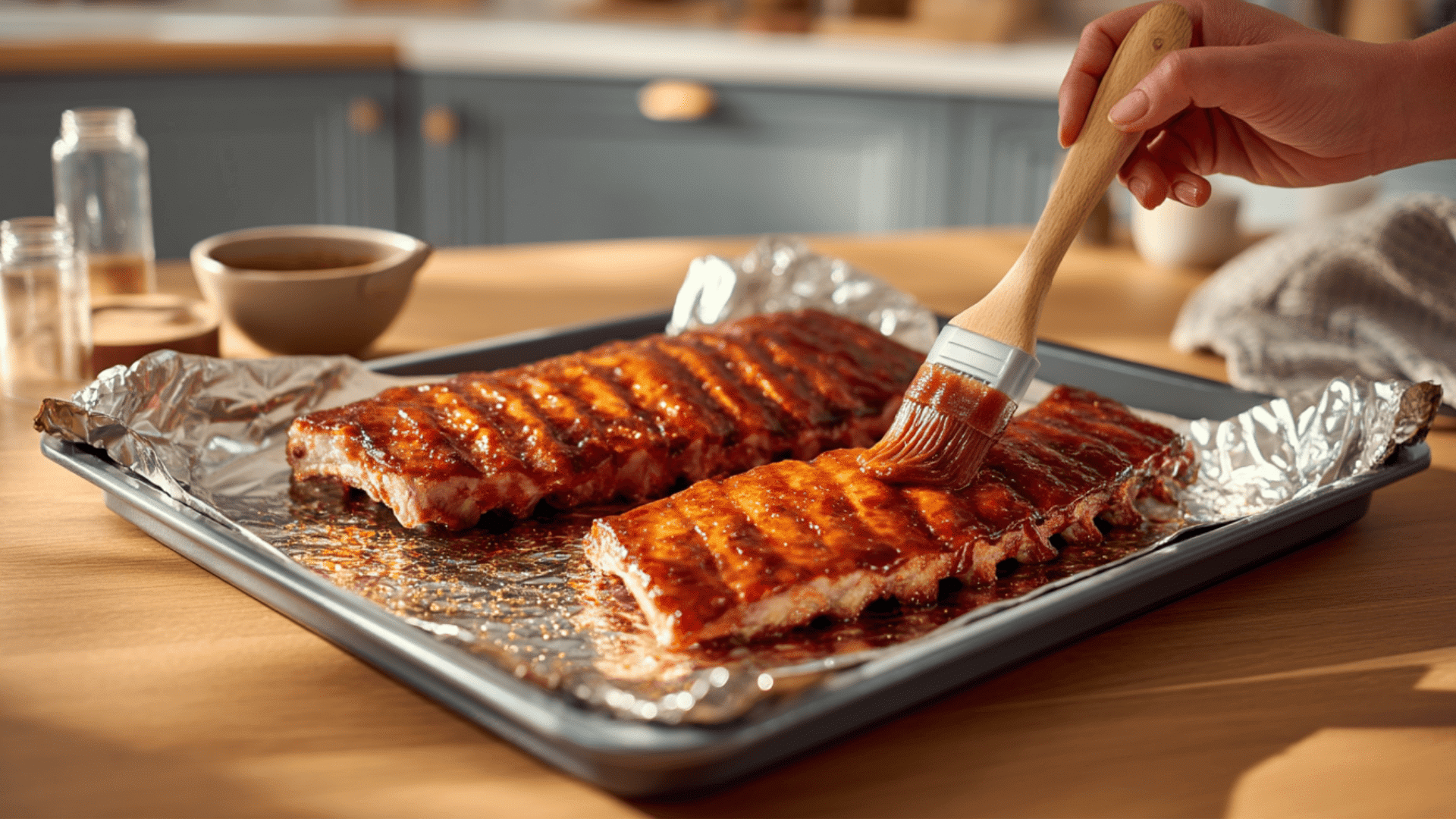
Carefully remove the top foil layer, watching for hot steam. Use a basting brush to coat the ribs with your chosen barbecue sauce, covering all exposed meat.
Don’t use too much, or it will slide off. Place the ribs back in the oven without the foil cover. Bake for another 20-30 minutes until the sauce caramelizes and becomes sticky. The edges should look slightly charred.
Step 5: Rest and Serve
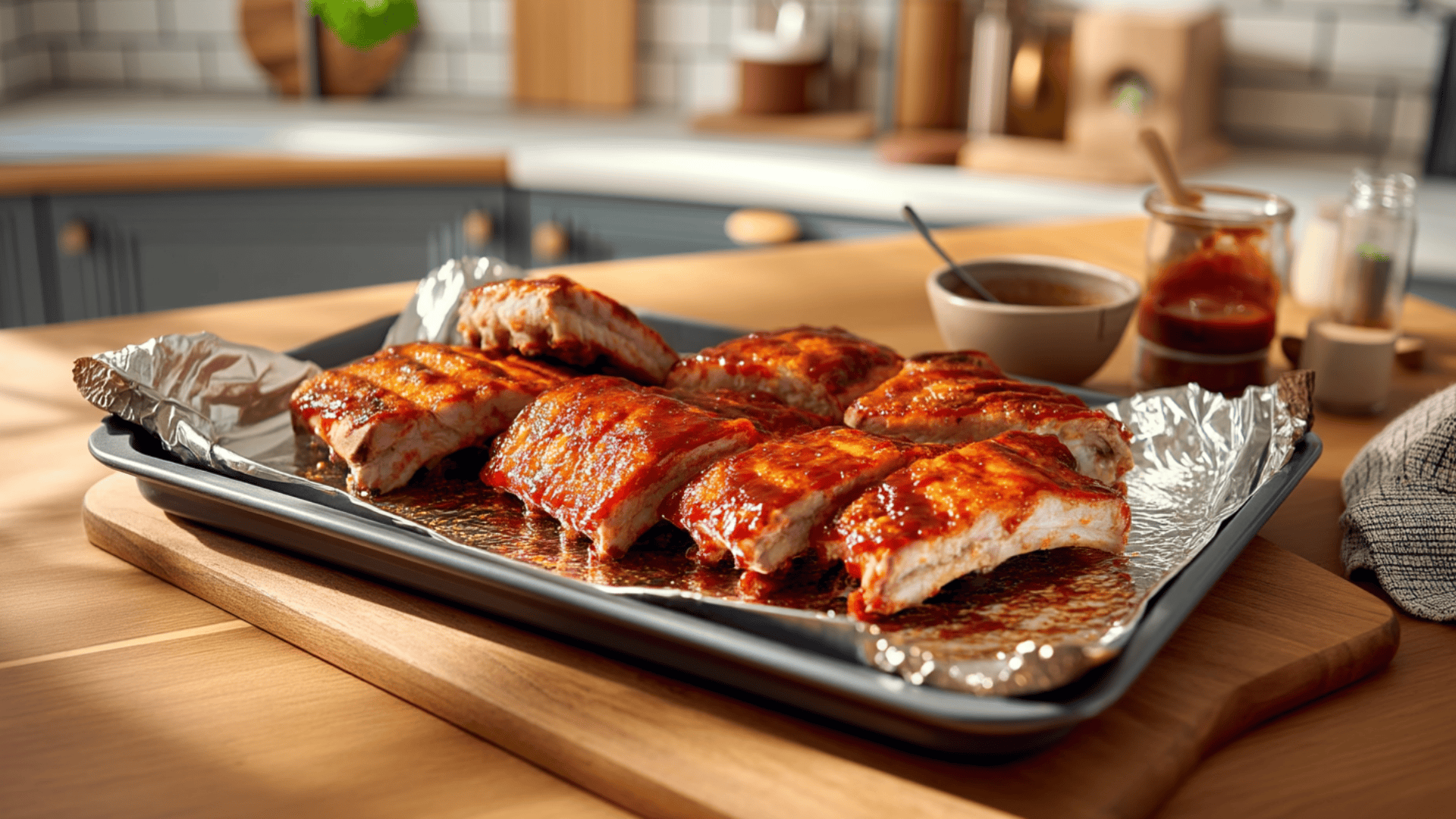
Take the baking sheet out of the oven and transfer the ribs to a cutting board. Tent loosely with foil and let them rest for 10-15 minutes. This allows the juices to redistribute throughout the meat.
Use a sharp knife to cut between the bones into individual ribs or two-bone portions. Serve immediately while still warm with extra sauce on the side and your favorite accompaniments.
Recipe Notes
Here’s everything you need to know about making these tender and flavorful oven-baked pork ribs. This recipe is ideal for beginners or home cooks looking for juicy ribs without needing a grill or smoker.
| INFORMATION | DETAILS |
|---|---|
| Prep Time | 15-20 minutes |
| Cook Time | 2.5–3 hours |
| Total Time | 2 hours 45 minutes – 3 hours 20 minutes |
| Method | Oven-baked |
| Yield | 2-4 servings (depending on rib size) |
| Cuisine | American/BBQ |
| Difficulty | Easy |
With this simple oven method, you’ll have fall-off-the-bone pork ribs with rich, caramelized flavor. Perfect for a family dinner or casual BBQ! Serve with your favorite sides for a restaurant-quality meal at home.
How to Cook Pork Ribs on the Grill?
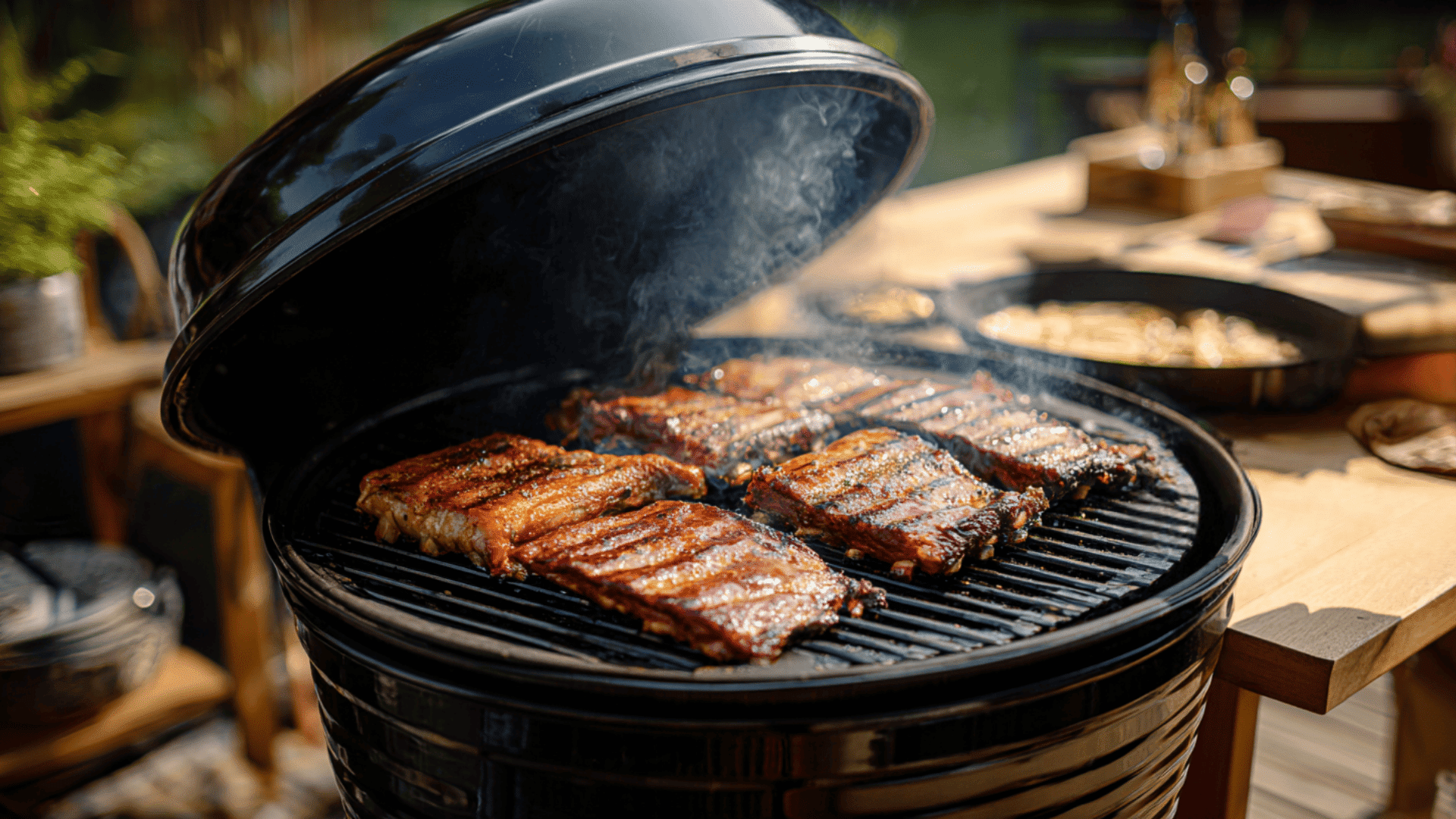
Grilling ribs requires understanding direct versus indirect heat to avoid common mistakes. Direct heat means placing ribs directly over flames, which can char the outside while leaving the inside undercooked.
Instead, use indirect heat by placing ribs on the cooler side of the grill away from flames. Keep the lid closed to maintain a steady temperature around 250-300°F.
This method cooks ribs evenly without burning. To keep them juicy, place a water pan near the heat source or spritz ribs with apple juice every 30 minutes. Apply barbecue sauce only during the last 15-20 minutes to prevent burning.
Total cooking time runs 3-4 hours, depending on rib thickness and grill temperature.
How to Cook Pork Ribs in a Smoker?
Smoking ribs creates deep, rich flavor through low and slow cooking. Set your smoker between 225-250°F for best results. This temperature range breaks down collagen without drying out the meat.
Wood choice significantly impacts taste. Hickory provides a strong, bacon-like flavor, while applewood offers mild sweetness. Cherry wood adds subtle fruity notes, and oak delivers classic smokiness.
Avoid over-smoking by limiting heavy woods like mesquite. Plan for 5-6 hours of cooking time for spare ribs and 4-5 hours for baby backs.
The meat should pull back from the bones about half an inch when done. Wrap ribs in foil halfway through if they look dry, then unwrap for the final hour.
Nutrition Facts
These oven-baked pork ribs are tender, flavorful, and perfect for a hearty meal. Enjoy them as a satisfying main dish with your favorite sides. Here’s a quick nutrition breakdown per serving:
| NUTRIENT | PER SERVING |
|---|---|
| Calories | 350 kcal |
| Protein | 28 g |
| Carbs | 4 g |
| Fat | 25 g |
| Fiber | 0 g |
| Sugar | 2 g |
| Sodium | 550 mg |
NOTE: Nutrition values are estimates based on ribs baked with a dry rub and barbecue sauce. Actual values may vary depending on rib size, sauce used, and portion.
How to Know When Ribs Are Done (Not Just Cooked)
Perfectly cooked ribs require multiple doneness checks beyond just temperature. Use a meat thermometer to confirm ribs reach 190-205°F internally for tender results.
Try the bone wiggle test – grab a bone and twist gently. It should move easily but not fall out completely. Look for meat pulling back from bone ends about half an inch, exposing clean bone.
After removing ribs from the heat, rest them for 10-15 minutes before cutting. This allows juices to redistribute throughout the meat.
Common mistakes include removing ribs too early when they hit 165°F, resulting in a chewy texture, or cooking past 210°F, which makes them mushy and dry. Trust multiple indicators together for the best results.
Serving & Pairing Ideas for Your Pork Ribs
Oven-baked pork ribs are full of flavor and are best enjoyed with sides that match their taste and texture. Choosing the right sides can make the meal more filling and balanced.
1. Creamy Coleslaw
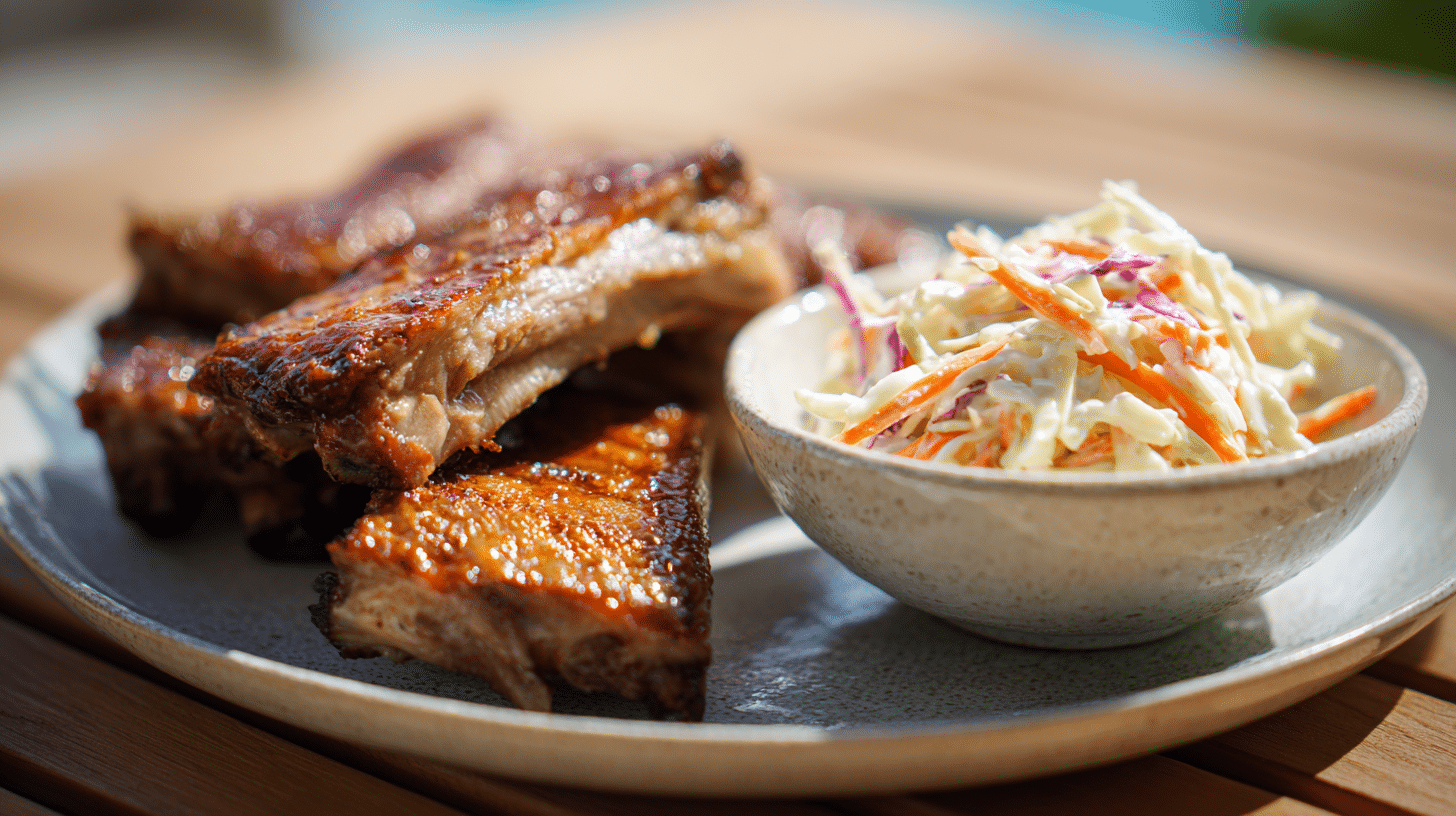
Creamy coleslaw is a perfect side for pork ribs because it adds a fresh and slightly tangy taste. The crunch of cabbage and carrots gives a nice contrast to the soft meat.
The creamy dressing helps balance the richness of the ribs, making each bite lighter and more satisfying. It can be served cold, straight from the fridge, which makes it easy to prepare ahead of time.
2. Garlic Mashed Potatoes
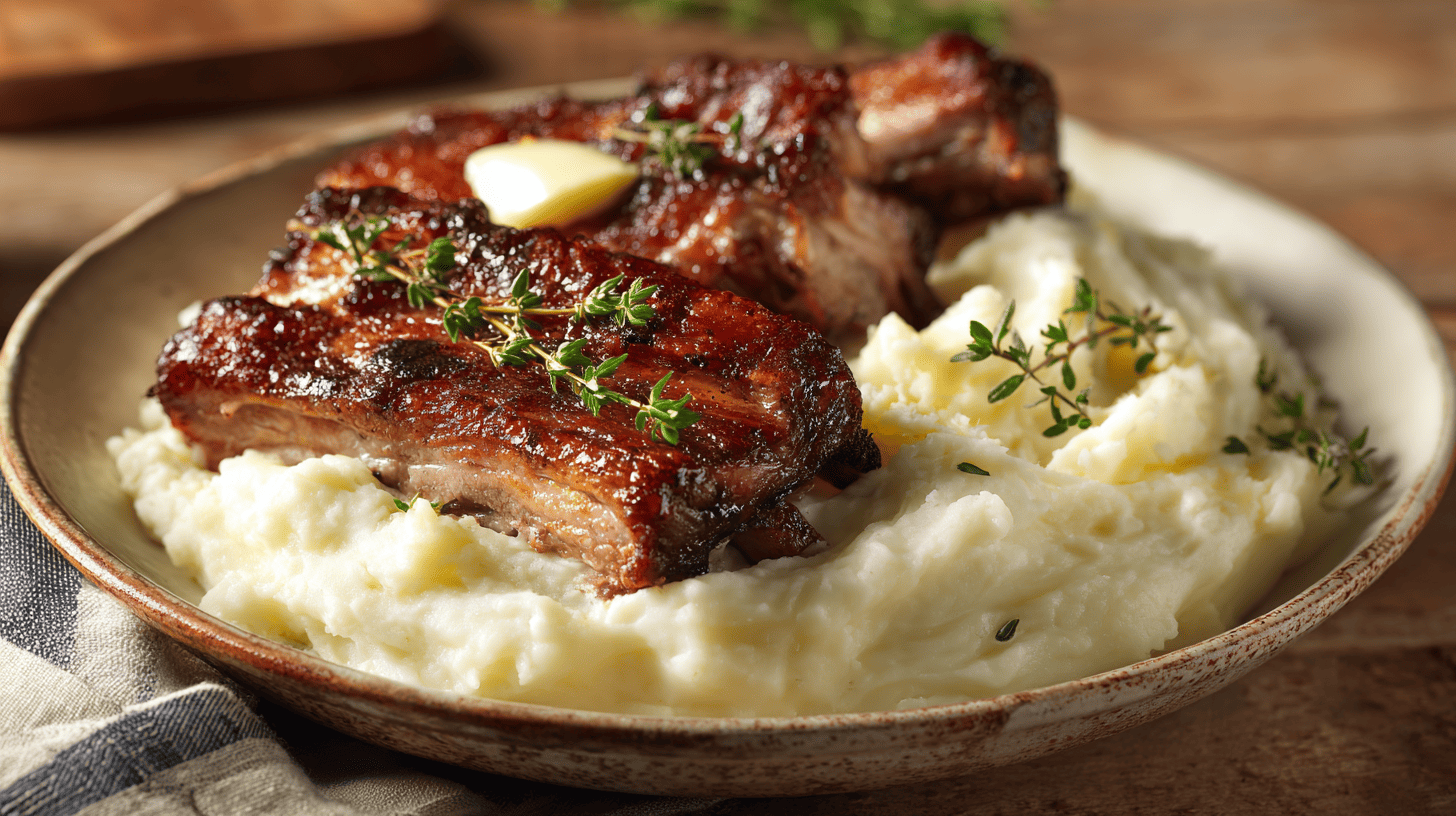
Garlic mashed potatoes are soft, warm, and full of flavor, making them an excellent match for pork ribs. The smooth texture and buttery taste complement the meat well.
They can also soak up any leftover sauce from the ribs, adding more flavor to every bite. You can make them simple or add a little cream and garlic for extra taste. This side is comforting and filling for any meal.
3. Grilled Corn on the Cob
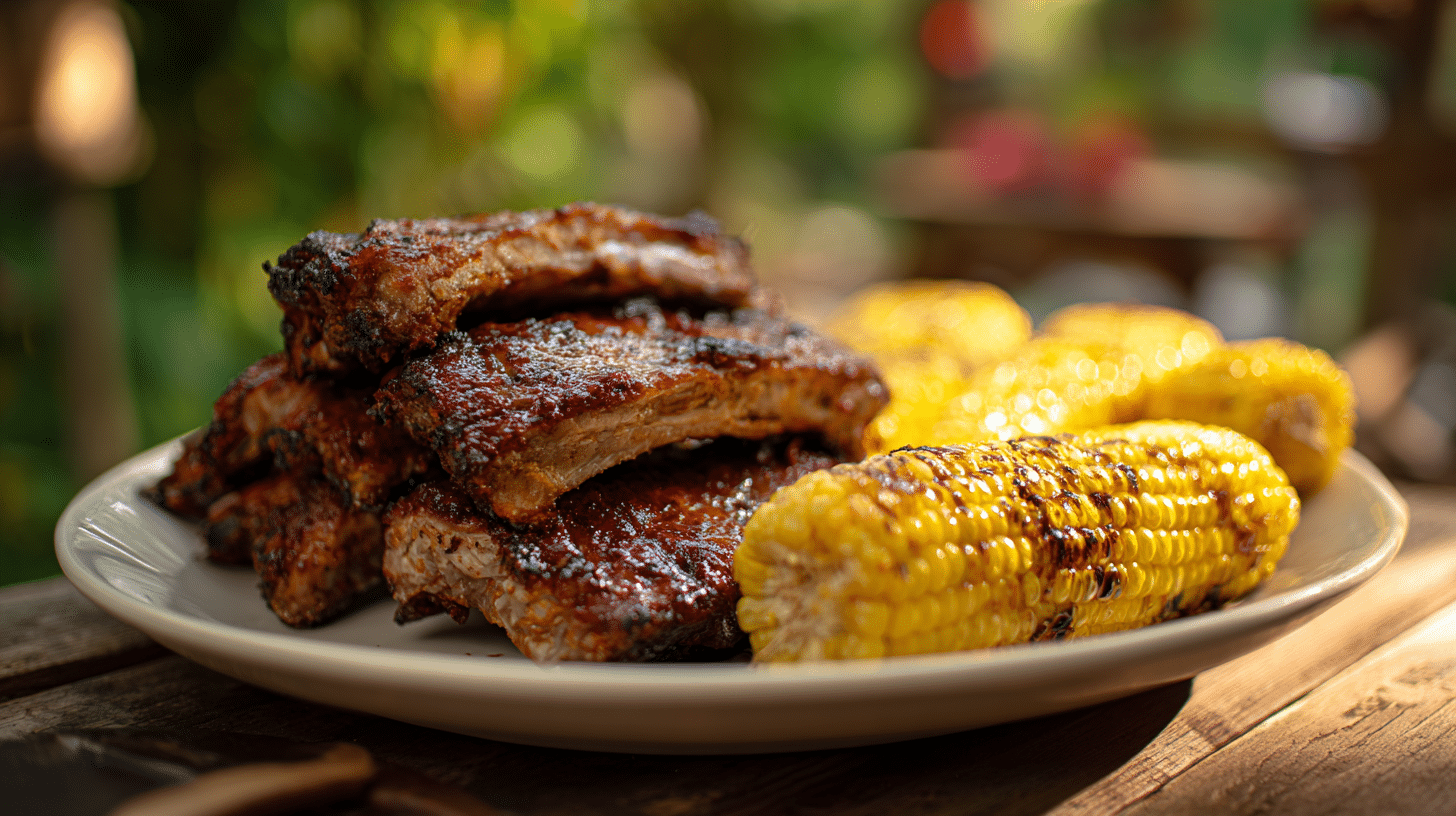
Grilled corn on the cob adds a sweet and smoky taste that pairs well with pork ribs. The natural sweetness of the corn helps balance the savory flavor of the meat.
You can grill it with a bit of butter and seasoning to make it even tastier. Corn is easy to eat by hand and makes the meal feel fun and casual. It also adds color to the plate, making the meal more appealing.
Mistakes to Avoid When Cooking Pork Ribs
Even experienced cooks make simple mistakes that ruin otherwise perfect ribs. Knowing what to avoid saves time, money, and frustration in the kitchen.
- Don’t Rinse Raw Ribs: This spreads bacteria. Pat dry with paper towels instead.
- Always Remove the Membrane: Leaving it on creates a rubbery texture and blocks flavor.
- Never Sauce Too Early: Sugar burns at high heat. Apply during the last 20-30 minutes only.
- Avoid High Heat: Temperatures above 300°F dry out meat and make ribs tough.
- Don’t Skip Resting: Cutting immediately releases juices and leaves the meat dry.
Learning from these common pitfalls helps you produce consistently tender, flavorful ribs every time you cook. Following these tips also makes the cooking process easier and more enjoyable.
The Bottom Line
Now you know how to cook pork ribs using multiple methods that deliver tender, delicious results every time.
From choosing the proper cut to avoiding common mistakes, these techniques work for beginners and experienced cooks alike. Remember to prep properly, cook low and slow, and let your ribs rest before serving.
Practice makes perfect, so don’t worry if your first attempt isn’t flawless.
Each time you cook ribs, you’ll gain confidence and develop your own preferred methods and flavors. Soon you’ll be serving up fall-off-the-bone ribs that impress everyone at the table.
Have questions or want to share your rib-cooking tips? Drop a comment below!