






Stop Scrubbing: The 5 Minute Pan Sauce Secret
You know those crusty brown bits stuck to your pan after searing chicken? The ones you attack with a scrub brush while muttering under your breath?
Yeah, stop doing that.
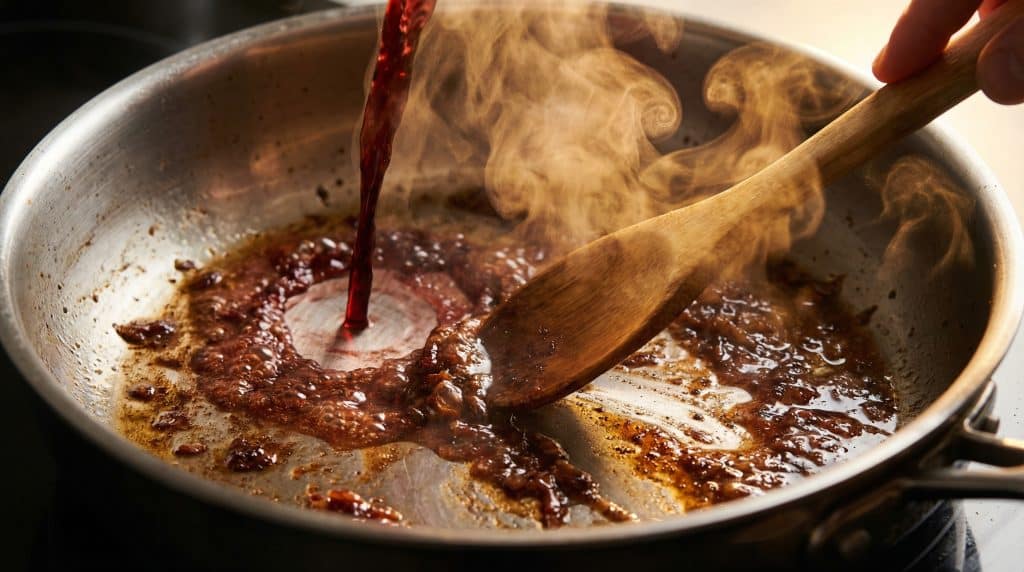
Those bits are called fond, and they’re basically concentrated deliciousness. More flavor than the chicken itself, actually. And most home cooks wash it straight down the drain like it’s a cleaning problem instead of dinner.
I’m here to rescue you from that tragedy.
The Right Pan Changes Everything
First things first: put the nonstick pan away. I know, I know it’s your favorite. But deglazing needs stuff that actually sticks to the pan. That’s literally the point. Nonstick defeats the whole purpose.
Grab a stainless steel or cast iron pan, at least 12 inches across. Smaller pans crowd the chicken, trap steam, and give you sad, anemic fond. We want gorgeous fond.
Quick note on cast iron: it builds fond beautifully, but wine and lemon juice can mess with your seasoning over time. If you’re a cast iron devotee who still wants pan sauces, enameled cast iron is your friend.
Oh, and get yourself a flat edged wooden spoon. The flat edge gets into corners where all the good stuff hides, and wood won’t burn your hand while you’re scraping. (Ask me how I learned that one.)
The Actual 5 Minute Method
Here’s the whole thing, start to finish:
Step 1: Pull your chicken off the pan but leave the pan on the heat turn it down to medium low. Pour off most of the fat, but leave about a tablespoon. That fat makes the sauce feel rich and silky instead of thin and sad.
Step 2: Toss in some minced shallots or garlic. Let them soften and get a little golden, maybe 1-2 minutes. This is optional if you’re in a rush, but it adds a nice flavor base. (I almost never skip it.)
Step 3: This is the magic moment. Pour in your deglazing liquid it should sizzle and steam immediately. If it doesn’t, your pan cooled too much. Scrape the bottom firmly, including the corners. Keep at it for 60-90 seconds until the pan looks mostly clean and the liquid turns deep, gorgeous brown.
Here’s the thing: you’ve got about 60 seconds before that fond cools and becomes a stubborn jerk. Don’t walk away to check your phone. Don’t even think about it.
Step 4: Let everything simmer until it reduces by about half. Want to know if it’s thick enough and how to fix a thin pan sauce? Dip a spoon in, drag your finger across the back. If the line holds for a few seconds before filling in, you’re golden.
If you used wine, give it an extra 2-3 minutes after reducing. You’re cooking off that raw alcohol edge. When it stops smelling like you’re about to do a shot and starts smelling like actual food, move on.
Step 5: Take the pan OFF the heat this is crucial and whisk in 1-2 tablespoons of cold butter, one cube at a time. Let each piece melt before adding the next. This is what gives restaurant sauces that glossy, coat your mouth texture.
If your butter breaks and gets greasy and separated (we’ve all been there), the pan was too hot. Heavy cream is more forgiving if butter feels like a diva move just stir in a few tablespoons instead.
Step 6: Taste it. Add salt in tiny amounts until the flavor wakes up. Then squeeze in a little lemon juice start with like ¼ teaspoon and work up. You want brightness, not pucker face.
Step 7: Fresh herbs go in last, off the heat. Parsley, thyme, tarragon whatever matches your vibe. Don’t simmer them or the aroma vanishes.
Done. That’s it. Five minutes, maybe six if you were texting.
What Liquid Should You Use?
Okay, decision time. Here’s my cheat sheet:
- No alcohol, fastest option: chicken stock
- Most restaurant-y flavor: wine (or vermouth) plus stock
- Fond being stubborn? Use something acidic wine, vermouth, or a splash of lemon
For about ½ cup of finished sauce:
| Liquid | Amount | Why I Like It |
|---|---|---|
| Dry white wine | ½ cup | Classic, bright, works with almost everything |
| Chicken stock | 1 cup | Simple, savory, kid friendly |
| Wine + stock | ½ cup wine, then 1 cup stock | The restaurant move best of both worlds |
| Dry vermouth | ½ cup | Slightly herbal, keeps forever in the cabinet |
Budget hack: equal parts stock and water plus ½ teaspoon white wine vinegar. It’s not identical, but it gets you 80% of the way there without the wine price tag.
Good Fond vs. “Oh No, I Burned It”
Here’s the difference:
Good fond: dark brown, almost chocolate colored. Smells rich and savory. This is the treasure.
Bad fond: jet black, ashy, smells sharp and burnt. This is charcoal, and no amount of wine fixes charcoal. Wipe the pan, start over, and forgive yourself. It happens.
Rescue Missions for Sauce Gone Wrong
Bitter sauce? If the fond was burnt, it’s unsalvageable (sorry). If you just over reduced a little, a tablespoon of butter or cream can soften the edge.
Sauce broke and got oily? The pan was too hot when you added butter. To fix it: warm 2 tablespoons cream in a clean pan over low heat, then whisk the broken sauce in bit by bit. Usually comes back together in 30 seconds.
Fond won’t dissolve? Pan cooled too much or you need more liquid. Add a splash, scrape harder, reheat briefly.
One random warning: don’t pour ice cold water into a hot stainless steel pan. Temperature shock can warp it. Room temp liquids are fine. Cold wine or stock is usually okay because the fat cushions the temperature change.
Three Sauces to Start With
Shallot and red wine: Sauté a sliced shallot in the reserved fat with a thyme sprig for a minute or two. Add ½ cup red wine + ½ cup stock. Reduce by half. Finish with a tablespoon of cold butter. Feels fancy, isn’t hard.
Lemon caper: Cook 2 tablespoons drained capers in the fat for about a minute (they’ll sizzle and pop a little that’s fine). Deglaze with white wine, reduce until almost gone. Add 1 cup stock + 2 tablespoons lemon juice. Reduce by half. Hit it with chopped parsley. This one is chef’s kiss over fish, too.
Stock only (the fastest): Skip wine entirely. Add 1 cup stock, reduce by half, finish with butter. Stripped down, dead simple, still beats anything from a jar by a mile.
A Couple Pro Moves
Once you’ve got the basics down:
- Anchovy paste (1 teaspoon): sounds weird, doesn’t taste fishy. Just adds depth.
- Dijon mustard (1 teaspoon): helps butter emulsify AND tastes great.
- Fish sauce (⅛ teaspoon): umami bomb.
Try one at a time so you can taste what each one does.
Also, restaurant sauces often use two acids like a squeeze of citrus plus a tiny splash of vinegar. Makes the sauce brighter without going sour. Game changer once you try it.
Don’t Throw Away Extra Sauce
Freeze it in ice cube trays. One cube = one serving. Thaws in under 10 minutes in a warm pan, which means random Tuesday chicken breast can taste like you tried.
For bigger batches, freeze flat in bags so you can snap off pieces. Reheat over low heat and stir high heat can break the sauce. If it’s too thick, loosen with a splash of stock.
Tonight, try the stock only version or a garlic red pepper sauce with whatever chicken you were already planning to make. I promise: a few minutes of scraping beats anything from a jar, and you’ll never look at those brown bits as a cleaning problem again.