






Ciguatera: The Invisible Fish Poison That Laughs at Your Grill
So here’s a fun fact I wish I’d learned before my first trip to the Caribbean: there’s a toxin lurking in certain reef fish that you cannot see, cannot taste, and cannot cook out of existence. It doesn’t care if you grill it, fry it, smoke it, or freeze it into oblivion. It survives everything.
It’s called ciguatera, and roughly 50,000 people get poisoned by it every year. Most of them had no idea it was coming.
I’m not here to scare you away from fish tacos forever. I’m here because this is so preventable once you know what to look for and what to avoid. Consider this your no nonsense guide to eating seafood in tropical places without ending up in the ER questioning all your vacation choices.
Quick heads up before we dive in: If you’ve recently eaten reef fish and you’re having trouble breathing, chest pain, severe weakness, or difficulty swallowing stop reading and get to an emergency room. This post will still be here when you’re feeling better.
How This Sneaky Toxin Ends Up on Your Plate
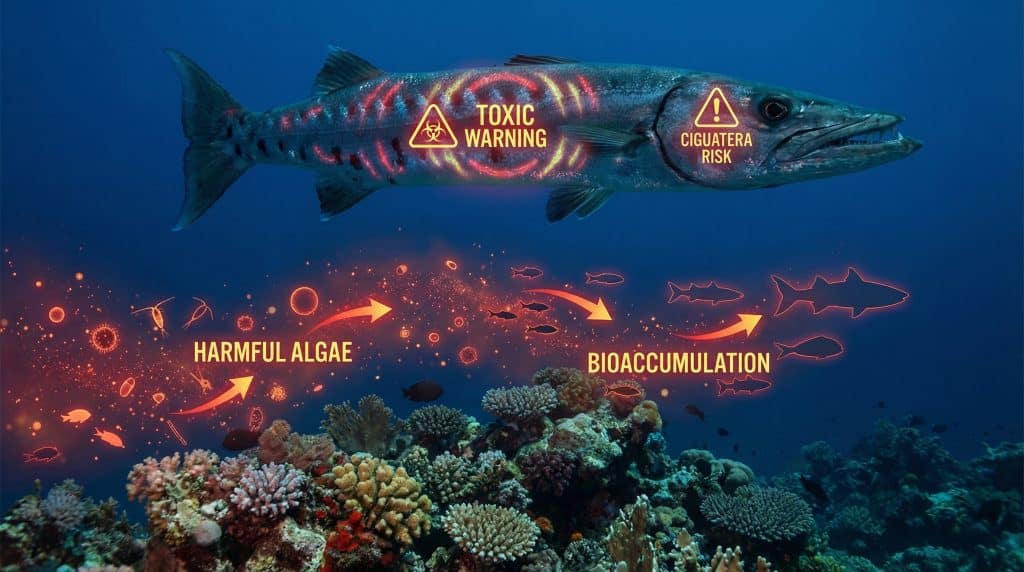
Ciguatera starts with tiny algae called dinoflagellates that hang out on coral reefs in tropical waters. Little fish nibble on the coral, consume the algae, and absorb the toxin. They’re fine. The toxin just… accumulates in their bodies like bad karma.
Then a bigger fish eats a bunch of those little fish. Now that fish is carrying all their stored toxin. Repeat this up the food chain until you get to the apex predators barracuda, big grouper, moray eels and you’ve got fish swimming around with enough poison to ruin your entire week (or month, but we’ll get there).
Here’s what makes it especially annoying: the toxin messes with your sodium channels, keeping your nerve cells firing when they should be resting. That’s why the symptoms are so weird and neurological. Your nerves basically get stuck in the “on” position.
And no, before you ask cooking does absolutely nothing. Neither does freezing, marinating, smoking, or praying. The fish looks normal, smells fresh, tastes delicious. You won’t know until the symptoms hit.
The Fish Most Likely to Betray You
About 75% of ciguatera cases come from four main culprits: barracuda, grouper, snapper, and amberjack. Barracuda is honestly the villain of this story and a snapper and barracuda comparison helps explain why many health agencies just say skip it entirely if you’re in a known problem area.
Also on the naughty list: moray eel, sea bass, and large red snapper.
One thing that surprised me: the “bigger fish = more danger” rule isn’t as reliable as people think. Research from French Polynesia found the connection between size and toxin levels is pretty inconsistent. Focus on species and where it was caught first. Size is secondary.
Also important: Where the toxin hangs out in the fish matters. Liver, intestines, head, and roe carry way higher concentrations than the actual fillet. If you’re eating reef fish from a questionable area, stick to the fillet and leave the organs alone.
Where the Risk Runs Highest
In the U.S.: Hawaii has the most cases, followed by Florida (especially the Keys), Puerto Rico, the U.S. Virgin Islands, Guam, and American Samoa.
Globally: The Caribbean, Pacific Islands (Polynesia in particular), Indian Ocean, and Australian waters. Newer hotspots are popping up in the Canary Islands and eastern Mediterranean climate change is apparently giving the algae new vacation homes.
Seasonal note: The algae love warm water, so May through August is peak risk season in the Northern Hemisphere. But here’s the kicker frozen fish travels. You can absolutely get ciguatera in a landlocked state if the fish was imported from a risky area.
A few things that make cases worse:
- Eating a bigger portion (more fish = more toxin = more misery)
- Eating the organs instead of just fillet
- Being an adult (kids often get milder cases, which feels unfair)
- Having had ciguatera before repeat exposures tend to hit harder
The Symptoms Are… Weird
If you’ve eaten reef fish recently and start feeling off, here’s what to watch for:
First wave (usually within 6-17 hours, sometimes faster): The classic food poisoning stuff nausea, vomiting, diarrhea, stomach cramps. This part usually settles down within a few days.
Second wave (the neurological circus): Tingling or numbness in your lips, tongue, fingers, and toes. Muscle weakness. Crushing fatigue. Headaches. Itching that fun fact often gets worse if you drink alcohol.
The signature move: Temperature reversal. Hot things feel cold. Cold things feel burning hot. If you grab an ice cube and it feels like touching a hot stove, that’s a massive red flag for ciguatera. Not everyone gets this symptom, but when it happens, it’s pretty unmistakable.
Interestingly, the symptom pattern can vary depending on where your fish came from. Caribbean cases often start with stomach issues that shift to nerve symptoms over 24 hours. Pacific cases sometimes skip straight to the neurological stuff. Different oceans, different toxin cocktails.
The Part Nobody Warns You About: It Can Drag On
Most acute symptoms clear up within days to weeks. But the nerve stuff the tingling, the fatigue, the temperature confusion can stick around for months. In rare cases, years.
And here’s a lovely surprise: symptoms can flare up again 3-6 months later if you eat any fish (not just reef fish), drink alcohol or caffeine, or eat nuts. Your nervous system stays extra twitchy long after you thought you were better.
So if you’re wondering why your doctor told you to avoid wine and almonds for the next six months… now you know.
Getting It Diagnosed (Without a Magic Test)
There’s no quick lab test for ciguatoxin, which is frustrating. Diagnosis is basically detective work. Your doctor will want to know:
- What species of fish you ate
- Where it was caught
- When you ate it
- How much you ate
- Whether anyone else who ate the same fish got sick (if multiple people get sick from the same fish, that’s a strong clue)
Write this stuff down while it’s fresh in your memory. It really helps.
When to Get Help Immediately
Get to an ER if you ate tropical reef fish and develop any of these:
- Difficulty breathing or chest pain
- Irregular heartbeat or palpitations
- Severe weakness (like, affecting your ability to walk)
- Trouble swallowing or speaking
- Hallucinations or severe confusion
- Vomiting so bad you can’t keep any fluids down
If you’re not sure whether your symptoms are serious enough, call the Poison Control Marine Hotline: 1-888-232-8635. They can help you figure out your next move.
How to Actually Enjoy Seafood Without the Risk
Look, I’m not telling you to never eat fish in tropical places. I’m just saying: ask questions and make smart swaps.
Safer choices: Open ocean fish like tuna and mahi mahi carry very low ciguatera risk because they’re not part of reef food chains. Farm raised fish is also safer they’re not out there eating wild algae.
At the fish counter or restaurant, ask:
- What species is this?
- Where was it caught reef or open ocean?
- How big was the fish?
Good fishmongers in high risk areas know about ciguatera. They’ve seen cases. They’ll usually give you a straight answer.
If you do eat reef fish from a sketchy source: Small portion, fillet only, no organs. You’re managing your dose.
The Quick Checklist
Next time you’re ordering or buying fish in a tropical spot:
- Is it a reef predator (barracuda, grouper, snapper, amberjack) or open ocean/farmed?
- Where was it caught? Known hotspot? Unknown origin?
- If it’s a reef predator from a risky or unknown area: Skip it. Order the mahi mahi.
- If you decide to eat it anyway: Fillet only, smaller portion.
- If you feel sick afterward: Document everything and review the emergency signs above.
People who live in these areas eat reef fish all the time. They just pay attention to species, source, and which parts they eat. That’s it. That’s the whole secret.
Now go enjoy your vacation just maybe weigh barracuda safety and taste.