

Chicken thigh nutrition facts reveal why this cut deserves more attention on your dinner plate.
While chicken breasts often steal the spotlight, thighs pack impressive amounts of protein, essential minerals, and B vitamins that support your health goals.
Their rich, juicy flavor comes from natural fats that keep you satisfied longer. Many people skip thighs, thinking they’re too fatty or unhealthy, but the truth is far more interesting.
Understanding what’s in each thigh helps you make smarter choices at the grocery store and in your kitchen. Knowing these nutrition facts can also improve how you plan balanced, delicious meals.
What Chicken Thigh Nutrition Really Means?
Chicken thigh nutrition refers to the balance of protein, fat, and calories in this flavorful cut of meat. Per 100g of cooked, roasted, boneless, skinless chicken thigh, you get roughly 179 calories, 26g of protein, and 9.5g of fat.
One average boneless, skinless thigh (about 116g cooked) provides approximately 208 calories, 28-29g of protein, and 9-10g of fat, making it a high-protein, satisfying option.
Chicken thighs are dark meat, containing more myoglobin, which gives them their deeper color and richer flavor. Their fat content helps retain moisture during cooking, making them harder to dry out than chicken breasts.
Chicken Thigh Nutrition Facts
Chicken thighs are not only flavorful but also nutrient-dense, making them a valuable part of a balanced diet. Here’s the nutritional profile of 100g of cooked, skinless chicken thigh.
| NUTRIENT | AMOUNT PER 100g |
|---|---|
| Calories | ~179 kcal |
| Protein | ~26 g |
| Total Fat | ~9.5 g |
| Saturated Fat | ~2.5 g |
| Cholesterol | ~90 mg |
| Carbohydrates | 0 g |
| Fiber | 0 g |
| Sodium | ~82 mg |
| Iron | ~1.3 mg |
| Zinc | ~2 mg |
| Vitamin B12 | ~0.4 µg |
NOTE: Values can vary with cooking method and skin. Thighs have slightly more fat than breasts, but are richer in iron and zinc, making them nutritious and satisfying.
Benefits of Chicken Thighs
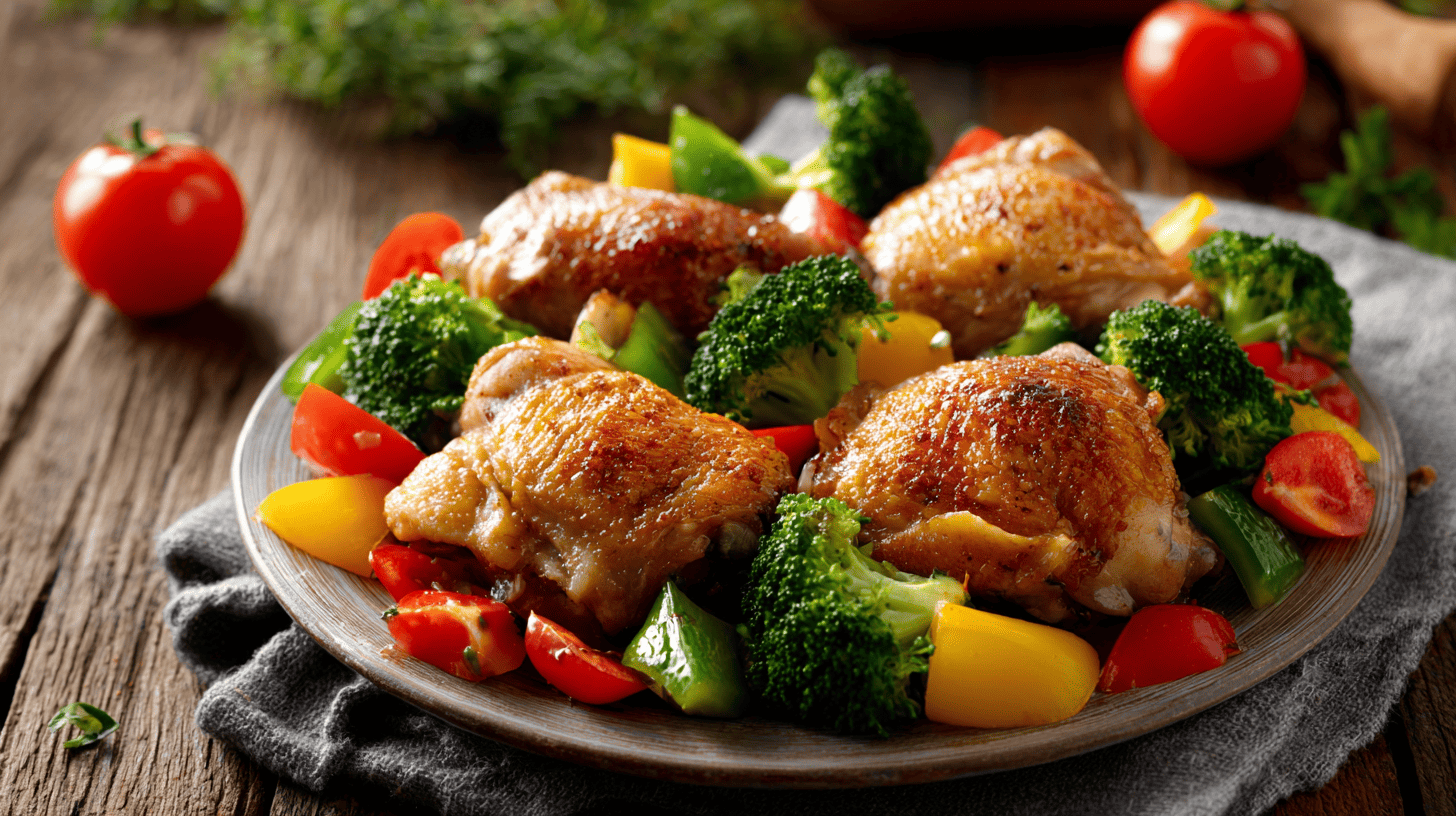
Chicken thighs offer more than just great taste. They pack several health benefits and practical advantages that make them a wise choice for everyday cooking.
- High-Quality Protein: Each cooked boneless, skinless thigh provides nearly 28 grams of protein for building and repairing muscles.
- Essential Minerals: Thighs provide iron and zinc for healthy blood cells and immune support.
- B-Vitamins for Energy: These cuts contain niacin and B6, which help turn food into energy.
- Juicier and More Flavorful: The higher fat content keeps thighs tender and moist, making healthy meals more satisfying.
- Budget-Friendly and Versatile: Chicken thighs cost less than breasts and work in countless recipes.
These benefits explain why chicken thighs deserve a regular spot in your weekly menu rotation. With their flavor, nutrition, and versatility, they make every meal even more satisfying and wholesome.
How Chicken Thigh Nutrition Compares to Chicken Breast
When deciding between chicken thighs and breasts, it’s helpful to compare their nutrition side by side. While both are excellent sources of protein, they differ in fat content, calories, and certain minerals.
| NUTRIENT | CHICKEN THIGH (100g) | CHICKEN BREAST (100g) |
|---|---|---|
| Calories | 209 kcal | 165 kcal |
| Protein | 26 g | 31 g |
| Total Fat | 10.9 g | 3.6 g |
| Saturated Fat | 3 g | 1 g |
| Cholesterol | 93 mg | 85 mg |
| Iron | 1.3 mg | 0.7 mg |
| Zinc | 2 mg | 1 mg |
| Vitamin B12 | 0.4 µg | 0.3 µg |
In short, chicken breasts are better for lower calories and higher protein, while chicken thighs offer more flavor and minerals like iron and zinc. Both can be healthy choices depending on your goals and how they’re prepared.
Chicken Thigh Nutrition vs. Chicken Wings

Chicken thighs and wings differ quite a bit in their nutrition profiles. Wings contain more total fat and significantly higher sodium, especially when fried or coated in sauces.
A single wing has less protein than a thigh, making thighs the better choice for muscle building.
When comparing minerals, chicken thighs win with higher levels of zinc and iron, both crucial for immune health and oxygen transport in your blood. Wings do offer some nutritional value, but their smaller size means you need several to match the protein in one thigh.
If you’re watching sodium intake or want more minerals per serving, chicken thighs provide better nutritional bang for your buck while keeping fat levels reasonable.
Macro Breakdown: Protein, Fat & Calories
Macros, short for macronutrients, are the three primary nutrients your body needs in large amounts: protein, fat, and carbohydrates. Understanding these numbers helps you plan balanced meals that match your health goals.
Protein builds and repairs tissues, making it essential for muscle maintenance and recovery. Fat provides concentrated energy, supports hormone production, and helps your body absorb specific vitamins.
Calories measure total energy from all macros. Chicken thighs contain zero carbs, making them a pure source of protein and fat.
Tracking these macros lets you control portion sizes, manage your weight, and ensure you’re getting enough nutrients to fuel your daily activities and fitness routines.
Micronutrients: What Chicken Thighs Bring to the Table?
Chicken thighs pack impressive amounts of micronutrients that support your overall health. They’re particularly rich in iron, which carries oxygen through your bloodstream and prevents fatigue.
The zinc content strengthens your immune system and helps wounds heal faster. B-vitamins like niacin, B6, and B12 play key roles in energy production and brain function. Dark meat contains more of these nutrients compared to chicken breasts.
Thighs also provide selenium, a powerful antioxidant that protects cells from damage. Phosphorus helps build strong bones and teeth, while riboflavin supports healthy skin and vision.
These micronutrients work together to keep your body running smoothly, making chicken thighs a nutritious protein choice beyond just their calorie and protein counts.
With Skin vs. Without Skin: Does It Matter?
Chicken thighs eaten with or without skin can make a noticeable difference in calories and fat. The skin adds flavor and moisture, but it also increases total fat and calorie intake. Here’s a comparison of cooked chicken thigh per 100g:
| TYPE (COOKED) | CALORIES (Per 100g) | TOTAL FAT |
|---|---|---|
| With Skin | ~215-230 kcal | ~13–15 g |
| Without Skin | ~179 kcal | ~9.5 g |
Keeping the skin works well for roasting or grilling when flavor is the priority. Removing the skin is a better choice if calorie control or lower fat intake matters more. Both options can fit into a balanced diet depending on your needs.
Tips for Eating Chicken Thighs Healthily
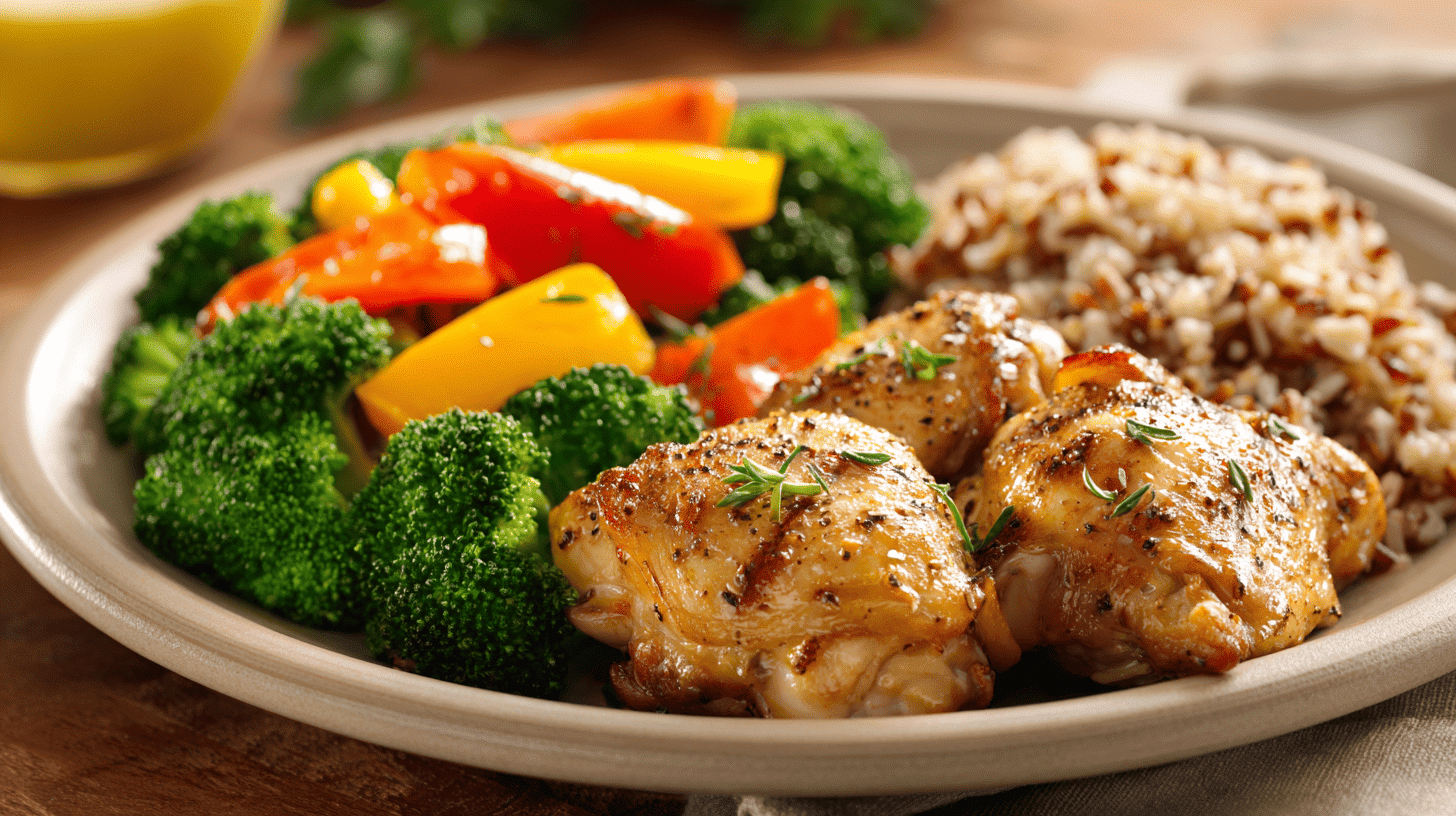
Getting the most nutrition from chicken thighs starts with how you prepare and serve them. These simple tips help you enjoy their flavor while keeping meals balanced and healthy.
- Choose Healthier Cooking Methods: Grill, bake, or air-fry thighs instead of deep frying to cut extra fat and calories.
- Watch Your Portion Sizes: Stick to one or two thighs per meal for adequate protein without excess calories.
- Remove Skin When Possible: Taking off the skin significantly reduces fat and calories while maintaining flavor with proper seasoning.
- Pair with Colorful Vegetables: Serve thighs with roasted broccoli, peppers, or leafy greens for added fiber and vitamins.
- Add Whole Grains: Include brown rice, quinoa, or whole wheat pasta for a complete meal with sustained energy.
These habits make chicken thighs part of a nutritious eating pattern that satisfies your taste buds and supports your health goals. With mindful preparation, they can fit easily into a balanced, everyday diet.
Misconceptions About Chicken Thigh Nutrition
Many people believe chicken thighs are unhealthy because they contain more fat than breasts, but this view misses essential facts. The fat in thighs includes healthy unsaturated fats that your body needs for hormone production and vitamin absorption.
Moderate dietary fat doesn’t automatically cause weight gain or raise cholesterol. Another myth claims dark meat lacks nutritional value, yet thighs actually provide more iron, zinc, and B vitamins than white meat.
Some think you must remove the skin to eat healthy, but skinless thighs already offer balanced nutrition. The key isn’t avoiding thighs – it’s using proper cooking methods and reasonable portions to fit them into your diet.
The Bottom Line
Understanding chicken thigh nutrition facts helps you make smarter protein choices. Thighs deliver quality protein, essential minerals like iron and zinc, and B vitamins for energy.
Their natural fat keeps meals satisfying while providing nutrients your body needs. With healthy cooking methods and proper portions, you get rich flavor without compromising health goals.
Thighs cost less than breasts and work in countless recipes for easy meal planning. Now that you know their accurate nutrition profile, add them confidently to your menu.
What’s your favorite way to cook chicken thighs? Share your tips in the comments below!
Frequently Asked Questions (FAQs)
Are Chicken Thighs Good for Weight Loss?
Yes, in moderation, chicken thighs provide protein and nutrients while keeping you full, which can support weight management.
Can Chicken Thighs Be Part of a Low-Carb Diet?
Absolutely, chicken thighs have zero carbs and are ideal for low-carb or keto-friendly meals.
How Long Should Chicken Thighs Be Cooked Safely?
Cook chicken thighs until the internal temperature reaches 165°F (74°C) to ensure they are safe to eat.
Do Frozen Chicken Thighs Lose Nutrients?
Freezing chicken thighs preserves most of their protein and minerals, with minimal nutrient loss.