






The Cereal Label Trick That Actually Steadies Blood Sugar
Look, I’m not here to tell you to give up cereal. Life is hard enough without someone prying the Cheerios from your cold, sleepy hands at 7 AM.
But here’s the thing: most cereals marketed as “healthy” are basically candy in a virtuous looking box. And if you’re managing diabetes or just trying to avoid the mid morning energy crash that makes you want to faceplant onto your keyboard, the cereal aisle is a minefield.
The good news? There’s a stupidly simple label trick that changes everything. Three numbers. That’s it. Once you know what to look for, you can actually keep cereal in your life without your blood sugar staging a full revolt.
The Three Numbers That Actually Matter
Forget complicated formulas. Forget marketing claims. (“Heart healthy!” “Made with whole grains!” Sure, Jan.) Just flip that box over and check three things:
1. Added sugar: 5% Daily Value or less.
This is where most “healthy” cereals faceplant spectacularly. Look at the Added Sugars line, not Total Sugars. And remember most of us pour about 1.5 to 2 servings without thinking. So that “only 6 grams of sugar!” is actually 12 grams before you’ve even added milk.
2. Fiber: At least 3 grams, ideally 5+.
Fiber is your secret weapon. It slows everything down, spreading glucose absorption over hours instead of hitting your bloodstream like a freight train. Quick math trick: divide total carbs by fiber. If you get 10 or less, you’re probably looking at a solid choice.
3. First ingredient: Must say WHOLE grain.
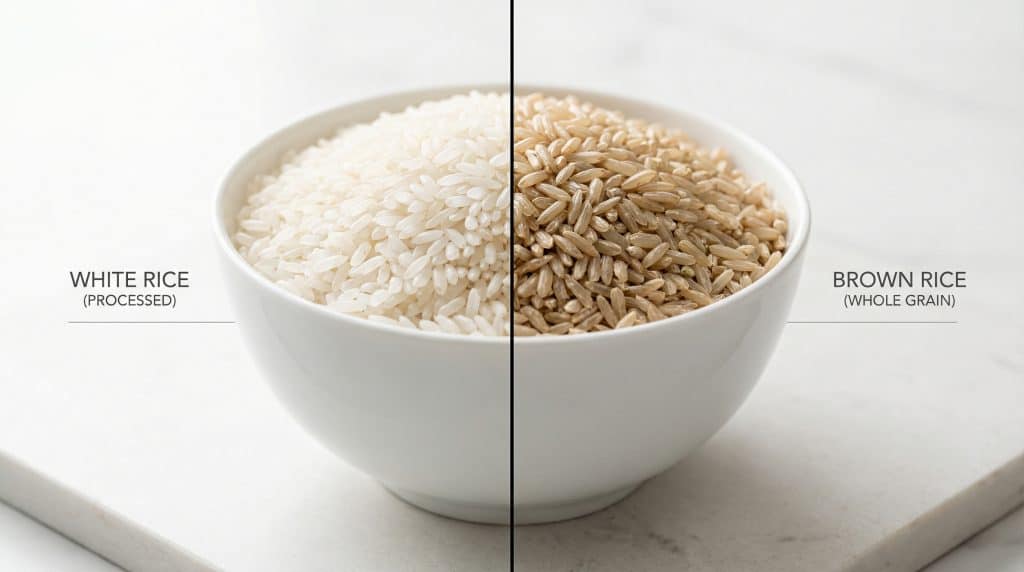
Not “enriched flour.” Not “wheat flour.” Not “multigrain” (which sounds healthy but can still mean refined). You want to see “whole grain oats,” “whole wheat,” or “whole grain corn” right at the top.
That’s the framework. Three numbers. Takes about 15 seconds once you know what you’re scanning for.
The Cereals That Sound Healthy But Totally Aren’t
Can we talk about this for a second? Because the betrayal is real.
Cheerios and Grape-Nuts both have glycemic index scores in the 70s which is high. Despite decades of “heart healthy” marketing, they’ll spike your blood sugar faster than you’d think when you check Honey Bunches nutrition facts.
Granola is my personal heartbreaker. It looks so wholesome! All those oats and clusters! But flip that bag over and you’ll often find 12+ grams of added sugar hiding in there. Granola is dessert cosplaying as breakfast.
Raisin Bran seems like a safe choice until you realize the raisins and added sweeteners can push a single bowl past 20 grams of sugar. Oof.
And anything labeled “instant”? Give it the side eye. Extra processing means faster blood sugar spikes.
What Actually Works (A Cheat Sheet)
Okay, enough doom and gloom. Here’s what you CAN eat:
Wheat bran cereals are the winners. All-Bran, Post 100% Bran these guys have a glycemic index around 45 and pack 11+ grams of fiber per cup. They’re not glamorous, but they work. (More on making them taste better in a minute, I promise.)
Steel cut or rolled oatmeal comes in second with a GI of 55. Plain oats typically have zero added sugar and decent fiber. Just stay away from the flavored instant packets they’re basically oatmeal shaped sugar delivery systems.
Shredded Wheat and Weetabix are solid picks too. Plain, unsweetened versions only. The frosted or flavored ones? Different story entirely.
Here’s a quick reference I keep in my head:
| Cereal | GI Score | My Take |
|---|---|---|
| Wheat bran (All-Bran, etc.) | 45 | Best bet |
| Steel cut/rolled oats | 55 | Excellent |
| Unsweetened muesli | 57 | Good option |
| Special K | 69 | Meh, be careful |
| Cheerios | 74 | Skip it |
| Grape-Nuts | 75 | Skip it |
| Cornflakes, instant oatmeal | 79 | Hard no |
Why Your Oatmeal Choice Matters More Than You Think
Same oats, wildly different results. Instant oatmeal scores way higher on the glycemic index than rolled or steel cut because all that extra processing basically pre-digests it for you.
If mornings are chaos at your house (no judgment, same), make overnight oats the night before. Same convenience, way smaller spike. Problem solved.
Build a Better Bowl
The cereal itself is only part of the equation. What you eat WITH it matters almost as much.
Add protein. Protein slows stomach emptying, which means the carbs hit your bloodstream gradually instead of all at once. Aim for 10-15 grams per breakfast. Easy wins:
- Half cup Greek yogurt (15-20g protein)
- Quarter cup nuts (5-7g protein)
- An egg on the side (6g protein)
Watch your milk. Unsweetened soy milk gives you 7 grams of protein with only 1 gram of carbs that’s the sweet spot. Cow’s milk adds 12 grams of carbs but also brings protein. Almond milk barely has any carbs OR protein, so you’ll need to add protein another way.
Measure your pour. Just once.
I know, I know. But here’s the thing: most of us eyeball portions 20-40% wrong. That can literally double your carbs before you’ve added anything else. Measure your normal pour ONE time, see how it compares to the serving size using cereal serving size math, and now you know. You don’t have to measure forever just calibrate your eyeballs.
My Go To Breakfast Templates
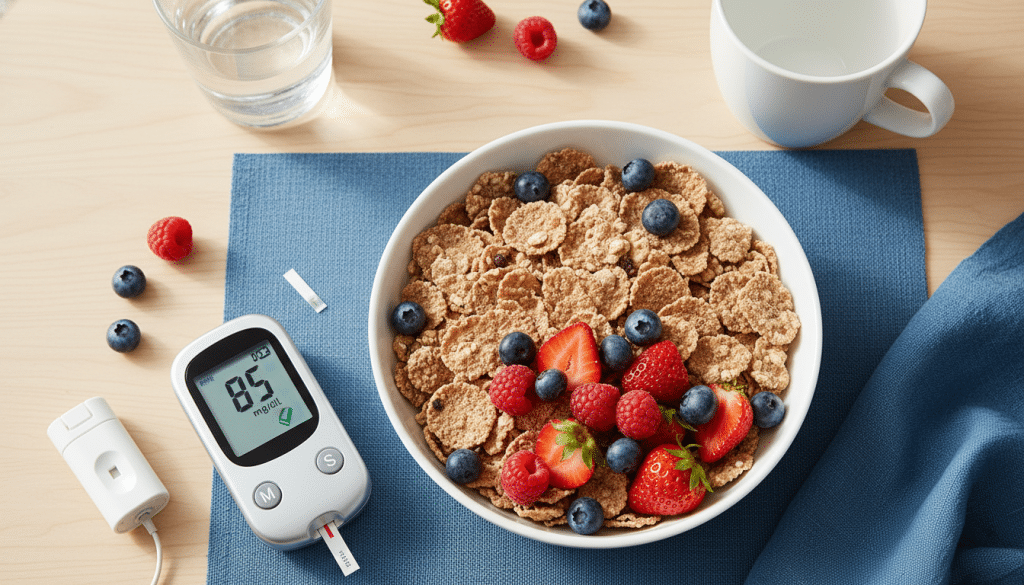
The Steady Eddie: One cup wheat bran cereal + half cup Greek yogurt + quarter cup walnuts + unsweetened soy milk. About 22-25g carbs, 18g protein. This is the “I have blood sugar concerns and I’m not messing around” option.
Overnight Oats (for the lazy and brilliant): One third cup rolled oats + three quarters cup soy milk + one tablespoon chia seeds + half cup berries. Throw it in a jar the night before, grab it in the morning. Around 32g carbs, 10g protein.
Making Wheat Bran Less… Bran-y
Real talk: wheat bran cereals are amazing for blood sugar but can taste like you’re eating a very nutritious cardboard box. Here’s how I deal with it:
Mix two parts bran with one part unsweetened muesli for texture variety. Add cinnamon or vanilla extract all the cozy flavor, zero extra carbs. A quarter cup of fresh berries (only 5-7g carbs) makes everything taste sweeter without actually being sweet.
Most people’s taste buds adjust within a couple weeks. Your palate is more adaptable than you think.
When Cereal Just Isn’t Your Thing (And That’s Okay)
Some people can do all the right things low GI cereal, protein pairing, measured portions and their glucose still goes haywire. Bodies are weird like that.
If your post meal readings consistently stay above 180 even with all these tweaks, or if you’re hungry again within 90 minutes, cereal might just not be your breakfast. Eggs, cottage cheese with berries, or Greek yogurt with nuts are solid alternatives. No shame in the cereal free game.
(And obviously, if you’re on insulin or sulfonylureas and making big changes to your carb intake, loop in your healthcare provider. That’s not me being paranoid that’s just good sense.)
The Bottom Line
You don’t have to give up cereal. You just have to get a little strategic about it.
Three label numbers. A protein pairing. One measured pour to calibrate your eyeballs. That’s genuinely it.
Try one recommended cereal this week. Pair it with some Greek yogurt or nuts. Check your glucose afterward. See how you feel by mid morning.
Your readings will tell you everything you need to know and I’m betting you’ll be pleasantly surprised.