

Brown rice is a nutritious pantry staple, but cooking it properly can feel challenging, especially on the stovetop.
Many home cooks end up with rice that is too chewy, mushy, or unevenly cooked, which often leads to questions about how to cook brown rice on the stove correctly.
Small details such as water measurement, heat control, and resting time play an important role in the final texture.
Understanding these basics helps uncover the best way to cook brown rice at home and avoid common mistakes.
With the right approach, brown rice becomes a reliable, versatile grain that works well for everyday meals, meal prep, and a wide range of cuisines.
What Is Brown Rice? (Brown vs White vs Wild Rice)
Brown rice is a whole grain that contains the bran, germ, and endosperm, which gives it more fiber, nutrients, and natural oils.
White rice is further processed to remove the bran and germ, resulting in a softer texture, lighter color, and shorter cooking time, but fewer nutrients. B
rown rice takes longer to cook and has a nutty flavor with a slight chew. Wild rice is not true rice but an aquatic grass seed.
It is still considered a whole grain and offers a firmer texture and longer cooking time.
| Type of Rice | Processing | Texture | Cooking Time |
|---|---|---|---|
| Brown Rice | Hull removed | Nutty and chewy | 40–50 minutes |
| White Rice | Bran removed | Soft and fluffy | 15–20 minutes |
| Wild Rice | Whole seed | Firm and chewy | 40–55 minutes |
Understanding these differences helps you choose the right rice for nutrition, texture, cooking time, and overall meal planning needs.
Brown Rice Texture: What It Should Be Like
Properly cooked brown rice has a tender yet slightly firm texture with individual grains that hold their shape.
It should feel pleasantly chewy without being hard, crunchy, mushy, or soggy.
This natural chewiness comes from the bran layer that remains on brown rice, which takes longer to soften during cooking.
If brown rice turns mushy, too much water or overcooking is usually the cause.
If it feels hard or undercooked, adding a little water and cooking longer helps improve tenderness and achieve the ideal texture.
Ingredients You’ll Need
|
How to Cook Brown Rice on the Stove
Cooking brown rice on the stovetop gives you complete control over texture, moisture, and doneness for consistently reliable results.
Step 1: Rinse the Rice Thoroughly
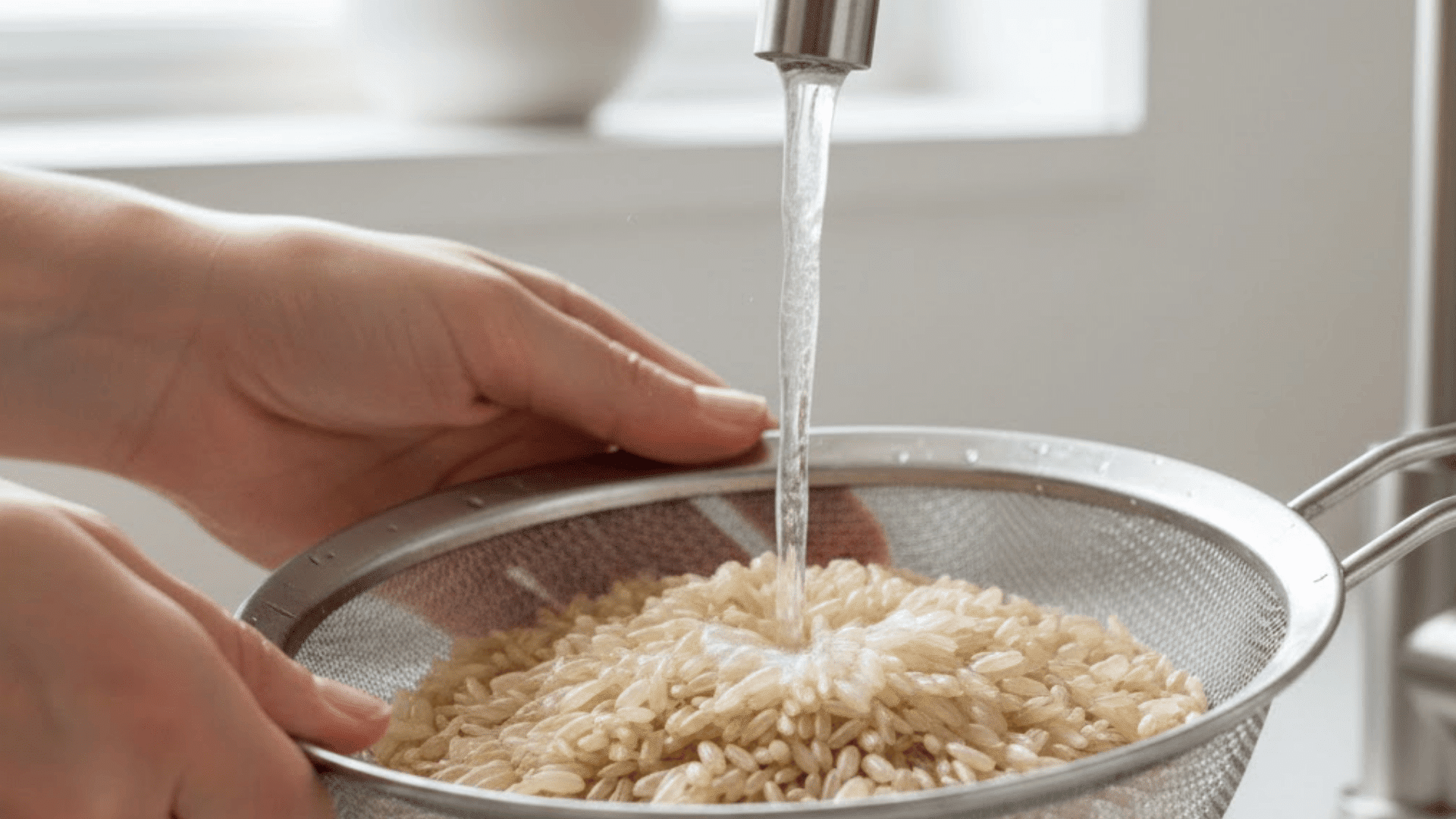
Place the brown rice in a fine-mesh strainer and rinse under cold running water for about one minute.
Gently swirl the grains with your hand to remove excess starch, dust, and debris, which helps prevent stickiness and improves overall texture.
Step 2: Measure Rice and Water Accurately
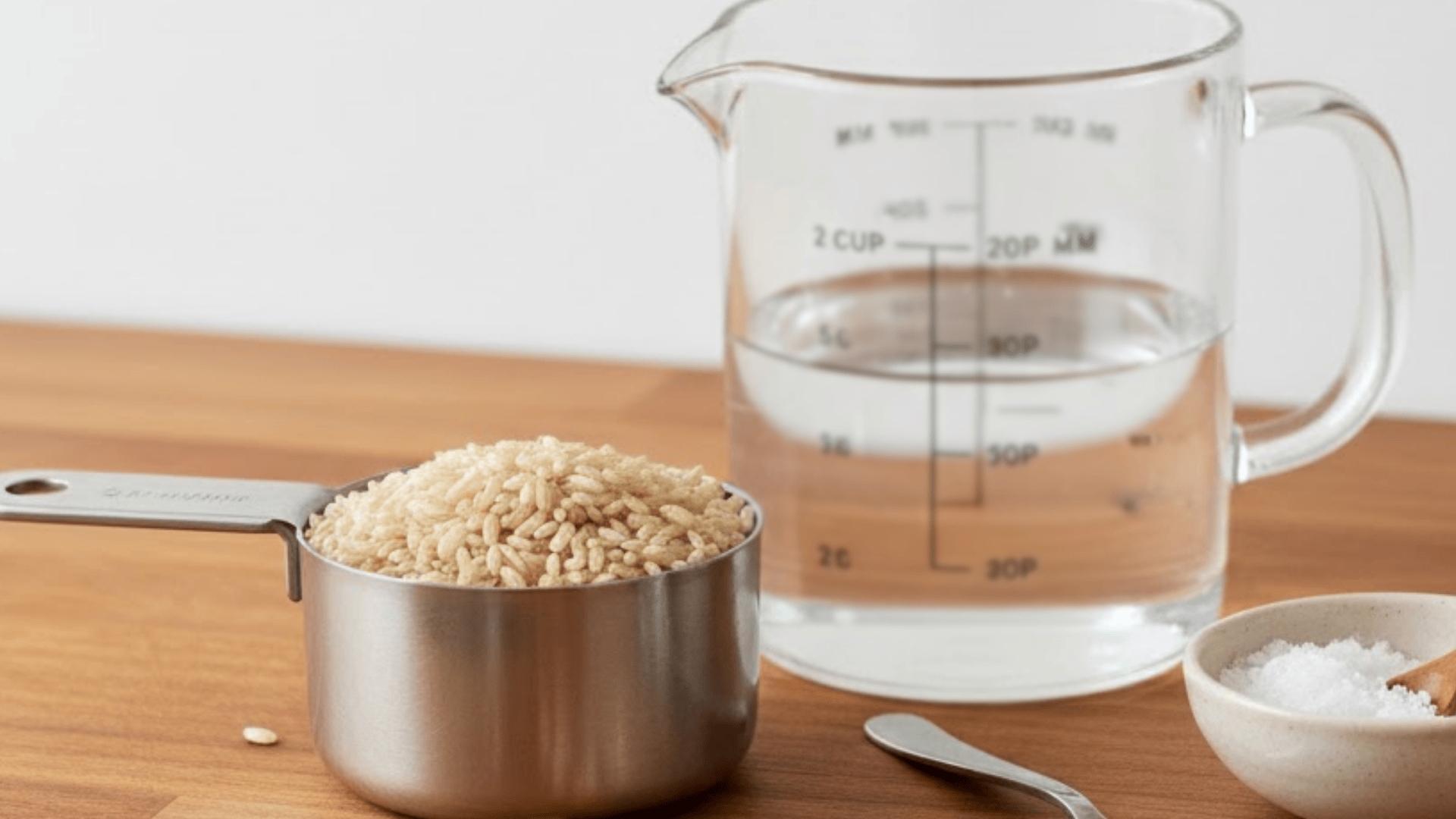
Use a water-to-rice ratio of 2:1 or 2.5:1, depending on your preferred texture.
For every cup of brown rice, add two to two-and-a-half cups of water, along with a pinch of salt and optional oil or butter.
Step 3: Bring the Rice to a Full Boil
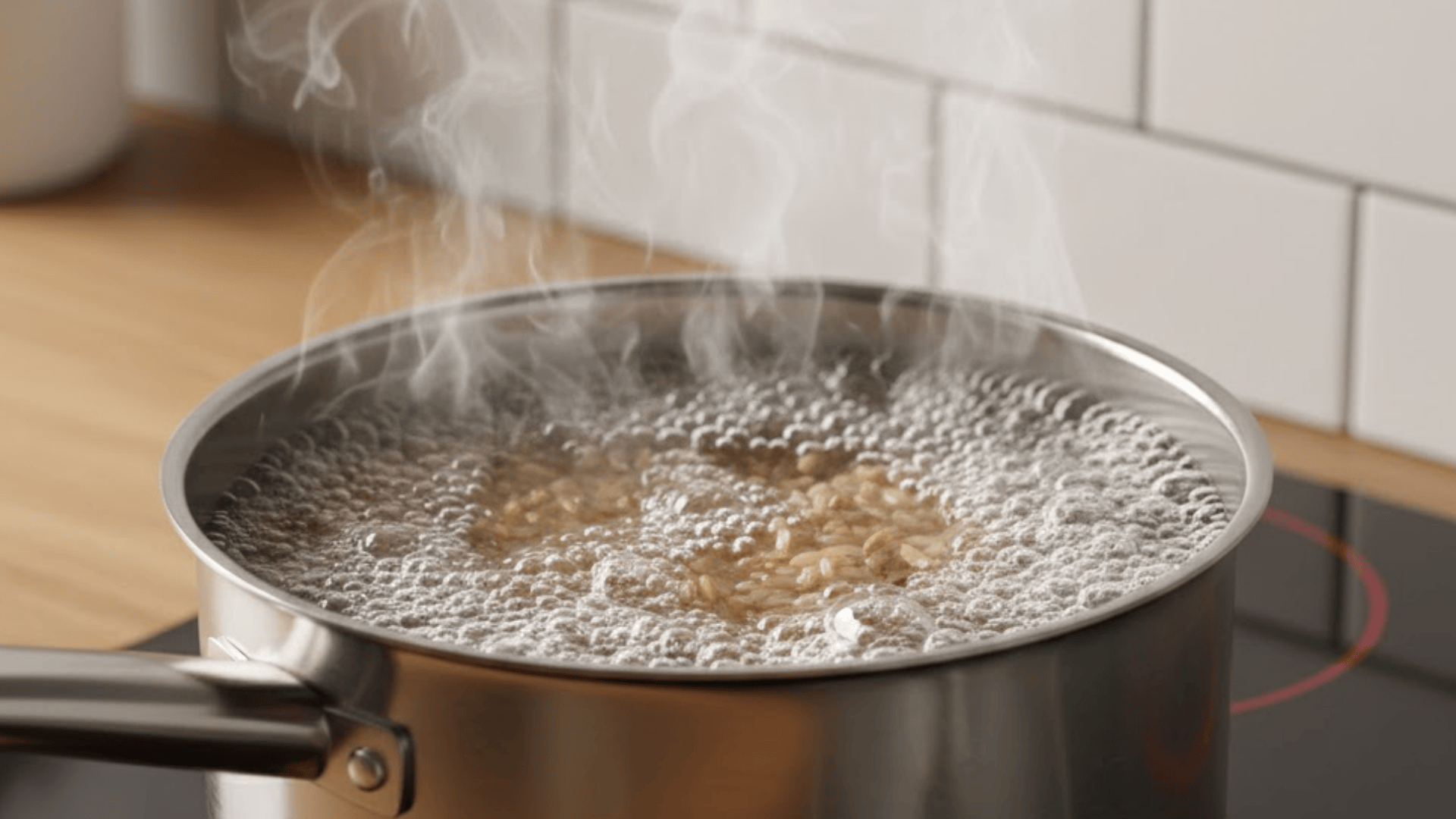
Add the rinsed rice and measured water to a medium or large saucepan with enough space for expansion.
Bring the mixture to a rolling boil over high heat with the lid off, ensuring even heat distribution before simmering.
Step 4: Reduce to a Gentle Simmer and Cover
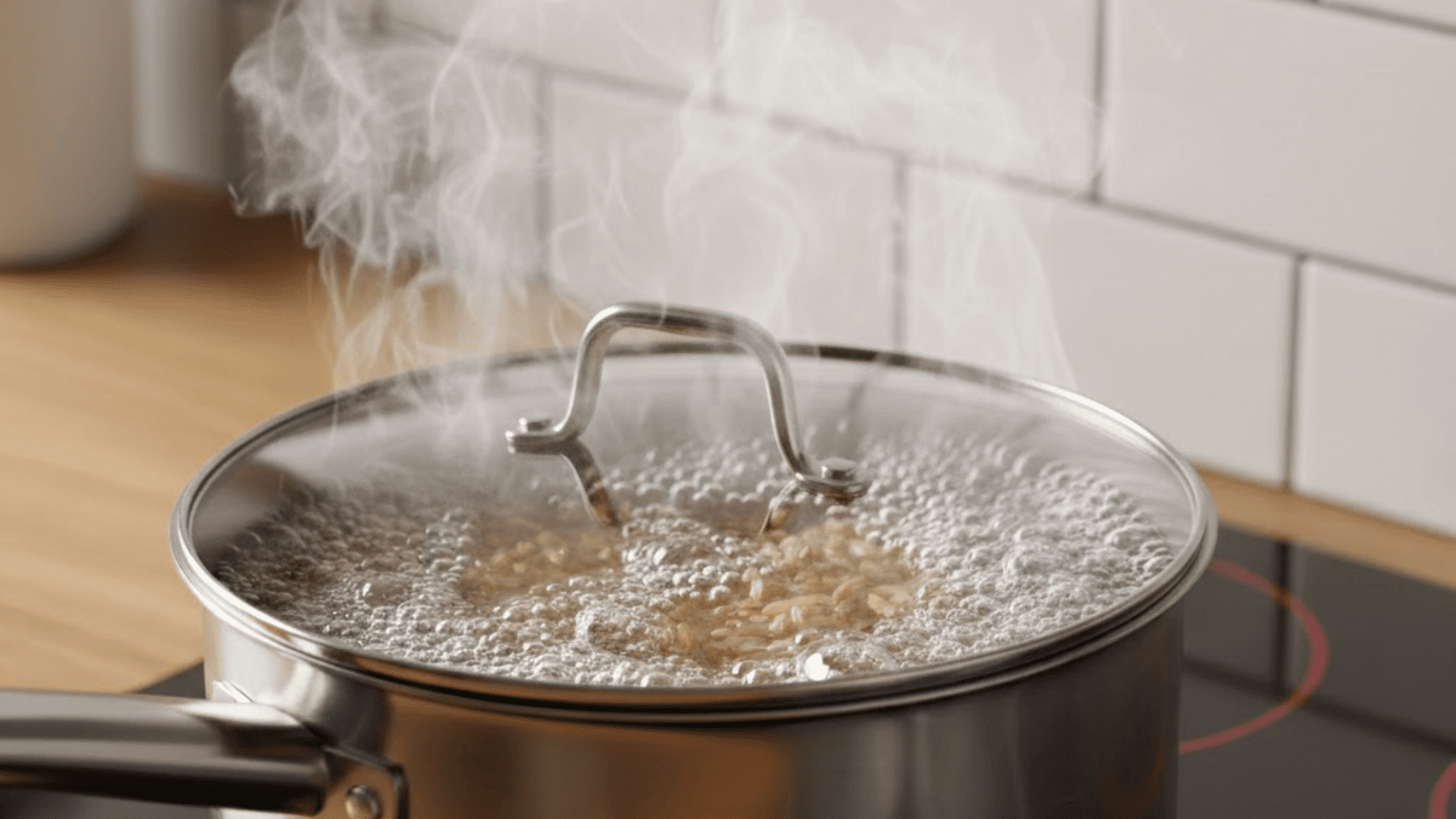
Once boiling, immediately reduce the heat to low so the rice simmers gently.
Cover the pot tightly with a lid and avoid lifting it, allowing trapped steam to cook the rice evenly for 40 to 50 minutes.
Step 5: Rest and Fluff Before Serving
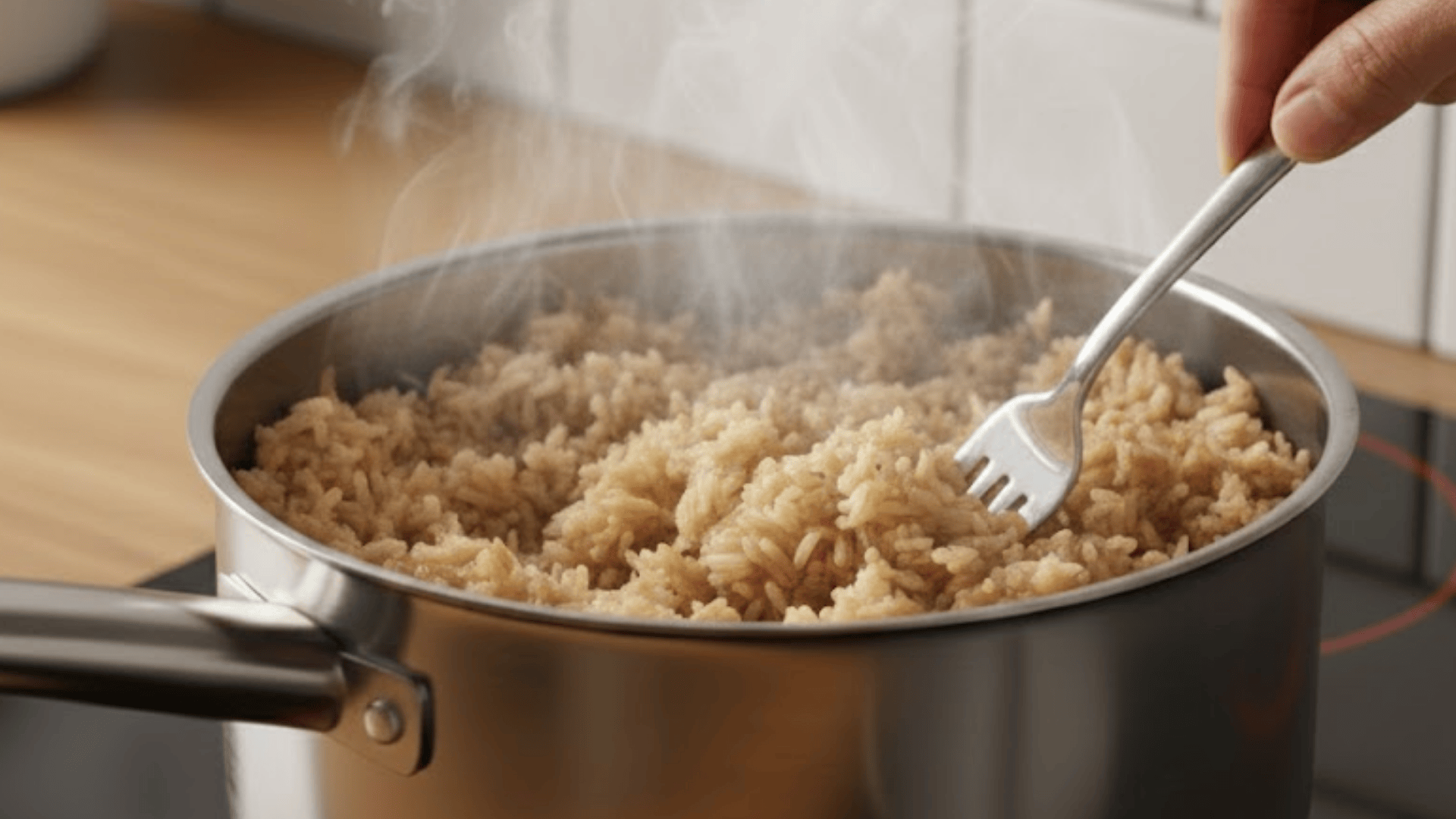
When all the water is absorbed, remove the pot from the heat and let the rice rest covered for ten minutes.
This resting period allows moisture to redistribute and helps the grains firm up before fluffing gently with a fork.
Tips for Perfect Brown Rice on the Stove
Simple stovetop techniques can dramatically improve brown rice texture, preventing scorching, sogginess, and unevenly cooked grains.
- Use a Heavy-Bottomed Saucepan: Promotes even heat distribution and reduces the risk of burning or sticking.
- Seal in Steam with a Tight Lid: Proper steam retention ensures consistent cooking; foil can help improve a loose lid seal.
- Avoid Lifting the Lid Mid-Cook: Releasing steam disrupts temperature and leads to undercooked or uneven rice.
- Allow a Full Resting Period: Resting for 10 minutes helps grains absorb moisture, firm up, and separate cleanly.
- Keep Heat Low and Steady: A gentle simmer prevents rapid evaporation and burning; higher heat won’t cook rice faster.
Applying these stovetop tips consistently results in fluffy, tender brown rice with balanced moisture and reliable results every time.
Other Methods to Cook Brown Rice
Beyond stovetop cooking, rice cookers and Instant Pots offer convenient, hands-off options for preparing brown rice with consistent results.
1. Cooking Brown Rice in a Rice Cooker
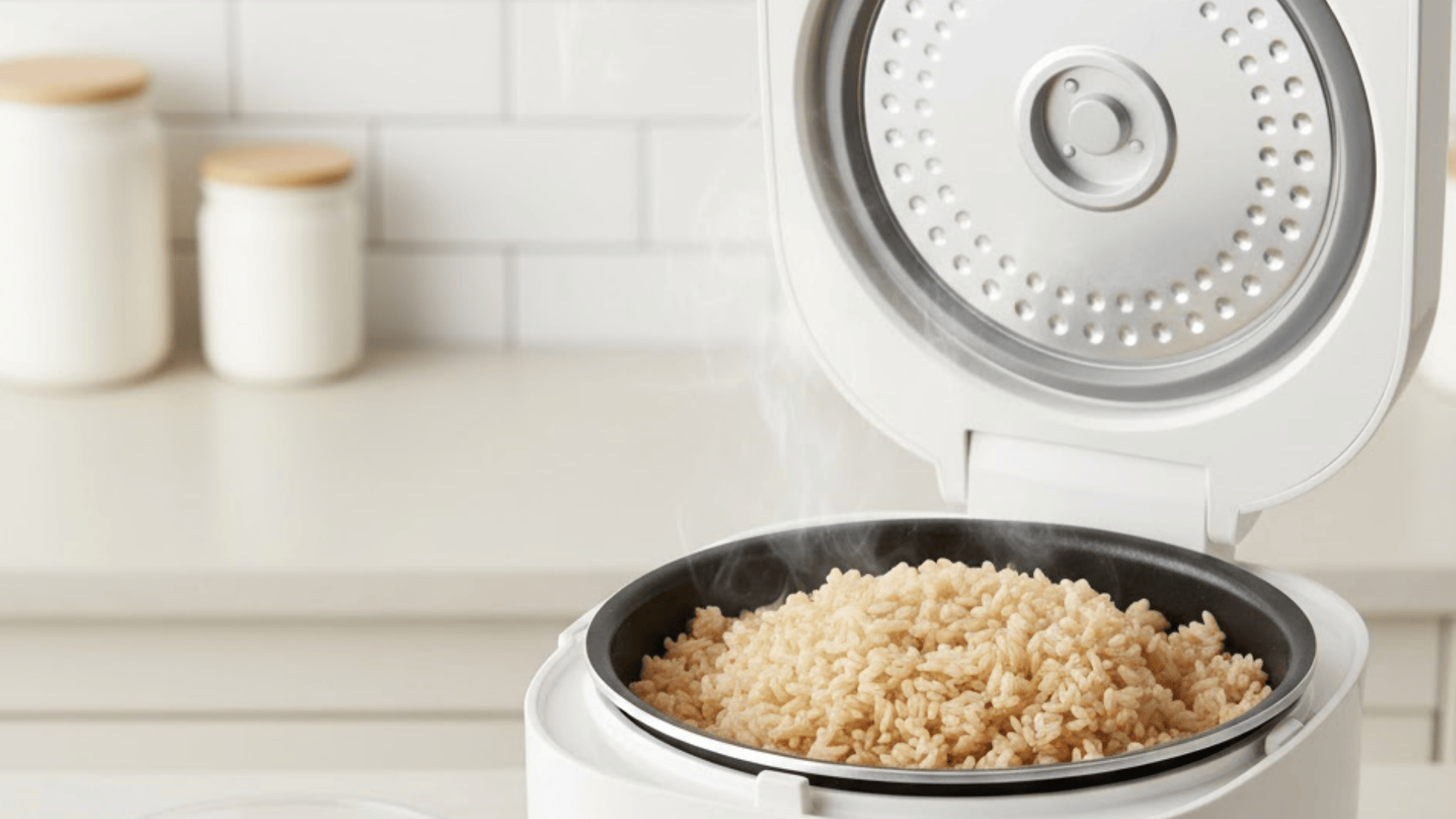
Rice cookers make brown rice cooking simple by automatically controlling heat and timing for dependable, low-effort results.
- Rinse brown rice thoroughly under cold water
- Add rice and water using a 2:1 or 2.5:1 water-to-rice ratio
- Transfer ingredients to the rice cooker bowl
- Select the brown rice or regular cook setting
- Allow the cycle to finish and switch to keep warm
- Rest rice for five to ten minutes before fluffing
This method produces evenly cooked brown rice with a softer texture, ideal for everyday meals and convenient batch cooking.
2. Cooking Brown Rice in an Instant Pot
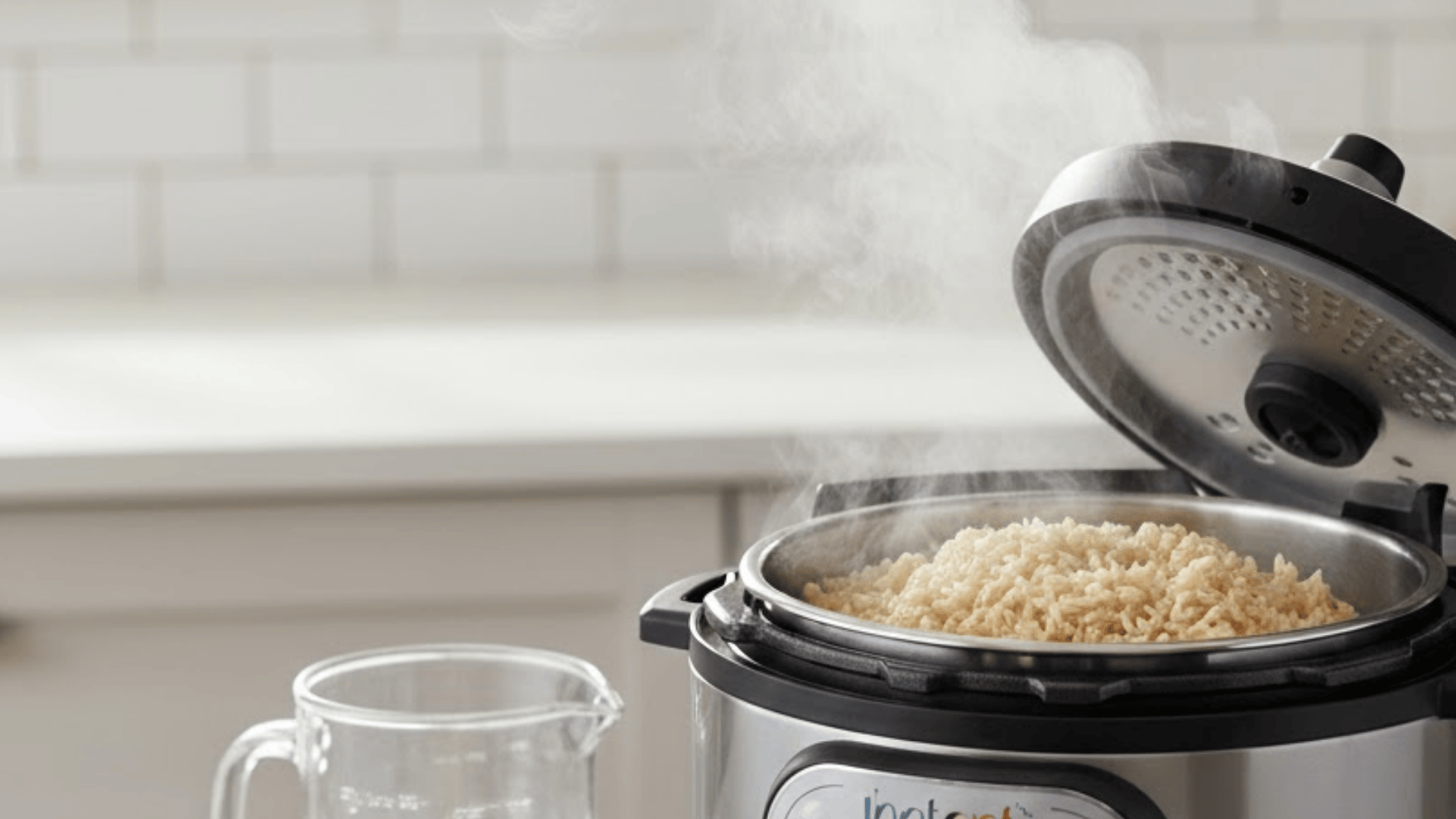
Instant Pots use pressure cooking to shorten hands-on time while producing tender brown rice using significantly less water.
- Rinse brown rice under cold water
- Add rice and water using a 1:1 water-to-rice ratio
- Lock the lid and set the pot to high pressure
- Cook for twenty-two to twenty-five minutes
- Allow natural pressure release for at least ten minutes
- Fluff rice gently once pressure is fully released
This approach works well for busy kitchens, offering consistent brown rice results with minimal monitoring and reliable texture.
Brown Rice Nutrition Facts
Brown rice provides steady energy and essential nutrients, making it a balanced whole grain choice for everyday meals.
| Nutrient | Amount (Per 1 Cup Cooked ≈ 195 g) |
|---|---|
| Calories | 248 kcal |
| Protein | 5 g |
| Total Fat | 2 g |
| Carbohydrates | 52 g |
| Dietary Fiber | 3.5 g |
| Sugars | 0.7 g |
These nutrition values are approximate and may vary slightly based on rice variety, cooking method, brand, and serving size used.
Health Benefits of Brown Rice
Brown rice is a nutrient-rich whole grain that supports digestion, heart health, steady energy levels, and long-term overall wellness.
- Supports Healthy Digestion: High insoluble fiber improves gut health, promotes regular bowel movements, and helps prevent constipation.
- Helps Maintain Stable Blood Sugar: Lower glycemic index than white rice, reducing sharp blood sugar spikes after meals.
- Promotes Heart Health: Whole grains like brown rice are linked to lower cholesterol levels and reduced heart disease risk.
- Aids Weight Management: Fiber-rich meals increase fullness, helping control appetite and reduce overeating.
- Provides Essential Nutrients: Rich in manganese, magnesium, phosphorus, selenium, and B vitamins that support metabolism and bone health.
- Naturally Gluten-Free: Safe for individuals with celiac disease or gluten sensitivity.
Brown rice is best for people managing weight, blood sugar, heart health, gluten sensitivity, or choosing wholesome, fiber-rich foods daily.
Types of Brown Rice
Not all brown rice cooks the same. Different varieties vary in grain size, texture, aroma, and cooking time, which can affect the final result of your dish.
| Type of Brown Rice | Texture When Cooked | Best Uses | Cooking Time |
|---|---|---|---|
| Long-Grain Brown Rice | Fluffy, separate grains | Pilafs, salads, fried rice | 45–50 min |
| Medium-Grain Brown Rice | Slightly creamy, tender | Rice bowls, side dishes | 40–45 min |
| Short-Grain Brown Rice | Sticky, dense, compact | Sushi, rice balls | 40–45 min |
| Brown Basmati Rice | Dry, aromatic, separate | Curries, Indian dishes | 30–40 min |
| Brown Jasmine Rice | Soft, moist, lightly clinging | Thai & SE Asian dishes | 40–45 min |
Tip: Cooking time and texture depend on the variety and brand, so package instructions may vary slightly.
Brown Rice Water Ratio & Cooking Time
Using the correct water-to-rice ratio is essential for well-cooked brown rice.
Most stovetop methods use 2 to 2.5 cups of water per 1 cup of brown rice, depending on how soft you prefer the texture.
Brown basmati and jasmine rice usually need slightly less water. Cooking time ranges from 30 to 50 minutes based on the variety.
Brown rice is done when the water is absorbed, the grains are tender with a slight chew, and no liquid remains in the pot.
Letting the rice rest covered for 10 minutes improves texture and consistency.
What Dishes Go Well with Brown Rice
Brown rice has a nutty flavor and hearty texture that pairs well with vegetables, proteins, sauces, and cuisines from around the world.
1. Vegetables, Curries, and Stir-Fries
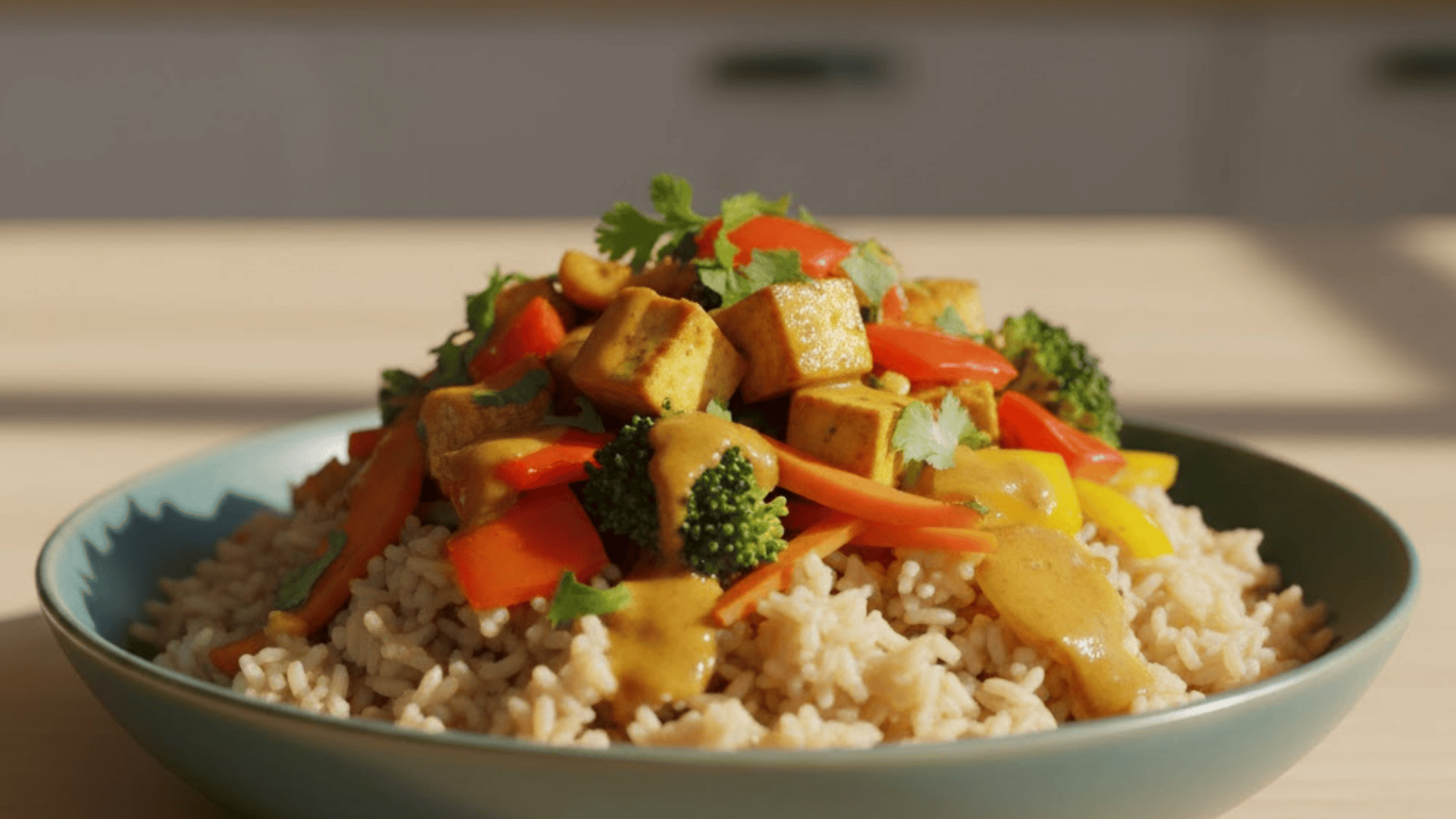
Brown rice works exceptionally well with saucy vegetable-based dishes because its firm texture absorbs flavors without becoming mushy.
It pairs beautifully with Indian and Thai curries, vegetable and tofu stir-fries, and roasted seasonal vegetables served as a hearty base for plant-forward meals.
2. Meat, Fish, and Plant-Based Meals
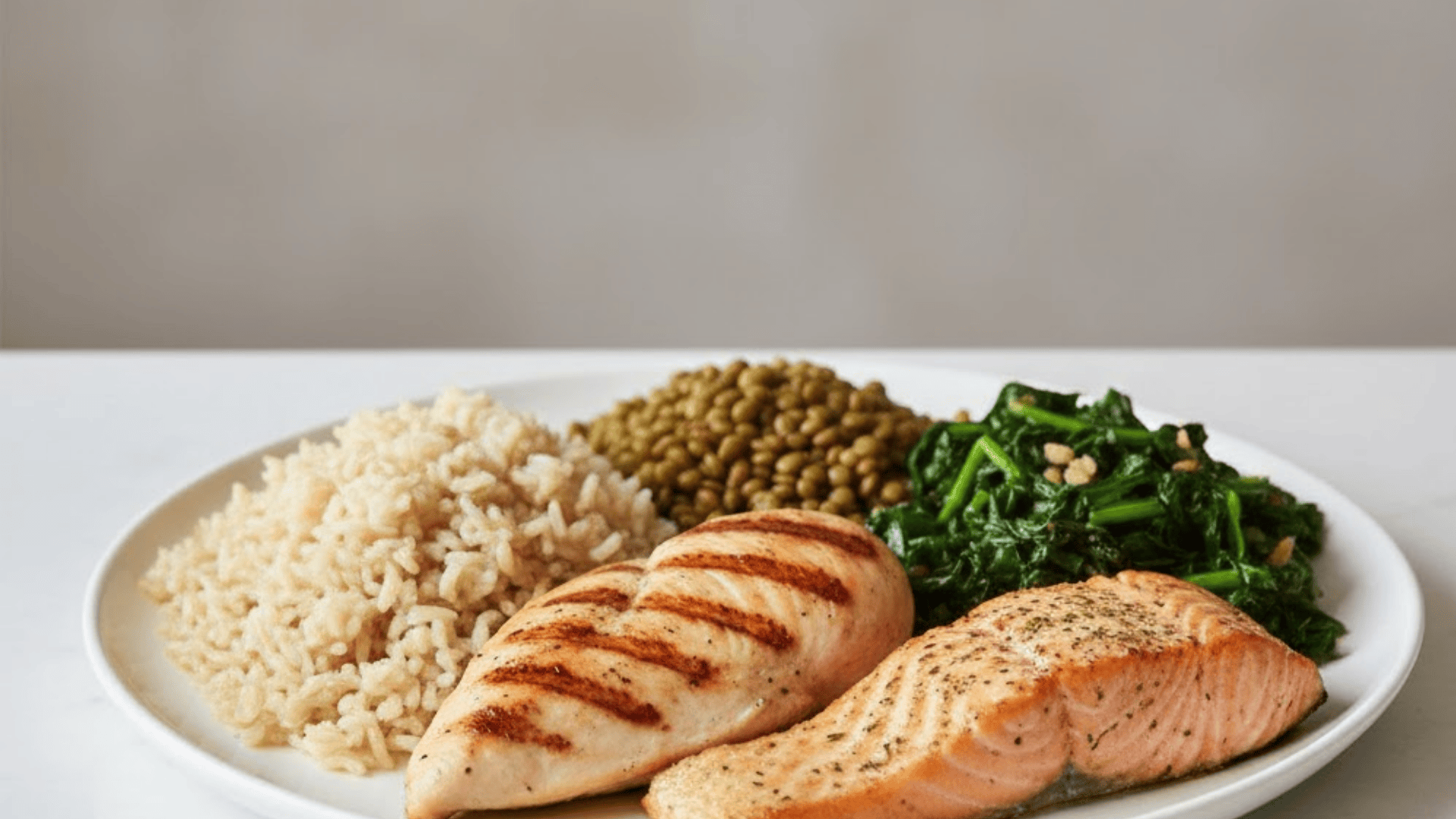
Brown rice complements protein-rich dishes by adding texture and balance.
It pairs well with grilled chicken or turkey, baked or grilled fish like salmon, hearty beef stews, and plant-based proteins such as lentils, beans, tofu, and tempeh, creating satisfying, well-rounded meals.
3. Grain Bowls and Meal Prep Ideas
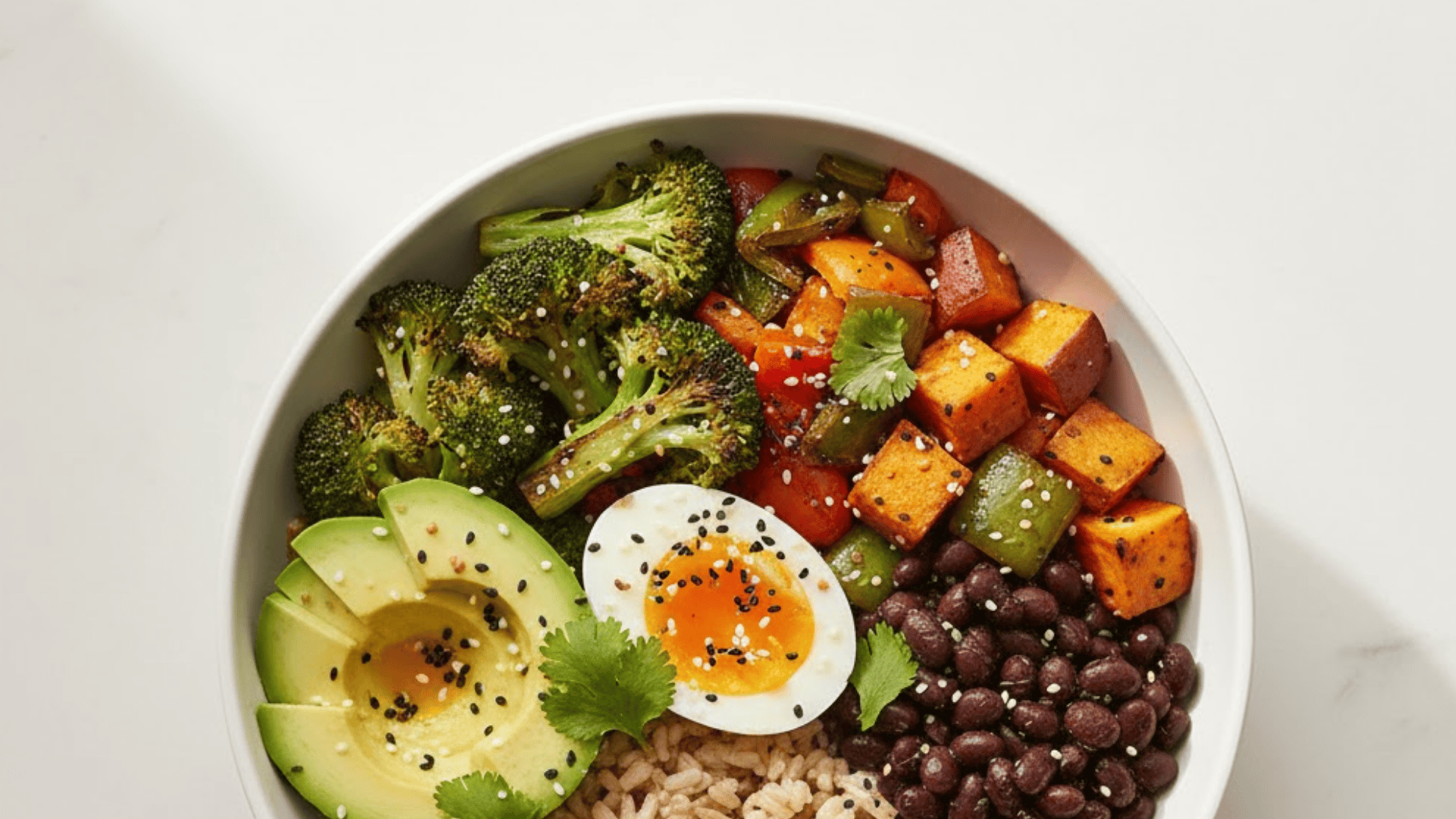
Brown rice is ideal for meal prep because it stores and reheats well.
It works as a base for Buddha bowls, burrito bowls, breakfast bowls topped with eggs and vegetables, fried rice made from leftovers, and cold rice salads mixed with fresh vegetables and light dressings.
How to Store, Reheat & Use Leftover Brown Rice
Store cooked brown rice properly to maintain quality and prevent food safety issues.
Let rice cool quickly and refrigerate it within two hours in an airtight container, where it stays fresh for four to six days.
For more extended storage, freeze brown rice in portioned freezer-safe containers for up to six months.
When reheating, add a small amount of water, cover, and heat until steaming hot throughout. Reheat rice only once to reduce the risk of foodborne illness.
Final Thoughts
Learning how to cook brown rice on the stove becomes simple once you understand water ratios, cooking time, and texture.
With the right approach, the stovetop method gives you the most control, making it the best way to cook brown rice for consistently fluffy, tender results.
From choosing the right variety to storing leftovers safely, brown rice fits easily into healthy everyday meals.
If you prefer grain bowls, curries, or meal prep, brown rice adds nutrition and versatility to your kitchen.
Now that you know the techniques, put them into practice and cook with confidence.
Try the stovetop method first, then experiment with rice cookers or Instant Pots to find what works best for your routine.
Frequently Asked Questions
Can Brown Rice Be Cooked Without Rinsing?
Skipping rinsing is safe but may cause slightly stickier rice and less clean-tasting results.
Does Cooking Brown Rice in Broth Affect Storage Safety?
Using broth adds flavor but does not change how long cooked brown rice safely stores.
Is It Safe to Keep Cooked Brown Rice Warm for Hours?
Keeping cooked brown rice warm for too long increases food safety risks and is not recommended.
Does the Age of Brown Rice Affect Cooking Results?
Older brown rice may require slightly longer cooking times and can produce a drier texture overall.