


Many people run into clumps or a chalky texture when mixing protein powder into hot oats, but it’s easy to fix with the right method.
Can you add protein powder to oatmeal?
Yes, and when you do it correctly, you’ll get a smooth, creamy bowl that’s more filling and better balanced.
It works with stovetop oats, microwave oatmeal, and overnight oats, and you can adjust the flavor and thickness to match what you like.
Up next, you’ll see the best ways to mix it in without ruining the texture, plus simple tips and recipe ideas to keep your protein oats tasting great.
Nutritional Profile of Oatmeal
Oatmeal is a smart base because it delivers steady energy from complex carbs and fiber that helps you feel satisfied.
One cup of cooked oats is relatively low in calories, with a modest amount of natural protein and a solid dose of fiber.
A standout nutrient is beta-glucan, a soluble fiber that supports heart health and slows digestion, which can help with fullness.
Oats also provide minerals like magnesium, iron, zinc, and manganese.
Quick-cooking oats are softer and faster, rolled oats are hearty and ideal for overnight oats, and steel-cut oats are chewier with the longest cook time. Since oats are protein-light, adding protein powder balances the bowl.
How to Add Protein Powder to Oatmeal
Smooth protein oats come down to timing, temperature, and mixing. Use these four methods to avoid clumps every time.
Method 1: Make a “protein slurry” first
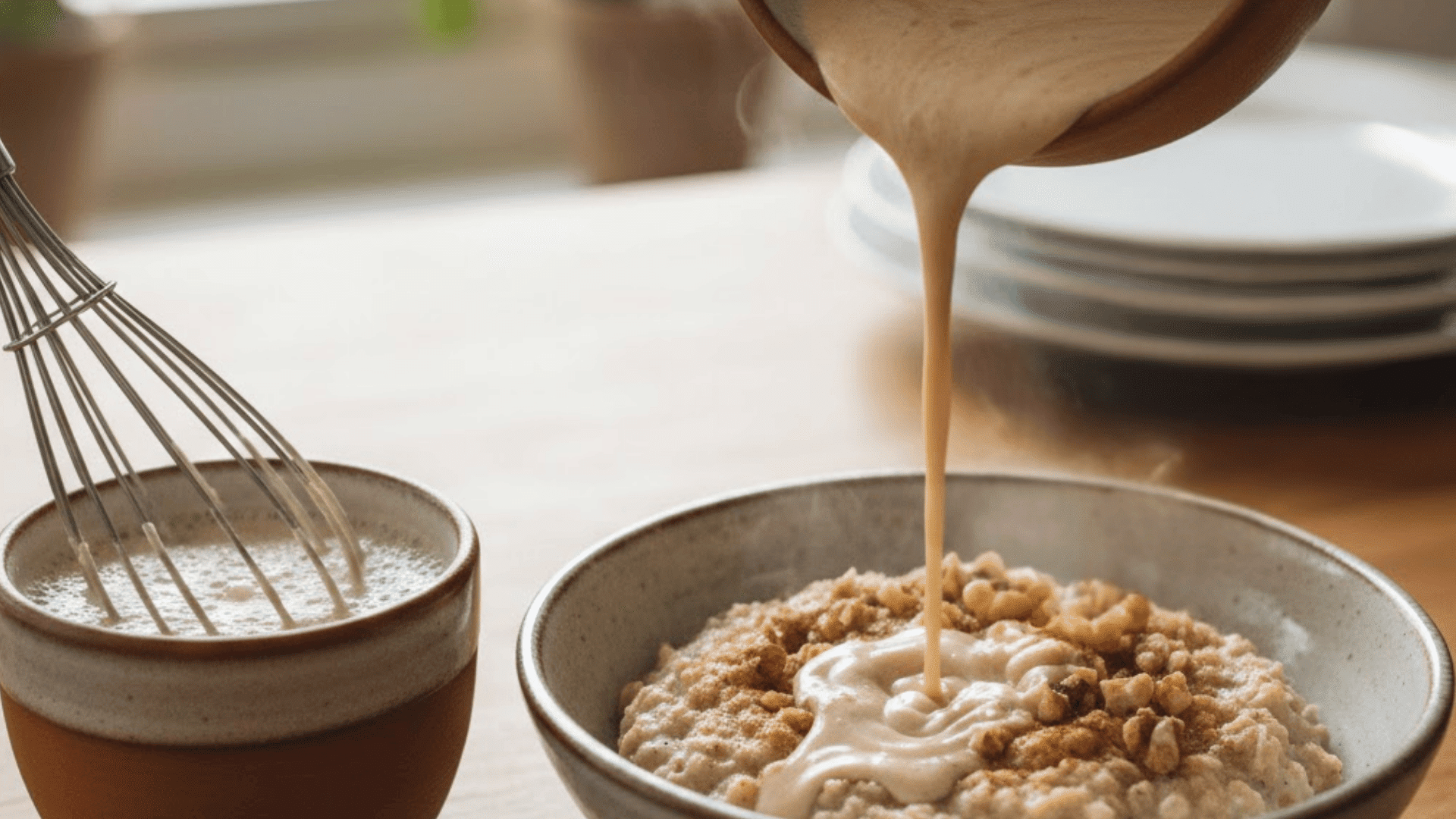
This foolproof trick pre-mixes powder with liquid, so it blends smoothly into oats without turning gritty or lumpy.
- Cook oats according to package directions.
- In a cup, mix protein powder with 2–3 tbsp warm milk or water.
- Stir until it forms a smooth paste with zero dry bits.
- Remove oats from the heat once cooked.
- Stir the slurry into the oats until thoroughly combined.
- Add a splash more liquid if the texture gets too thick.
Method 2: Stir in after cooking (off heat) + whisk
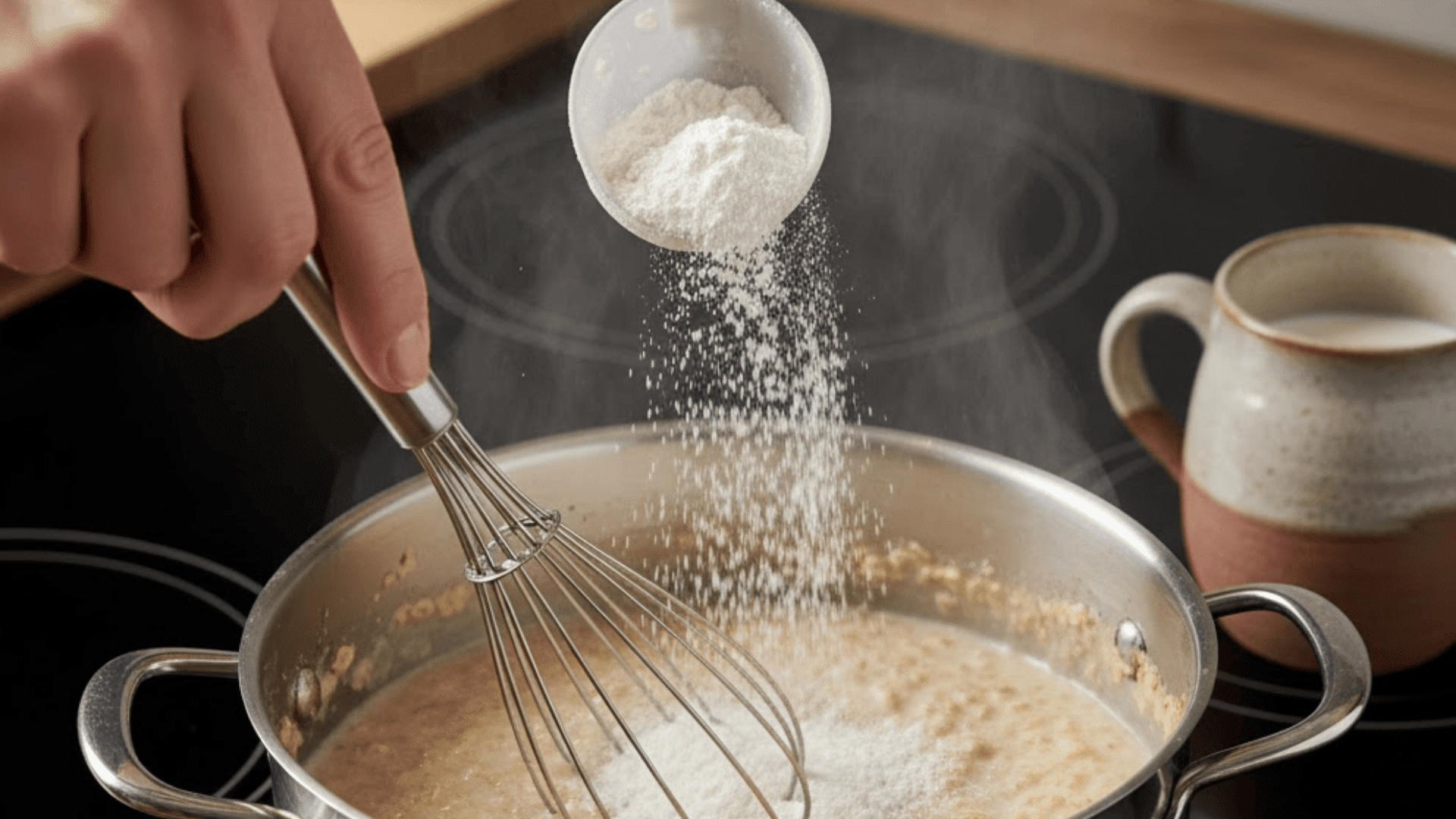
Fast and effective when you add powder slowly and whisk constantly, keeping the heat low and the texture creamy.
- Cook oatmeal fully.
- Remove from heat and let it cool 1–2 minutes.
- Sprinkle protein powder in gradually while whisking nonstop.
- Use a whisk (not a spoon) to break up tiny clumps.
- Add extra milk or water as needed for consistency.
Method 3: Microwave method (without clumps)
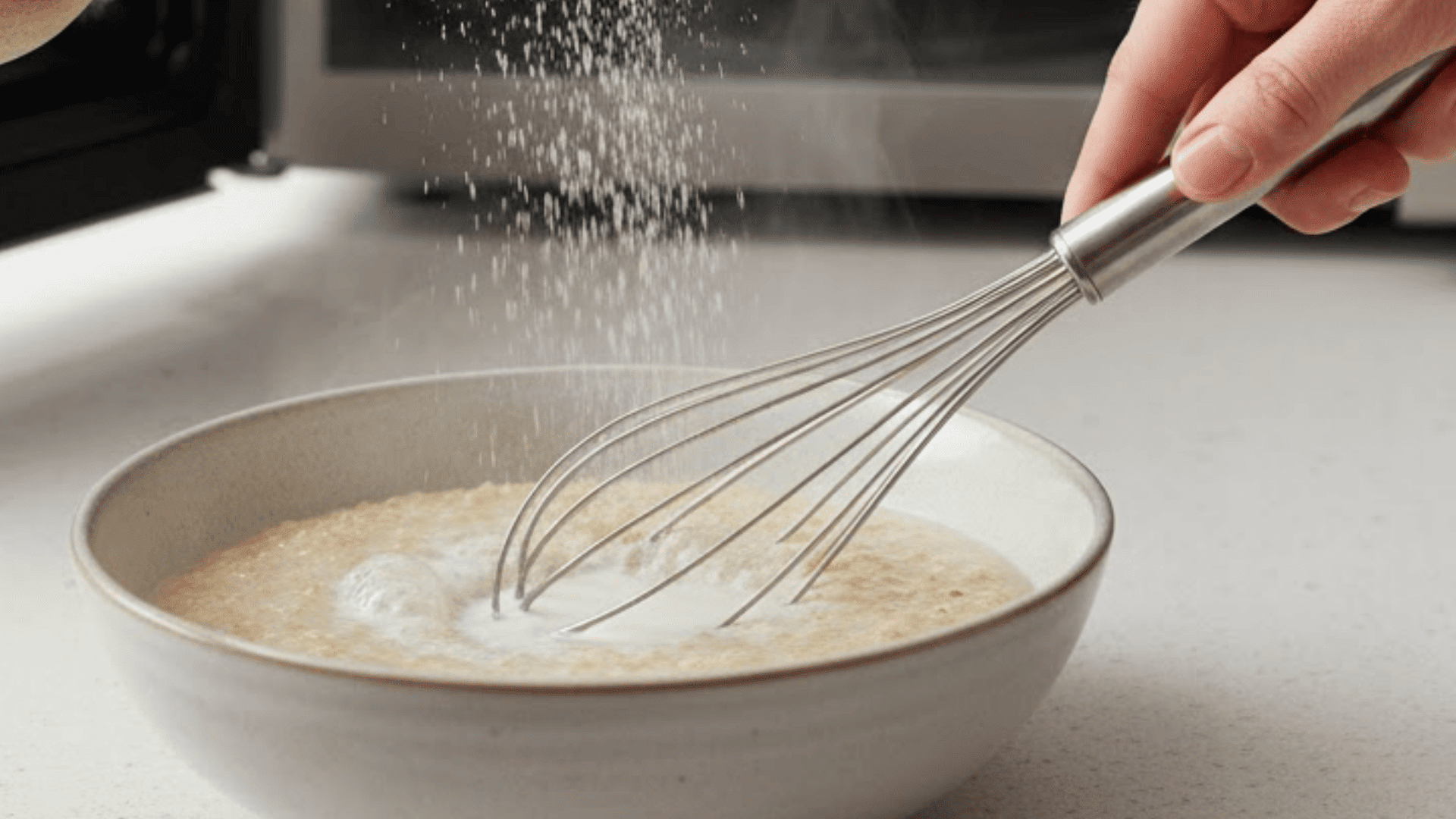
Ideal for busy mornings, cool the oats briefly, then mix protein in slowly with extra liquid.
- Microwave oats as directed (usually 1–2 minutes).
- Let the oatmeal cool for 1–2 minutes.
- Add protein powder slowly while stirring with a fork or whisk.
- Pour in 2–3 tbsp milk or water to help it blend.
- Stir thoroughly until the oatmeal looks smooth and uniform.
Method 4: Overnight oats with protein powder
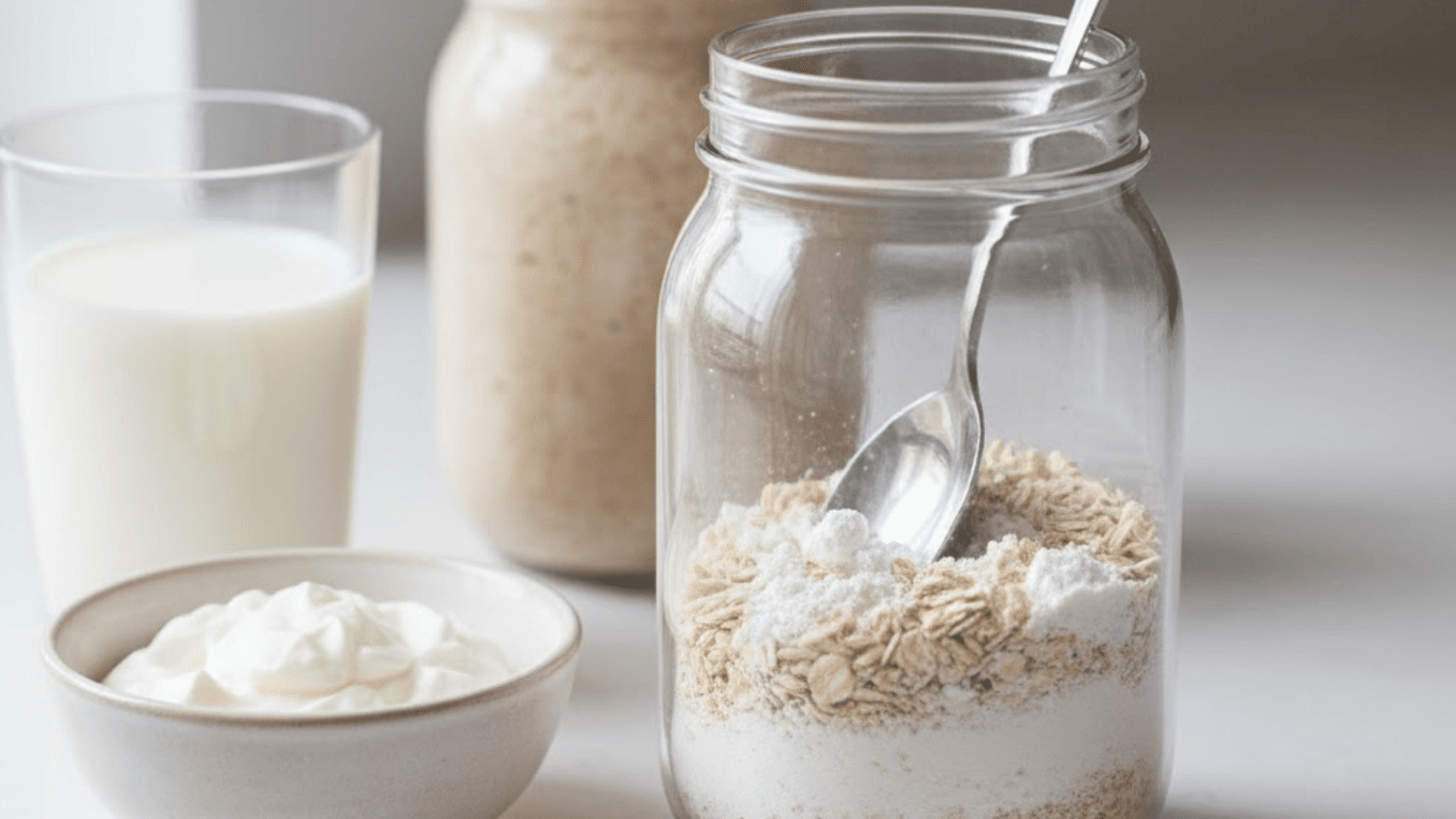
Great for meal prep, mix powder with dry oats first, then refrigerate so everything hydrates evenly overnight.
- In a jar, mix rolled oats and protein powder until evenly combined.
- Add milk and yogurt (or just milk) and stir well.
- Scrape sides and bottom to eliminate dry pockets.
- Cover and refrigerate at least 4 hours or overnight.
- In the morning, stir and add more liquid if it’s too thick.
Start with the slurry for best results, cool hot oats before mixing, and add liquid slowly for smooth protein oatmeal.
How Much Protein Powder to Use?
For hot oatmeal: Start with half a scoop (about 10-15 grams) per serving of oats. This gives you a protein boost without overwhelming the oat flavor. Once you get used to it, you can increase to a full scoop (20-30 grams).
For overnight oats: Use a full scoop since the overnight soak helps blend the flavors better.
If it’s too thick: Add milk or water 1 tablespoon at a time until you reach your preferred consistency. Protein powder thickens as it sits, so don’t be shy with extra liquid.
Benefits of Adding Protein Powder to Oatmeal
Adding protein powder to oatmeal can make breakfast noticeably more filling, balanced, and supportive of your daily nutrition goals, without changing your routine much.
- Better satiety and fewer cravings: Protein digests more slowly than carbs, helping you stay full longer and snack less mid-morning.
- Helps hit daily protein targets: Oats alone are relatively low-protein; one scoop can bring your bowl closer to a protein-rich meal.
- Supports muscle repair and recovery: Protein provides amino acids your body uses to repair and build muscle after workouts and daily activity.
- More balanced macros: Pairing carbs with protein (and optional healthy fats) supports steadier energy and fewer “crash” moments.
Overall, this simple upgrade makes oats more satisfying, more balanced, and easier to rely on as a go-to breakfast.
More Ways to Add Protein to Your Oatmeal
|
Tips for Perfect Protein Oatmeal (Taste + Texture)
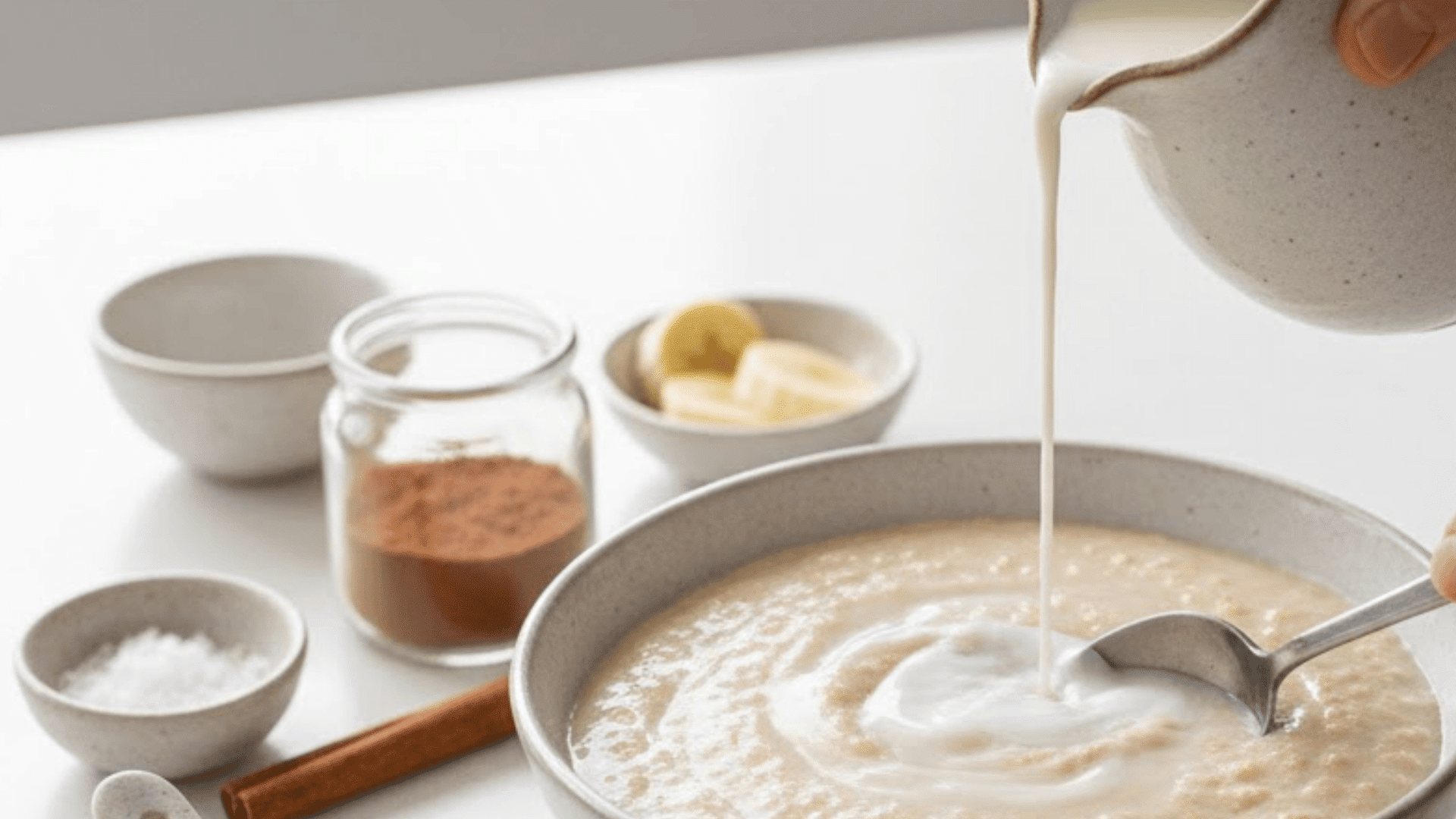
Protein oatmeal tastes best when you control heat, liquid, and flavor add-ins. Use these quick tips to keep it smooth.
- Cool it first: Add protein after cooking, off heat, and wait 1–2 minutes to prevent gummy, chalky clumps.
- Adjust liquid slowly: Protein thickens fast, add milk or water 1–2 tbsp at a time until it’s creamy again.
- Boost flavor instantly: Add a pinch of salt, cinnamon/vanilla, cocoa, or instant coffee, or fruit for sweetness.
- Make it creamier: Stir in Greek yogurt after mixing protein for a smoother, richer texture.
- Fix grainy thickness: Warm nut butter, mashed banana, or a splash of applesauce helps loosen and smooth the bowl.
With the right timing and mix-ins, protein oats stay creamy, taste better, and feel like a real breakfast upgrade.
Common Mistakes (and How to Fix Them)
Even with the best methods, things can go wrong. Here’s how to troubleshoot the most common protein oatmeal problems.
Mistake 1: Dumping powder into very hot oats
Fix: Take your oats off the heat source first. Let them sit for 1-2 minutes before adding protein. This slight cooling prevents the protein from cooking or clumping on contact.
Mistake 2: Not enough liquid
Fix: Add 2-4 tablespoons of milk or water after mixing in your protein powder. Different protein powders absorb different amounts of liquid (plant proteins generally absorb more than whey), so you’ll need to adjust each time.
Mistake 3: Overpowering or odd flavors
Fix: Match your flavors thoughtfully: Vanilla protein works with berries, banana, honey, maple syrup, or cinnamon-apple; Chocolate protein pairs well with peanut butter, banana, coffee, or cherries; Unflavored protein is your most flexible option, season it however you like
Mistake 4: Over-sweetening
Fix: Taste your oats after adding protein powder but before adding other sweeteners. Many protein powders are already sweetened. Add fruit and spices first, then sweeten only if needed.
Final Thoughts
Adding protein powder to oatmeal doesn’t have to result in chalky clumps or weird textures.
The secret is simple: cook your oats first, let them cool slightly, then mix in your protein powder with a bit of extra liquid.
If you use the protein slurry method, overnight oats, or the after-cooking technique, you’ll get smooth, creamy results every time.
Start with half a scoop of protein powder if you’re new to protein oatmeal, then work your way up.
Play with different flavors, add-ins, and toppings until you find your perfect combination. Your morning bowl of oats just became a balanced, satisfying meal that’ll keep you full until lunch.
Try one of the recipes above this week and see the difference protein oatmeal makes in your energy levels and hunger.
Frequently Asked Questions
What Protein Powder Works Best for Oatmeal?
Whey mixes smoothest; plant blends work too, add extra liquid and whisk longer.
Can You Mix Protein Powder Into Instant Oatmeal Cups?
Yes, stir in after heating, wait one minute, then mix slowly with a splash.
How Do You Store Protein Overnight Oats for Meal Prep?
Refrigerate in sealed jars up to four days; add toppings right before eating.
Can You Make Protein Oatmeal Without Dairy?
Absolutely, use soy or oat milk, dairy-free protein, and fruit for creaminess.