


Milk has been a dietary staple for thousands of years, recognized for its consistent presence in cultures around the world.
It is valued for its balanced nutritional makeup and its role as a reliable source of nourishment.
Understanding milk facts allows you to better interpret what appears on a milk nutrition label and helps you compare different types of milk with confidence.
Each label provides important details about calories, macronutrients, vitamins, and minerals, giving you a clear picture of what you are consuming.
By learning how to read and interpret these details, you can choose the milk variety that best aligns with your daily dietary preferences.
Is Milk Healthy?
Milk is often considered healthy because it contains a wide range of essential nutrients, including protein, calcium, vitamin D, vitamin A, potassium, phosphorus, and vitamin B12.
These nutrients make milk a nutrient-dense choice for many people.
However, how healthy milk is for you depends on factors such as your tolerance to lactose, the type of milk you select, and your overall dietary pattern.
Some individuals may need to limit saturated fat or choose lactose-free options.
Understanding these points makes it easier to interpret the nutrition facts and determine which milk variety fits your personal goals and daily nutritional needs.
Milk Nutrition Facts (Whole Milk: 3.25%)
| Nutrient Category | Nutrient | Amount per 1 Cup (240 ml) |
|---|---|---|
| Macronutrients | Calories | ~150 kcal |
| Protein | 8 g | |
| Total Carbohydrates | 12 g | |
| – Sugars (Lactose) | 12 g | |
| Total Fat | 8 g | |
| – Saturated Fat | 5 g | |
| – Monounsaturated Fat | ~2 g | |
| – Polyunsaturated Fat | ~0.3 g | |
| Vitamins | Cholesterol | ~24 mg |
| Vitamin D | 15–20% DV (fortified) | |
| Vitamin A | 5–10% DV | |
| Vitamin B12 | ~45% DV | |
| Riboflavin (B2) | ~26% DV | |
| Pantothenic Acid (B5) | ~10% DV | |
| Niacin (B3) | Small amount | |
| Minerals | Calcium | ~300 mg |
| Phosphorus | ~250 mg | |
| Potassium | 350–400 mg | |
| Magnesium | ~27 mg | |
| Sodium | ~100 mg | |
| Zinc | ~1 mg | |
| Selenium | ~8 mcg | |
| Iodine | Naturally occurring | |
| Additional Components | Complete Amino Acids | All 9 essential amino acids |
| Milk Fat Globule Membrane (MFGM) | Present | |
| Conjugated Linoleic Acid (CLA) | Small amount | |
| Bioactive Peptides | Present |
Health Benefits of Milk
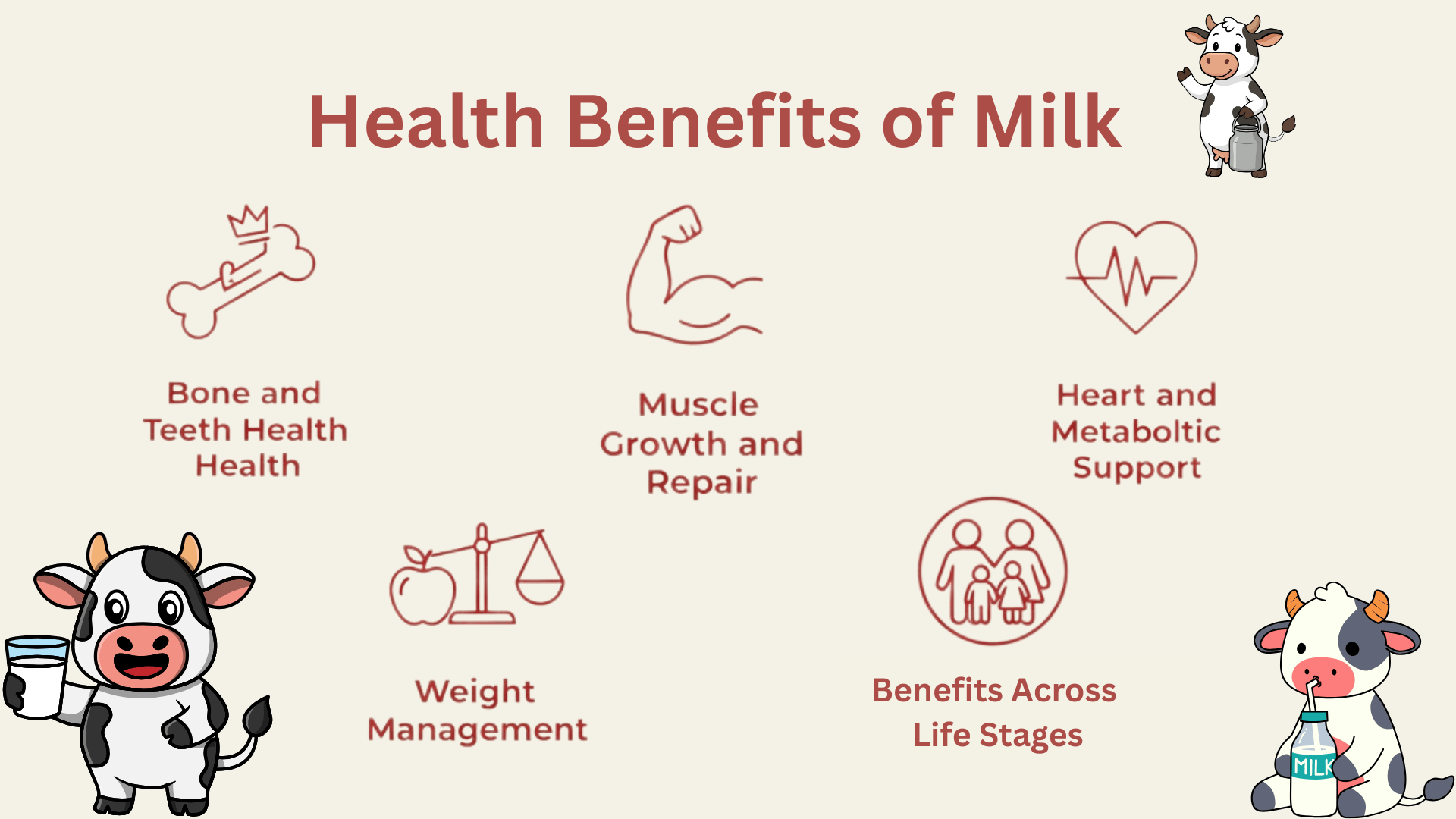
According to research highlighted by the National Library of Medicine, milk contains essential nutrients that support various physiological functions throughout life.
1. Bone and Teeth Health
Milk provides calcium and vitamin D, nutrients that help strengthen bones and teeth during growth and continue supporting skeletal maintenance in adulthood.
Adequate intake contributes to bone mineralization, helping reduce long-term risks associated with low bone density and structural weakness.
2. Muscle Growth and Repair
Milk contains complete proteins with all essential amino acids, supporting muscle recovery after physical activity and helping maintain muscle mass.
These proteins contribute to tissue repair, making milk beneficial for active individuals and older adults experiencing natural age-related declines in muscle strength.
3. Heart and Metabolic Support
Milk supplies potassium, a mineral associated with healthier blood pressure regulation and improved cardiovascular balance.
Low-fat and fat-free milk options provide these nutrients with reduced saturated fat, supporting heart health while contributing to overall metabolic stability in individuals aiming for balanced daily nutrient intake.
4. Weight Management
Protein in milk increases fullness, which can help regulate appetite and support weight control when part of a balanced dietary pattern.
Its nutrient density allows individuals to meet nutritional needs without excessive calorie intake, promoting long-term dietary stability and healthier eating behaviors overall.
5. Benefits Across Life Stages
Milk supports different needs throughout life. Children benefit from nutrients aiding growth, athletes rely on its protein for recovery, and older adults gain support for maintaining muscle mass and bone strength.
These life-stage benefits highlight milk’s relevance within diverse nutritional requirements across ages.
Different Types of Milk You Can Choose
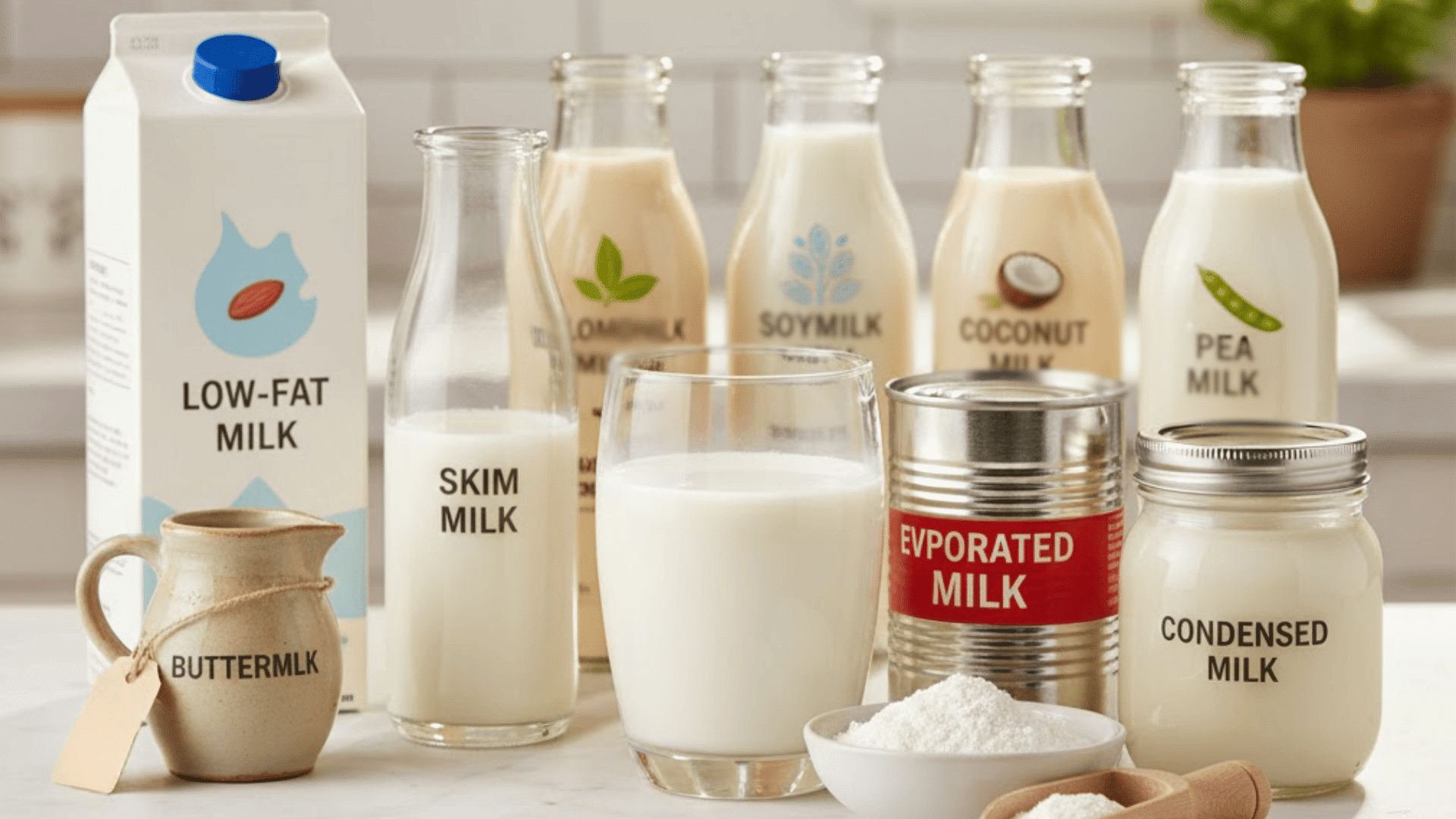
Milk is available in many forms, each differing in fat content, processing method, and nutritional profile, giving consumers multiple options.
Fat-Based Categories
- Whole Milk: Contains 3.25% milkfat (~8 g per cup) and offers full flavor; suitable for higher-calorie needs.
- Low-Fat Milk (1% or 2%): Provides essential nutrients with less fat, ideal for reduced-calorie diets.
- Skim/Fat-Free Milk: Contains <0.5% fat while maintaining protein and calcium levels.
- Semi-Skimmed Milk: Popular in several regions; typically contains 1.5–2% milkfat.
Shelf-Stable & Processed Milk Types
- UHT Milk: Heat-treated at ultra-high temperature; shelf-stable until opened, with largely intact nutritional value.
- Dried Skimmed/Powdered Milk: Water removed for long storage; reconstituted with water.
- Evaporated Milk: 60% water removed; available in whole and low-fat varieties.
- Condensed Milk: Similar to evaporated milk but sweetened; commonly used in desserts.
- Buttermilk: Fermented milk with tangy flavor; often low-fat.
Plant-Based Alternatives
- Almond, Soy, Oat, Coconut, and Pea Milk: Popular dairy alternatives.
- Fortified Soy Milk: Nutritionally closest to dairy; included in dietary recommendations.
- Other Plant Milks: Vary in protein and nutrient content; always check for calcium and vitamin D fortification.
These processed and plant-based varieties offer flexible choices for taste, storage needs, dietary restrictions, and nutritional goals across different lifestyles.
Nutrition values for All Milk Types (Per 240 ml)
| Milk Type | Calories | Protein (g) | Fat (g) | Carbs (g) | Calcium (mg) |
|---|---|---|---|---|---|
| Whole Milk (3.25%) | ~150 | 8 | 8 | 12 | ~300 |
| 2% Low-Fat Milk | ~120 | 8 | 5 | 12 | ~300 |
| 1% Low-Fat Milk | ~100 | 8 | 2.5 | 12 | ~300 |
| Skim / Fat-Free Milk | ~80 | 8 | 0 | 12 | ~300 |
| Semi-Skimmed Milk (1.5–2%) | ~110–130 | 8 | 3–5 | 12 | ~300 |
| UHT Whole Milk | ~150 | 8 | 8 | 12 | ~300 |
| Reconstituted Skimmed Powdered Milk | ~80 | 8 | 0 | 12 | ~300 |
| Evaporated Whole Milk | ~340 | 17 | 19 | 25 | ~660 |
| Evaporated Low-Fat Milk | ~250 | 17 | 5 | 25 | ~660 |
| Sweetened Condensed Milk | ~980 | 24 | 27 | 166 | ~790 |
| Buttermilk (Low-Fat) | ~100 | 8 | 2 | 12 | ~285 |
| Milkshake (Chocolate, Commercial) | ~300–400 | 8–12 | 7–12 | 50–60 | ~300 |
| Channel Island Milk | ~200–220 | 8 | 12–15 | 12 | ~320 |
| Oat Milk (Fortified) | ~120 | 3 | 5 | 16 | ~350 |
| Almond Milk (Unsweetened) | ~30–40 | 1 | 2.5 | 1 | ~450 |
| Soy Milk (Fortified) | ~110 | 7–8 | 4 | 8 | ~300 |
| Coconut Milk Beverage | ~45 | 0 | 4–5 | 1 | ~450 |
| Pea Milk (Fortified) | ~80 | 8 | 4.5 | 6 | ~440 |
How to Use the Nutrition Label to Choose Milk Wisely
Understanding a milk nutrition label helps you compare options accurately and choose products that match your dietary preferences, health goals, and nutrient needs.
- Check Fat Levels: Review total and saturated fat to choose between whole, low-fat, or fat-free varieties based on age and goals.
- Evaluate Protein: Aim for milk that provides about 8 grams per cup to support a balanced daily intake.
- Calcium Content: Choose options that offer at least 30% of the Daily Value for strong nutritional support.
- Vitamin D Fortification: Look for fortified varieties to help maintain adequate levels.
- Watch Added Sugars: Flavored milks and plant-based options may contain significant added sugars; always verify on the label.
- Lactose-Free Choices: These contain the same nutrients as regular milk but are easier to digest for lactose-sensitive individuals.
- Fortified and Organic Options: Fortified versions add key vitamins, while organic milk avoids synthetic hormones.
Using labels effectively helps you select milk that fits your nutritional needs while avoiding unnecessary sugars or unwanted ingredients.
How Much Should You Drink?Recommended milk intake varies by age. Children ages 2–3 need about 2 cups daily, while those ages 4–8 require around 2.5 cups. Teens and adults typically need 3 cups of dairy daily, including milk, yogurt, or cheese. Individual needs may differ based on activity levels, health goals, lactose tolerance, or medical conditions. Moderation is important; milk is most beneficial when consumed as part of a balanced, varied diet. |
Potential Side Effects of Milk
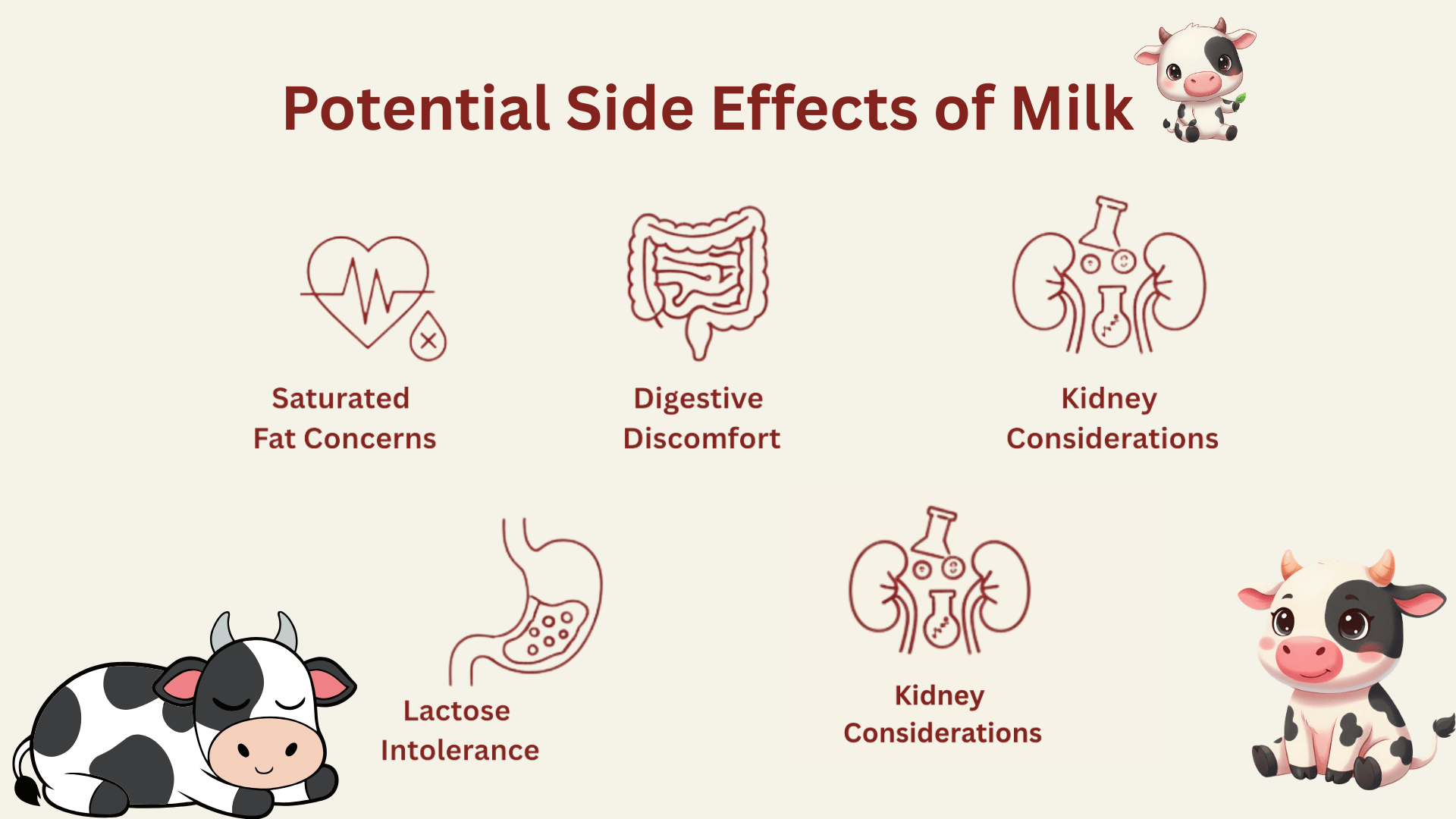
Some individuals may experience reactions to milk, making it important to recognize how different health conditions or intolerances can affect overall comfort and tolerance.
1. Lactose Intolerance
Lactose intolerance occurs when the body lacks lactase, the enzyme that digests milk sugar, leading to bloating, gas, cramping, and diarrhea.
Many adults experience this condition and often choose lactose-free milk alternatives.
2. Milk Protein Allergy
A milk protein allergy triggers an immune response that may cause hives, wheezing, vomiting, or severe anaphylaxis.
It is most common in children and requires complete avoidance of dairy products.
3. Saturated Fat Concerns
Whole milk contains saturated fat, which may influence cholesterol and heart health.
Individuals monitoring cardiovascular risk often select low-fat or fat-free varieties to reduce saturated fat intake.
4. Digestive Discomfort
Some people may experience stomach heaviness, bloating, or discomfort after drinking milk, even without lactose intolerance.
Reactions vary widely and may depend on portion size, digestion, or overall dietary patterns.
5. Kidney Considerations
People with kidney disease may need to moderate milk consumption due to its phosphorus and potassium content.
Medical guidance helps maintain mineral balance while preventing additional strain on the kidneys.
Milk Processing Methods
Understanding how milk is processed helps you compare different varieties and choose the option that best fits your nutritional needs and personal preferences.
- Pasteurization: Heats milk to eliminate harmful microbes. Includes HTST (161°F for 15 seconds) and UHT (280°F for 2 seconds).
- Homogenization: Breaks fat globules into smaller particles, creating a consistent, smooth texture that prevents cream separation.
- Fortification: Adds vitamins such as A and D to improve nutritional value and support daily dietary requirements.
- Skimming/Separation: mechanically removes cream to produce reduced-fat or fat-free milk varieties with lower overall fat content.
- Evaporation and Drying: Remove water to create concentrated products such as evaporated and powdered milk, providing extended shelf stability.
- Condensation: Eliminates water and adds sugar, forming sweetened condensed milk commonly used in desserts and baking.
These processing methods shape milk’s texture, flavor, and nutrient profile, helping consumers choose the option best suited to everyday use.
Raw vs. Pasteurized Milk
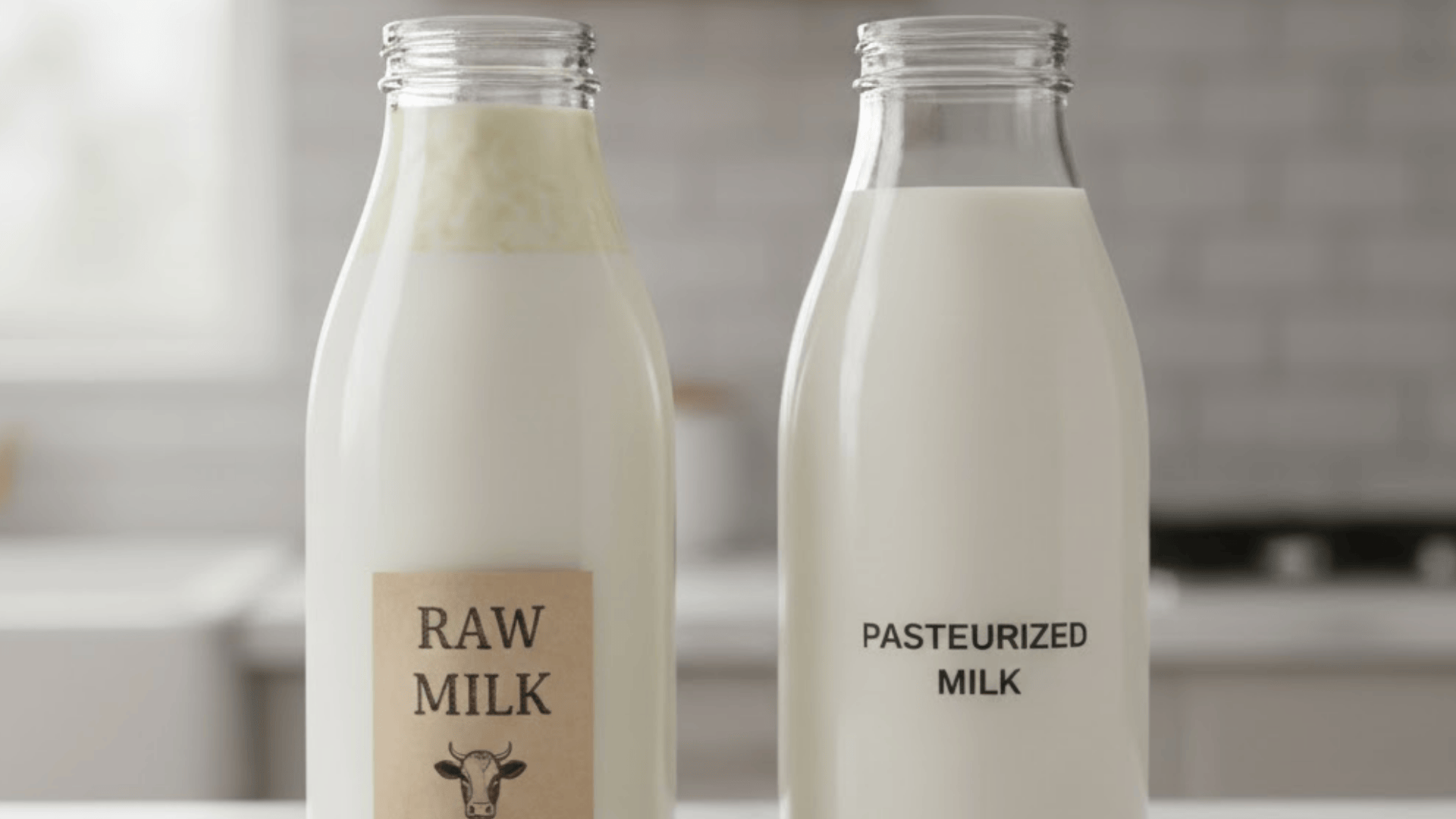
Understanding the differences between raw and pasteurized milk helps you choose the safest option while recognizing how processing affects milk quality and safety.
| Aspect | Raw Milk | Pasteurized Milk |
|---|---|---|
| Definition | Not heated or processed | Heated to kill harmful germs |
| Safety | May contain dangerous bacteria | Considered safe for consumption |
| Outbreaks | Linked to 202 outbreaks | Not associated with major outbreaks |
| Risk Groups | Higher risk for children, older adults, pregnant individuals immunocompromised people | Safe for all age and risk groups |
| Myths | Not more nutritious, same lactose symptoms as pasteurized | Retains nutrients and removes harmful germs |
| Guidance | Not recommended for safety reasons | Recommended by CDC for safe daily use |
Choosing pasteurized milk ensures safety, preserves nutritional quality, and reduces the risk of foodborne illness for people of all ages.
Overview of Milk-Derived Products
Milk is the foundation for many dairy products, each offering distinct textures and nutritional profiles. Cheese delivers concentrated calcium and protein in a wide variety.
Yogurt provides probiotics that support gut health, with plain types being the most nutritious.
Butter and ghee add richness for cooking, while cream products enhance both savory and sweet dishes.
Ice cream is a sweet, occasional treat. Fermented options like buttermilk and kefir offer probiotics and may be easier to digest.
Final Thoughts
Milk can be a nourishing addition to your routine when chosen with awareness and aligned with your personal health needs.
Understanding the nutrition label helps you identify the type of milk that best fits your goals, If you need more protein, prefer lower-fat options, or seek alternatives that are easier to digest.
Prioritizing pasteurized products ensures safety while allowing you to enjoy milk’s natural nutritional value.
With a wide variety available, selecting the right one depends on your lifestyle and preferences.
Scroll through your options, compare labels, and choose the milk that supports your overall well-being. Start making informed choices today.
Frequently Asked Questions
Does Milk Lose Nutrients When Boiled?
Boiling slightly reduces heat-sensitive vitamins, but key nutrients like protein and calcium remain mostly unchanged.
Is It Okay to Drink Milk Before Bed?
Yes, many people find warm milk calming at night, though individual digestion and tolerance can vary.
Can Adults Develop Lactose Intolerance Later in Life?
Yes, lactase levels can decline with age, leading previously tolerant adults to experience symptoms of lactose intolerance.
How Long Does Opened Milk Stay Fresh in the Refrigerator?
Opened milk typically stays fresh for five to seven days when properly stored at cold temperatures.